The Collaborative GP Clinic
How notes sharing saves time, builds relationships, and improves patient outcomes.
Introduction
GPs are community pillars—they watch their patients grow and change, and are responsible for shepherding the health of their communities. Primary care providers like GPs are often the first point of contact for patients. They care for the chronically ill, identify acute illnesses, and build relationships in their neighborhoods, large or small.
In the past, building community ties was a low tech affair. A GP might use a locally installed system or paper cards, and recall key personal details about a patient through memory. Relationships were built through small talk and proximity. While a personal touch is still welcome, patients now not only use technology to build interpersonal relationships, but also rely on it for their first impression and long-term relationship with a practice.
Plato was born from the idea of bringing the latest technology to clinics, driving automation. When Plato started in 2015, automation meant helping providers transition from locally installed systems and paper cards to the web.
As patients’ expectations and the healthcare system evolved, Plato evolved in step. A GP clinic using Plato is linked with key systems like CHAS, CDMP, SFL, for direct checking and claims submission. GP clinics using Plato can allow patients to book appointments directly with them through an online link, saving time for both patients and providers.
Now, Plato is bringing collaborative technology to clinics. In almost every industry, software is driving collaboration—from Google Workspace allowing teams to collaborate on documents, to Microsoft 365 shifting physical offices to the secure cloud. With notes sharing, Plato gives providers the ability to securely share key data with other doctors, caregivers, and patients, without leaving their EMR. Collaboration has arrived in healthcare.
And collaboration has arrived at just the right time. As the primary healthcare space grows more competitive, GPs must find new ways to differentiate themselves to patients. Note sharing improves communication, trust, and convenience—key ingredients of patient-centric care. Visits can be stressful, making it easy for patients and caregivers to forget key details, like misremembering a diagnosis or missing care steps. Written instructions in a shared note give patients and caregivers a concrete reference point—a comfort they can hold on to. Communication builds relationships, embedding clinics more deeply in their community.
Communication also builds collegial relationships—shared care improves when colleagues collaborate. Imagine referring a patient to your colleague: instead of copy-pasting notes into a referral letter, you can share select folders with your colleague in a few clicks, regardless of whether they use Plato. Your colleagues will then have access to vital lab results and patient history, speeding up the referral process and getting all the data they need for care decisions. Your colleagues can then return the favor—sharing key information with you, closing the care loop.
Curious about shared notes? This white paper will show you:
- Why you should share notes with providers, patients and caregivers
- How you can securely share notes using Plato
- Best practices for managing shared notes at your clinic
Plato is more than just a clinic management software. Plato is the Operating System for your Clinic—the core platform around which all your clinic’s operations revolve. With note sharing, Plato has expanded its scope for automating work to include every stage of the patient journey and also collaboration in care. Today, thousands of practices in Singapore, Malaysia and Hong Kong trust Plato as their Clinic’s Operating System. Manage your practice from the Plato platform, collaborate easily with colleagues and automate work so you can focus on patient care and growing your practice.
Table of Contents
CHAPTER 1
Rise of Shared Notes
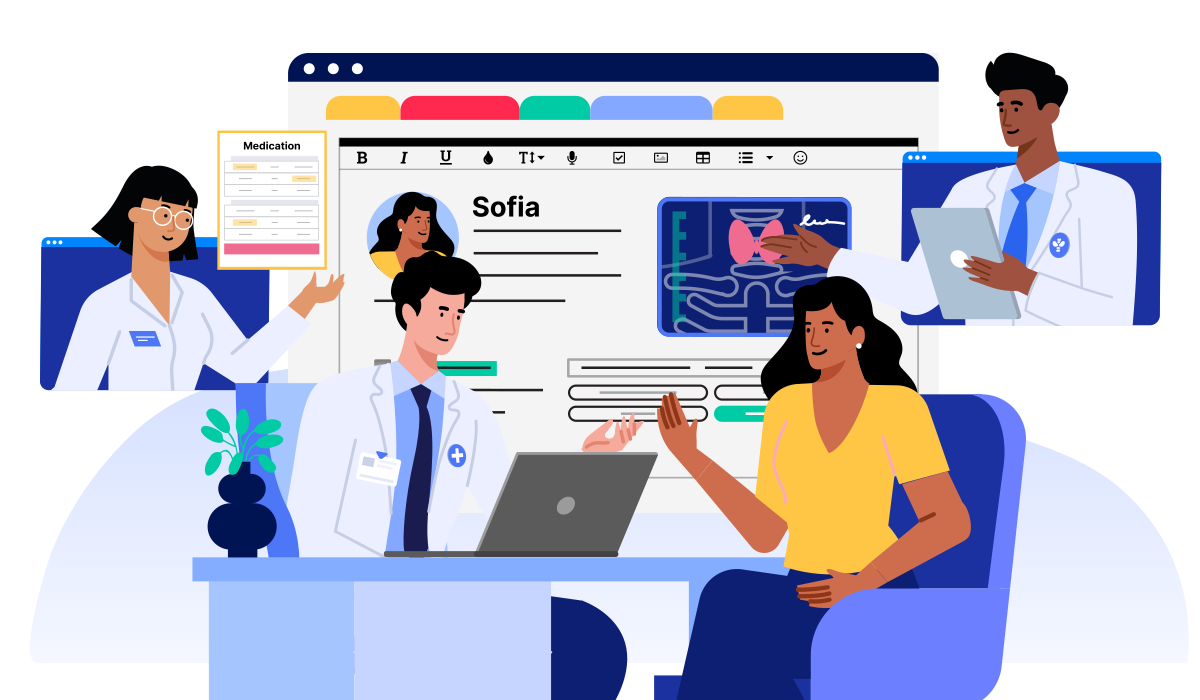
Long before note sharing gained traction worldwide, healthcare professionals were already envisioning a reality where doctors, patients and caregivers communicate openly to improve care processes and outcomes. As early as 1973, the notion of giving patients access to their notes was already a topic of discussion in the New England Journal of Medicine (NEJM).
-
1973
Idea of Note Sharing was Published
The advent of note sharing can be traced back to Shenkin and Warner’s 1973 NEJM article titled, “Giving the Patient His Medical Record: A Proposal to Improve the System”. In this piece, the pair discussed how sharing records with patients could benefit healthcare in four major ways:
- Sustain high quality of care
- Improve clinician-patient relations
- Maintain continuity of care
- Avoid unneeded bureaucracy
-
1982 to Present
Studies Confirm Patients want Access to their Notes
Patients have sought access to their notes from as early as 1982. In a study involving 200 patients, Michael and Bordley (1982) found that the majority of patients wanted access to their notes. Slightly over half believed there was a relationship between access to their notes and quality of care. Over the years, more studies have concluded patients want access to their notes to better understand their health and manage their care (Accenture, 2012; Fowles et al., 2004; Moscovitch, 2020; Walker et al.,2019).
-
2010
OpenNotes Movement was Born
OpenNotes was started by Tom Delbanco, MD, and Jan Walker, RN, MBA, from Beth Israel Deaconess Medical Center and Harvard Medical School. In the 1980s, Delbanco, aka the “Father of OpenNotes”, ran an experiment where patients at a hospital carried around their notes while receiving care. Patients could write their own records, along with their doctors writing theirs, and compare notes. “[T]he doctors thought the patients were crazy. It was a little early,” recounted Delbanco (Miliard, 2015). In 2010, Delbanco received a grant to conduct a similar experiment, but on a larger scale using electronic portals, marking the start of OpenNotes and its pilot study. Delbanco and Walker invited doctors from three different primary care settings to volunteer in the OpenNotes pilot study: urban hospital Beth Israel Deaconess Medical Center (BIDMC), Geisinger Health System (GHS) that comprised predominantly rural practices, and urban safety-net hospital Harborview Medical Center (HMC).
-
2012:
Pilot Study on Effects of OpenNotes was Published
The pilot study aimed to investigate the effects of OpenNotes on doctors and patients, as well as its implications for healthcare. By fall of 2011, participants at BIDMC, GHS and HMC had undergone 12 to 19 months of OpenNotes. In October 2012, the Annals of Internal Medicine published Delbanco et al.’s pilot study titled “Inviting Patients to Read Their Doctors' Notes: A Quasi-experimental Study and a Look Ahead”. The 1-year pilot study involved 105 primary care providers and 13,564 patients across BIDMC, GHS and HMC. Results were largely positive: the majority of patients reported clinical-related benefits (Figure 1), such as feeling more in control of their care and better medicine adherence. At the end of the study, almost all patients wanted to continue shared notes. The majority of primary care providers also agreed that sharing notes with patients online was a good idea (Figure 2).
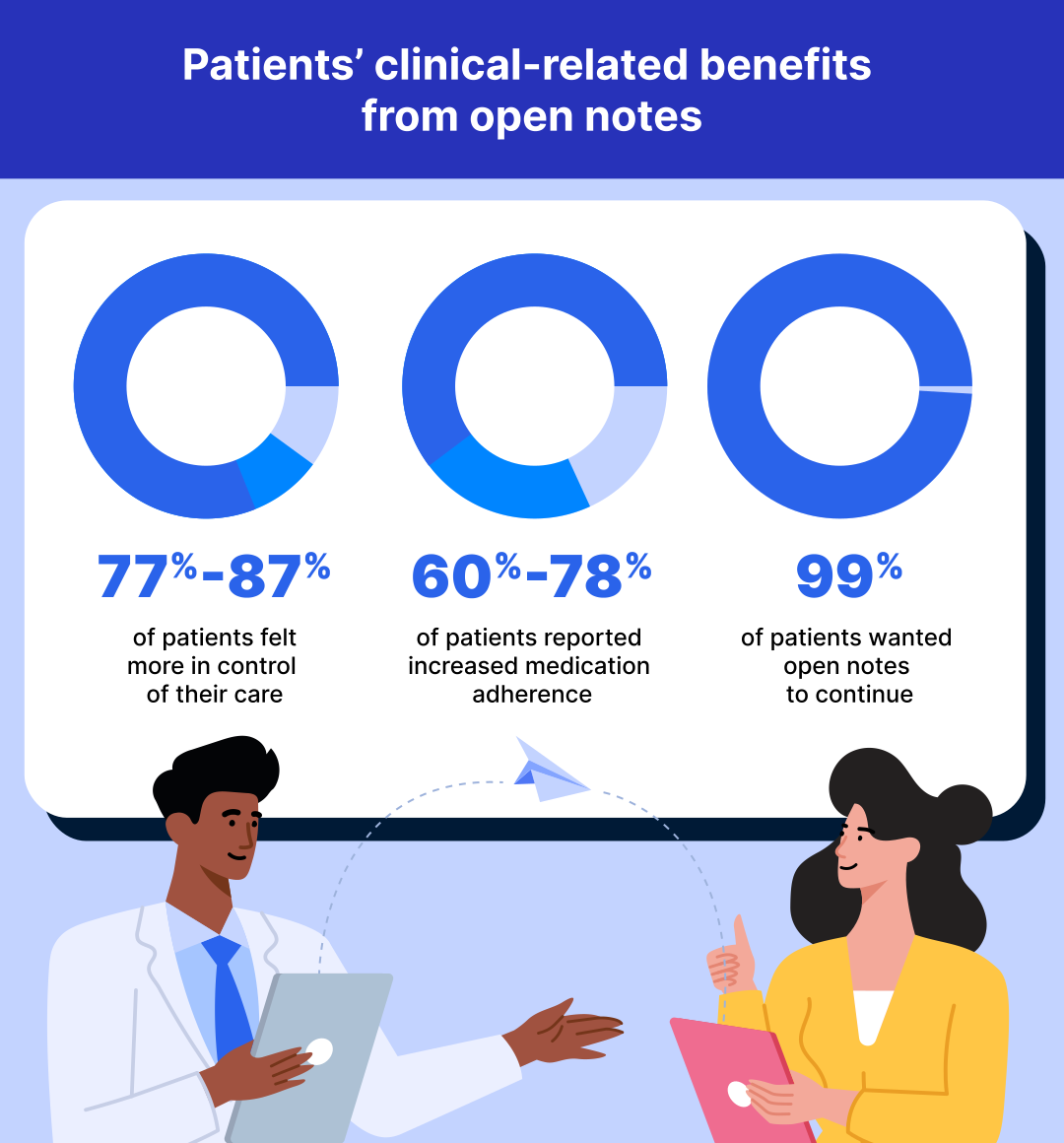
Figure 1: Of the 5,219 patients who opened at least one note and completed a post-intervention survey across three primary care practices, based on the study by Delbanco et al. (2012) 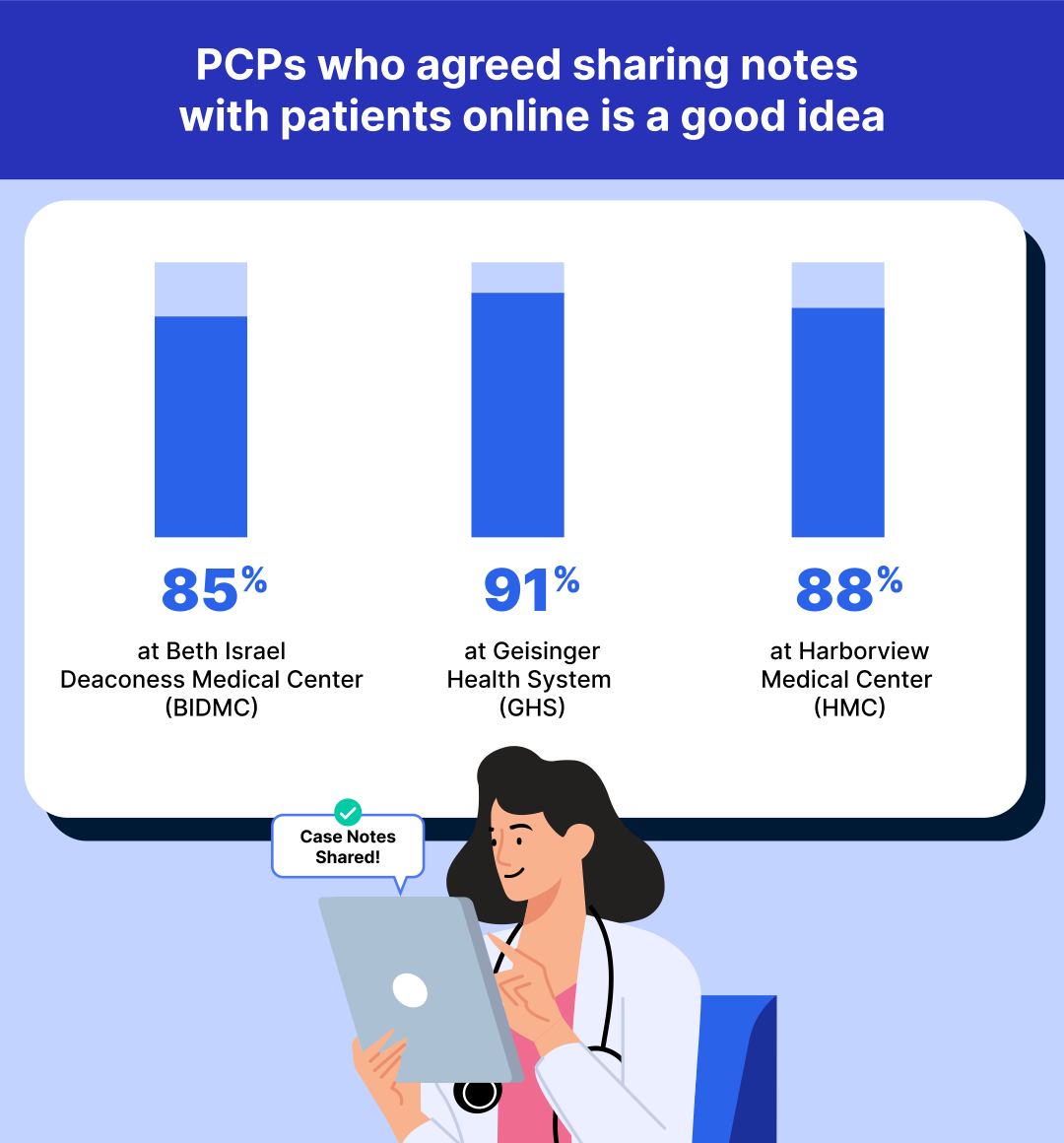
Figure 2: Of the 105 primary care providers who reported that “making visit notes available to patients online is a good idea” based on the study by Delbanco et al. (2012) After clinicians shared notes with patients, their concerns about an increase in workload diminished. They became more comfortable with the idea of sharing notes and were more likely to continue (Delbanco et al., 2012; DesRoches et al., 2020; Ralston et al., 2021; Scandurra et al., 2015). Since the benefits of note sharing greatly outweigh the risks, it’s unsurprising that numerous healthcare systems around the world now share notes with their patients (Walker et al., 2019).
-
2011 to Present
Research Finds Note Sharing Improves Primary Care
When primary care providers share key data with other healthcare providers, it not only helps improve shared care, but also enhances continuity of care and the primary care providers’s role in managing comorbidities (Rayner et al., 2020; Sada et al., 2011). Similarly, sharing notes with patients helps them better manage their health, and was even rated by patients as a deciding factor in choosing healthcare providers (Walker et al., 2019).
-
Today
Who is Sharing Notes with Patients?
Nordic countries like Sweden, Finland and Iceland take the lead in giving patients access to their notes for all public and private healthcare services. For years, esteemed institutions in the US like Mayo Clinic, Cleveland Clinic, and John Hopkins Medicine have been sharing notes to enhance care quality and outcomes. MD Anderson Cancer Centrehas been sharing notes with patients since 2009 with no detrimental results, and largely positive feedback from both patients and doctors (Martin, 2015).
In Europe, countries that practice note sharing include Brussels, Denmark, Estonia, Finland, France, Germany, Iceland, Netherlands, Norway, Sweden, Switzerland, and the United Kingdom. Hover your mouse over each country to see more details. In North America, Canada and the United States practice note sharing. Hover your mouse over each country to see more details. In Asia, countries that practice note sharing include China, Hong Kong, Singapore and Taiwan. Hover your mouse over each country to see more details. In Oceania, Australia practices note sharing. Hover your mouse over the country to see more details.
CHAPTER 2
Why Introduce Note Sharing?
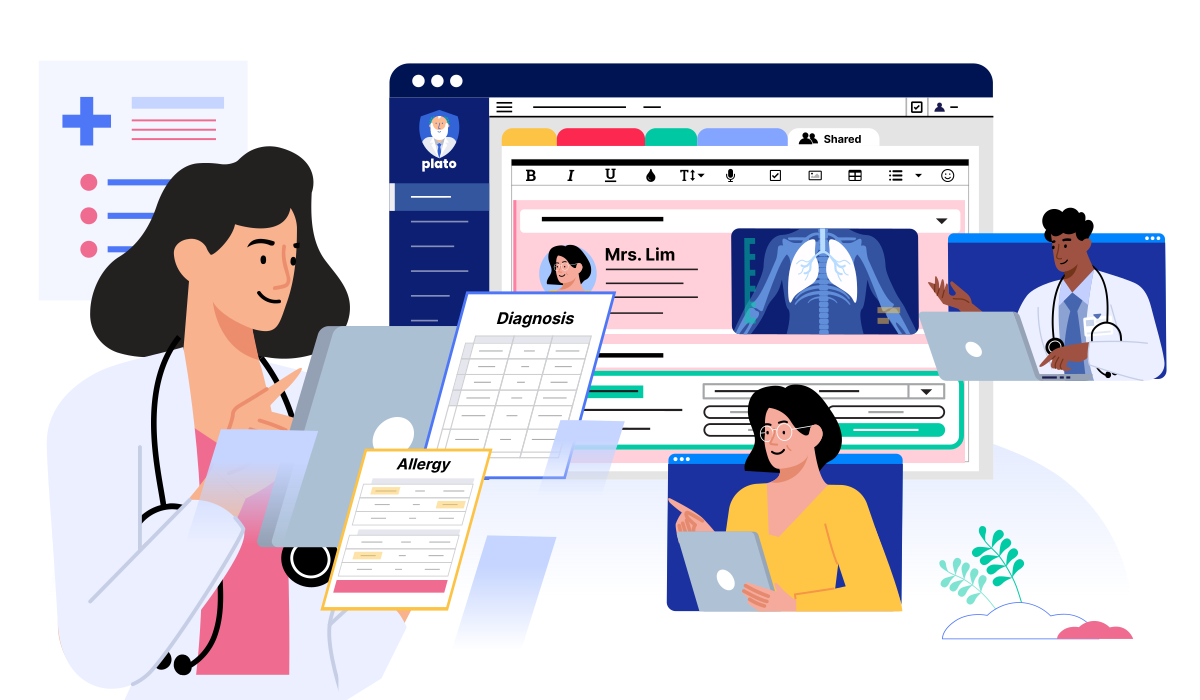
How can your GP clinic stand out in today’s competitive healthcare space? In the past, providers built relationships with patients by getting to know them personally. Healthcare providers were known community figures, clinics were fewer, and geographic proximity built relationships quickly. Now, patients and providers are more fluid—patients may not visit their neighborhood clinic by default. More than that, as patients have grown more tech-savvy, their first impression of your clinic may come from your online presence rather than your storefront.
While your personal touch as a GP is important, patients will rely on your digital presence to both form a first impression and build a long-term relationship. Your patient’s first impression starts before they walk in your door: an inviting website and positive reviews draw a patient’s attention. Convenience converts prospective patients into customers—if you allow patients to book appointments with you online, you will not only convert more website visits into visiting patients, but also make a great first impression. Upon arrival, protect patients’ time by reducing clinic wait times. Impress new patients by inviting them to pre-register from home or self-register at your front desk with a scan of their Singpass—reduce data entry and build precise patient profiles. Post-visit, continue care by sharing notes and pairing recalls with your online appointment booking link. Integrating technology in your practice builds clinic-patient relationships organically. Doctors often fear that technology will diminish relationships—but if technology brings convenience, it's a relationship enhancer.
The next frontier of convenience is collaboration. Note sharing is a foundational part of collaboration. Notes sharing improves communication, trust, and convenience—key components of patient-centric care. Picture sharing a note with your patient: at any time, they can refer to their written care plan for accuracy and improve adherence. Your notes also strengthen your role as their primary care provider, reminding patients to return for their holistic and preventive care. Shared notes likewise improve collegial relationships. Easily provide colleagues with the key data to continue patient care. Invite them to share their notes with you, tightening your patient’s care loop. Well-coordinated care gives patients a good impression, further strengthening your relationship with them.
Collaboration is Inevitable and Impactful
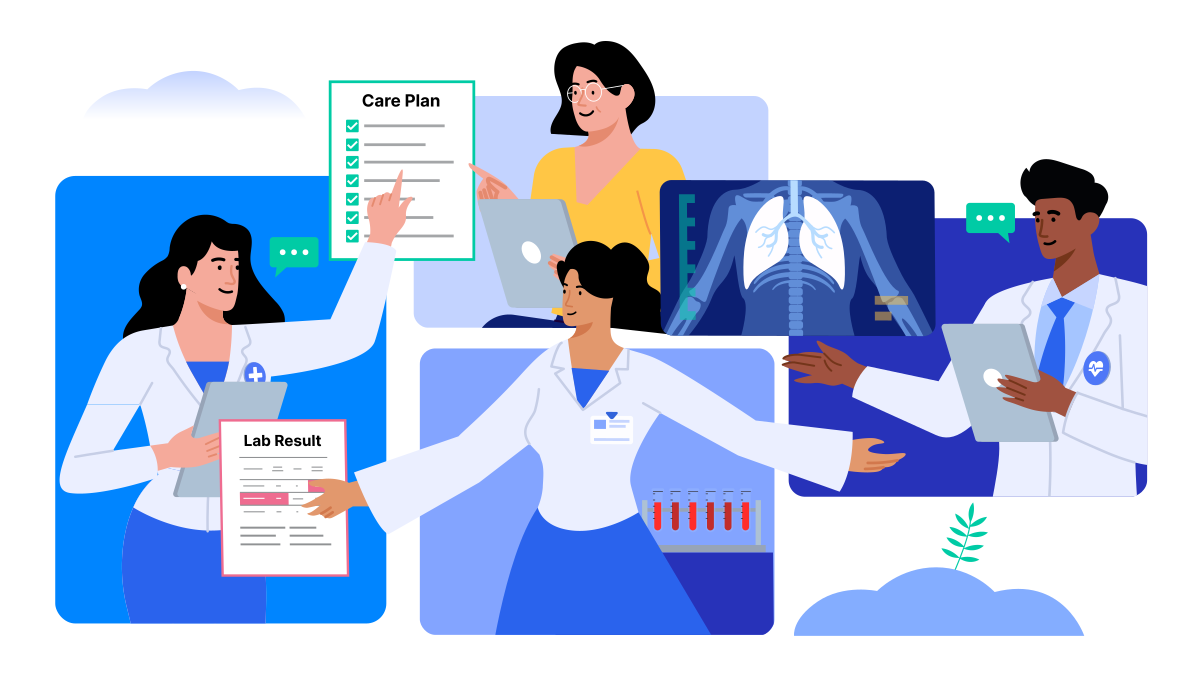
Outside of healthcare, collaborative technologies are already widespread. Before Google Workspace, Microsoft 365 and Amazon Web Services, early tech pioneers were already thinking up ways to drive collaboration with software, then known as ‘groupware’ in the late 1980s (Engelbart, 1962).
Like an electronic sinew that binds teams together, the new ‘groupware’ aims to place the computer squarely in the middle of communications among managers, technicians, and anyone else who interacts in groups, revolutionising the way they work.
Richman & Slovak (1987) in the article
"Software Catches the Team Spirit" on Fortune Magazine
Software quickly changed how people worked together for the better. For example, IBM’s Lotus Notes—an initial collaborative enterprise software—was a game changer. “[E]nterprise after enterprise, big companies and all, were depending on Notes to transform how they did business. They never had anything to help collaboration before. Notes opened up the opportunity for teams, departments, and even inter-company projects to communicate.” (Gewirtz, 2018).
In 2006, the introduction of cloud collaboration solutions such as Amazon Web Services and Google Docs revolutionised the collaboration experience (Foote, 2017). Suddenly, geographic barriers were eradicated. Employees could collaborate with anytime-anywhere access, work on documents simultaneously, and communicate more effectively with team members, no matter where they were in the world. Companies could also reduce their high communication and infrastructure costs from legacy IT systems.
Today, Software Drives Collaboration
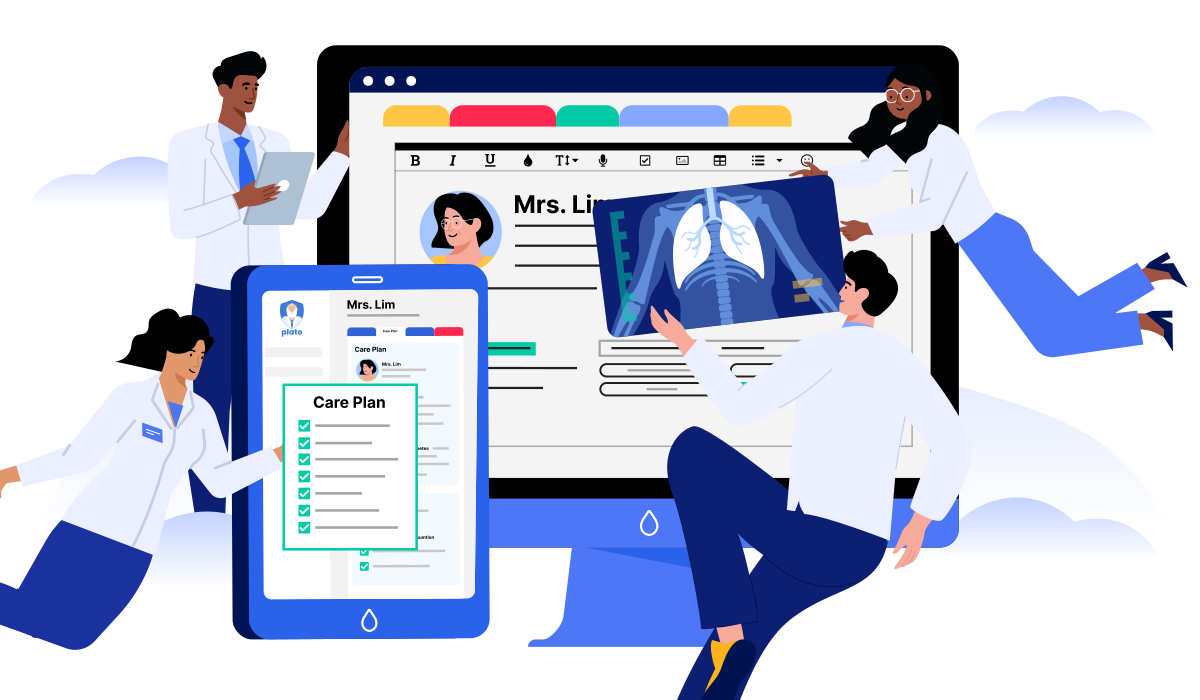
Benefits of Collaborative Software
As more businesses worldwide collaborate using software, it’s become increasingly clear that the advantages include both hard and soft benefits.
Collaborative software improves (Deloitte, 2013; Forrester Research, 2020):
- Communication;
- Productivity;
- Transparency;
- Innovation;
- Engagement;
- Job satisfaction; and
- Bottom-line profit
For example, Google Workspace simplifies collaborations to free up resources for companies, so they can focus on introducing more automations and improvements. Employees’ time is freed to add value directly to the business, instead of struggling with inefficient technologies and processes (Forrester Research, 2020). Since collaborative software simplifies teamwork and provides other soft benefits, employees with access to such technology have been found to be up to 20% happier at their jobs (Deloitte, 2013).
The Spillover Effect into Healthcare
Collaborative software can likewise improve the way healthcare providers build community relationships and work together. For example, doctors can empower their patients in care by sharing key notes about their diagnosis and care plan. When patients read their notes and fully understand their health condition and treatment, they are more likely to adhere to their care and enjoy better outcomes. When patients experience health improvements under your care, their trust in and loyalty to you grows. Healthcare providers also stand to gain from shared notes: you might currently copy-paste your notes into referral letters, which is tedious and time-consuming. With Plato, you can speed up the referral process by securely sharing key patient data with colleagues, directly from your EMR. In a few clicks, give your colleagues the data they need to aid their care decisions. Likewise, invite your colleagues to share key patient data with you, so you can easily follow-up as your patient’s primary care provider. Improve efficiency, minimise repetitive work, and save time by sharing notes, so you can focus on your patients.
Why Share Notes using Plato?
1. Strengthen Community Ties
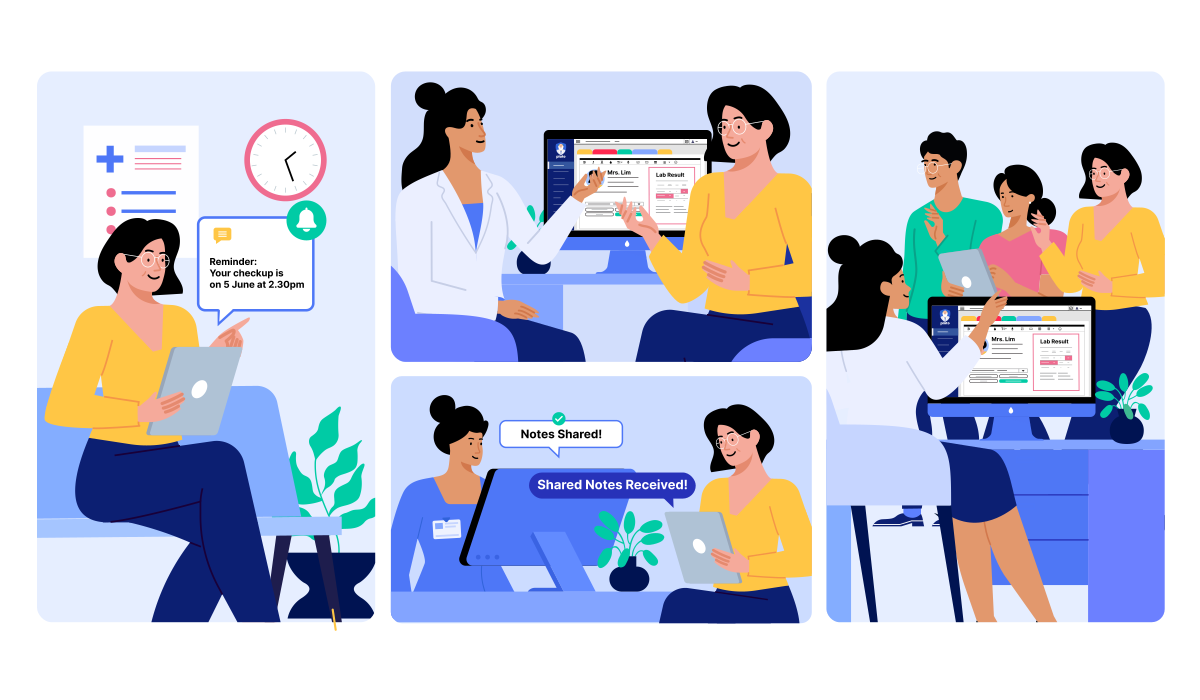
“This is great! I waited less than five minutes for my turn to see you,” compliments your new patient, Mrs Lim. “Before moving to this neighbourhood, I had to queue for a long time, sometimes half an hour or more, before seeing my GP. My former clinic didn’t have online appointment booking; it wasn’t so tech-forward. My GP was great, but it was really hard to wait—and so unnecessary. Each minute in the waiting room feels like an hour when you’re unwell! I was pleasantly surprised when your clinic even sent me a reminder about my follow-up appointment. It’s helpful as I’m a busy working parent. My visit had completely slipped my mind.”
Today, Mrs Lim is returning for her follow-up after seeing you about increased thirst and unusual fatigue. After investigating and running the necessary tests, you conclude Mrs Lim has early type 2 diabetes. While explaining her diagnosis and care plan, you notice a look of anxiety wash over her face. “Mrs Lim, are you all right?” you ask, concerned. “Dr Myia, I won’t remember these care steps. My memory isn’t good.” You reply assuringly, “Don’t worry Mrs Lim. My nurse will share with you a summary note of today’s visit. It will contain key details about your diagnosis, care plan, and test results. At any time, refer to your note to recall your care plan. This will help you effectively manage your diabetes and prevent it from progressing.” Mrs Lim lets out a sigh of relief. “Thank you Dr Myia! Wow, you even share notes to help your patients manage their care? I wished I‘d moved to this neighbourhood earlier! I’ll definitely ask my husband and daughter to see you when they are unwell, and recommend you to my friends in the neighbourhood.”
Notes sharing is a form of patient-centric care. It differentiates your practice to patients by buildinging tight clinic-patient relationships, embedding your clinic in the community as a result. Whether they are young or old, patients today are tech-savvy. They have a digital relationship with businesses they frequent—including their clinic. Plato’s patient-centric automations create a tech-forward impression of your clinic throughout the patient journey. Impress new patients by letting them book their first visit and self-register online. Post visit, continue care by sharing notes, so patients improve their adherence to care. Pair your recall messages with online appointment booking, so patients can schedule their follow-up visit instantly.
When GPs use Plato to share notes with their patients, they:
- Win patients over by creating a positive, tech-forward impression
- Improve efficiency in care for both provider and patient
- Build relationships with patients through clear communication and convenient follow-ups
2. Improve Patient Care
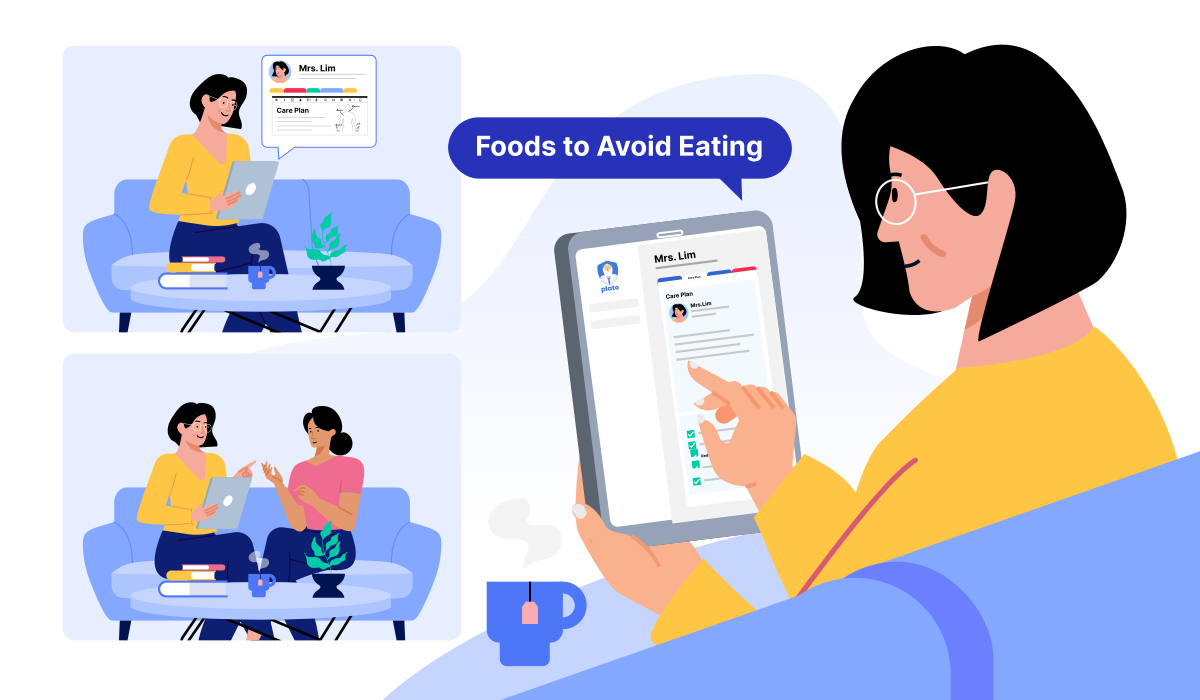
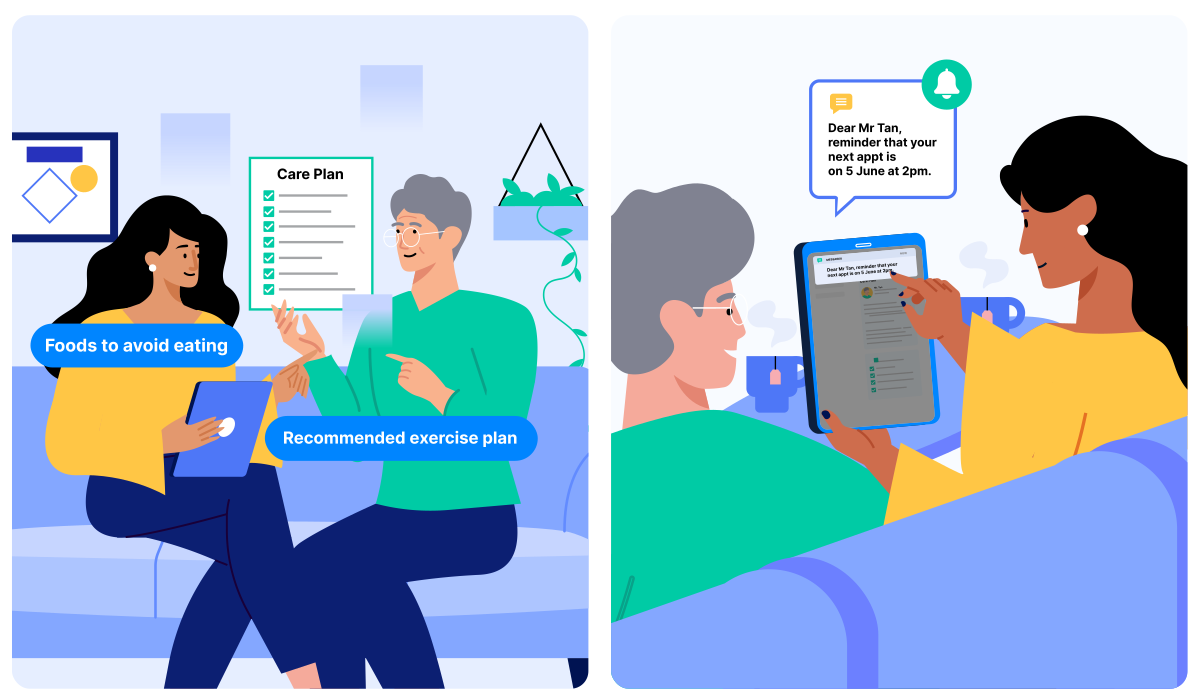
After Mrs Lim leaves your clinic, she returns to the comfort of her home, where she reads her shared note in a calm setting. Mrs Lim securely accesses her note on a web-based Plato interface, without downloading any third-party app or using a patient portal. Mrs Lim’s daughter, Cheryl, pops her head into the room. “Mum, what are you doing? How did your appointment go?”
Mrs Lim looks up from her iPad, “Dr Myia says I have type 2 diabetes, but she says not to worry. It’s in the early stages. I can prevent my diabetes from progressing, so long as I follow the care steps provided.” Cheryl’s face relaxes, “That’s good to know. I was so worried for a moment.” Mrs Lim waves her hand, ushering her daughter to join her on the sofa. “Look at these notes she prepared for me,” Mrs Lim chimes, while showing Cheryl her iPad screen.
“Here’s a full list of the foods I must avoid eating from now on, listed alphabetically. It’s helpful because I can refer to this whenever I’m unsure about my diet. Dr Myia even included a recommended exercise plan.” Cheryl raises her eyebrows, impressed, “I’ve never seen a GP share notes on a patient’s care before. This is so cool and helpful!” Mrs Lim smiles, “Her clinic even lets you book appointments online and sends you reminders on your visit, so you don’t have to wait long for your turn. You and your dad should visit Dr Myia for your medical care.” Cheryl nods in agreement, “Definitely!”
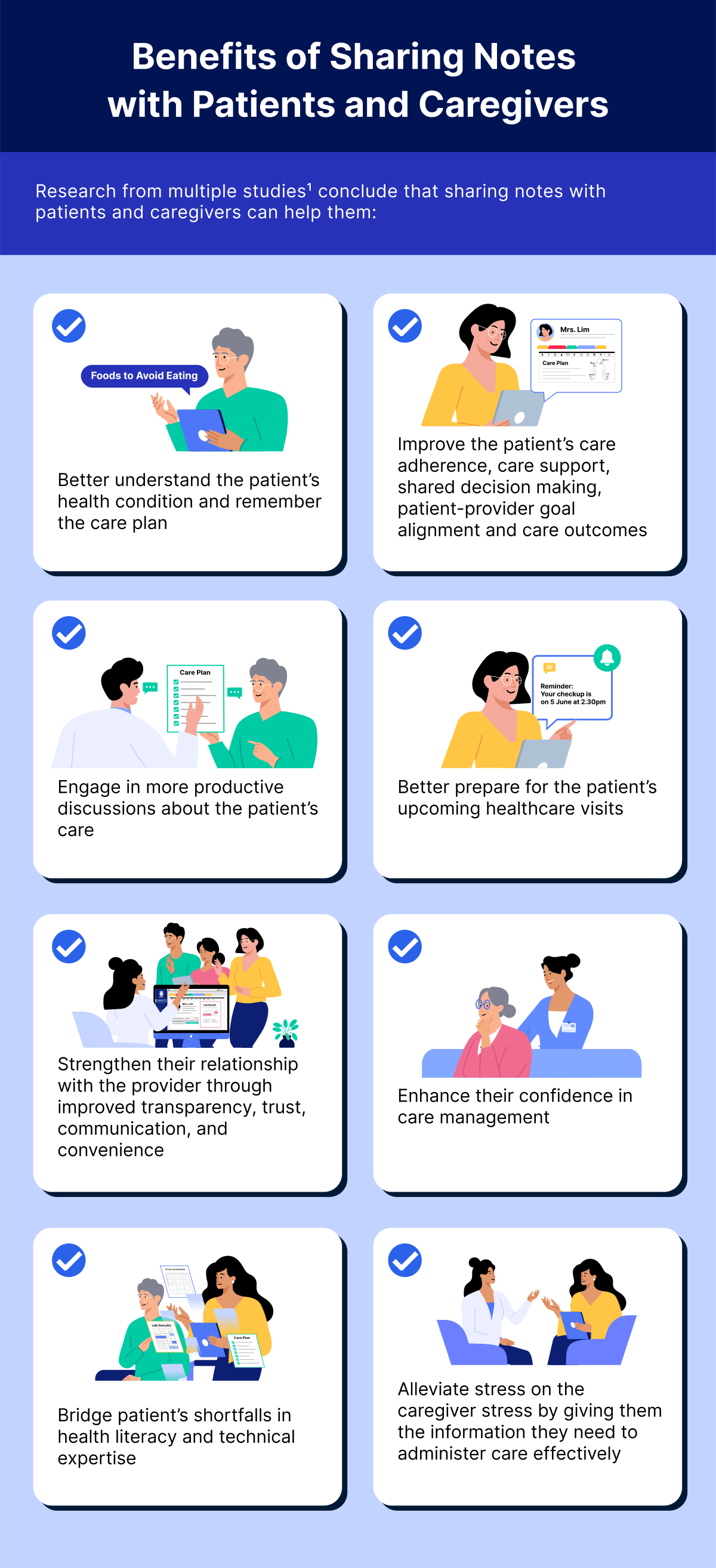
Generally, it’s difficult for patients to retain verbal medical information, especially if they are very young, elderly, anxious or dealing with overwhelming data. For example, patients who are chronically ill may struggle with care management over the long term. GPs can strengthen their role as the primary care provider by sharing notes to help patients recall what was discussed in visits, manage their health condition, and monitor their care progress (Kessels, 2003). Studies show that sharing notes with patients can help them (Delbanco et al., 2012; Tapuria et al., 2021; Vahdat et al., 2014):
- Better understand their health condition
- Take greater control of their care
- Experience better treatment outcomes
In Plato, you can securely share notes directly with patients from your EMR. Patients can safely access their read-only notes on a simple and beautiful web-based interface, created by Plato. Your patient need not download any apps or use any third-party patient portal.
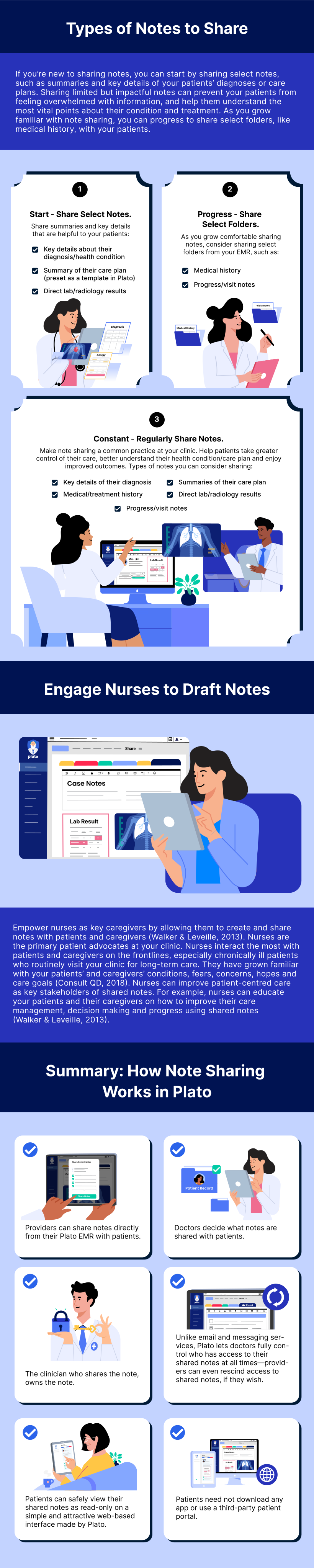
Some clinicians may feel anxious about sharing their first note with a patient. You can slowly introduce note sharing by sharing with patients:
- Key details about their diagnosis
- Summary of their care plan (preset as a template in Plato)
- Direct lab/radiology results
Since nurses are the primary patient advocates at your clinic, empower them in their role as caregivers. Let them create and share notes with patients (Walker & Leveille, 2013). Nurses interact the most with your patients on the frontlines, especially the chronically ill who routinely visit your clinic to receive continuous care. They are familiar with your patients’ conditions, fears, concerns, hopes and care goals (Consult QD, 2018). When nurses create notes to share with patients, it helps them provide better patient-centred care. Nurses can educate patients on how to use their shared notes to enhance care management, decision making and progress (Walker & Leveille, 2013).
3. Tighten the Collaboration Loop
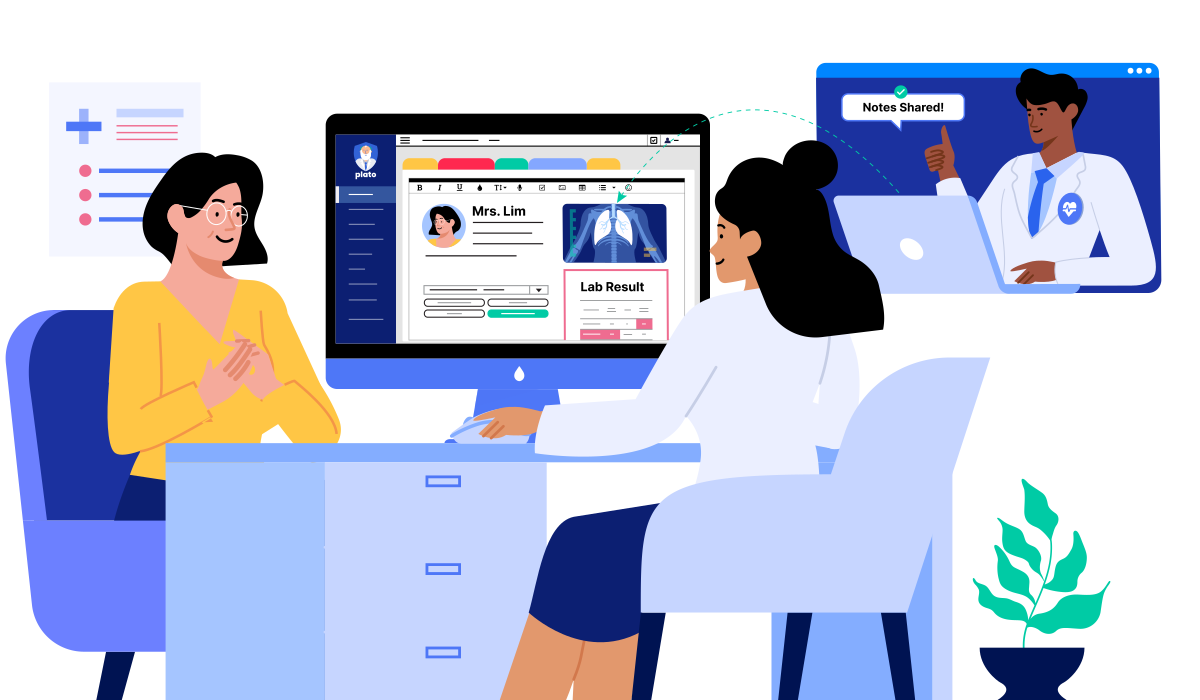
Since Mrs Lim moved to your neighbourhood, she’s been a loyal patient at your practice. Not only does her whole family visit your clinic, but also her friends living in the area, whom she’s recommended your practice to. Over the years, her diabetes has been well managed, thanks to routine checkups and care adherence, which she says is easier thanks to shared notes.
Today, Mrs Lim has come for a checkup due to chest discomfort and difficulty breathing. After investigating, you suspect Mrs Lim may have a heart condition. You refer Mrs Lim to Dr Alex, a cardiologist, for further evaluation. Before shared notes, you used to manually find and collate key patient data for inclusion in referral letters. To add context, you’d copy-paste your notes inside, but this was tedious. With shared notes, passing on key patient data to colleagues is easier: in a few clicks, you share a folder containing Mrs Lim’s vital health data with Dr Alex, regardless whether he uses Plato. If Dr Alex uses Plato, even better—he can just add his notes into the shared folder, so you’re instantly up to speed on Mrs Lim’s heart condition. When Mrs Lim returns to your clinic for follow-up, you already have a full picture of her health. Now, you can ask productive questions about her heart diagnosis and treatment. Your well-coordinated care impresses Mrs Lim and assures her that she’s in good hands, further strengthening her trust in you as her primary care provider.
GPs often work with other providers to deliver shared care to their patients. When GPs share notes using Plato to tighten the collaboration loop, it:
- Simplifies teamwork since secure data sharing becomes easier
- Improves efficiency, so GPs have more time to focus on patients
- Makes it easier to follow-up on care as the primary care provider
CHAPTER 3
Share Notes with Patients and Caregivers
Why Share Notes with Patients and Caregivers?
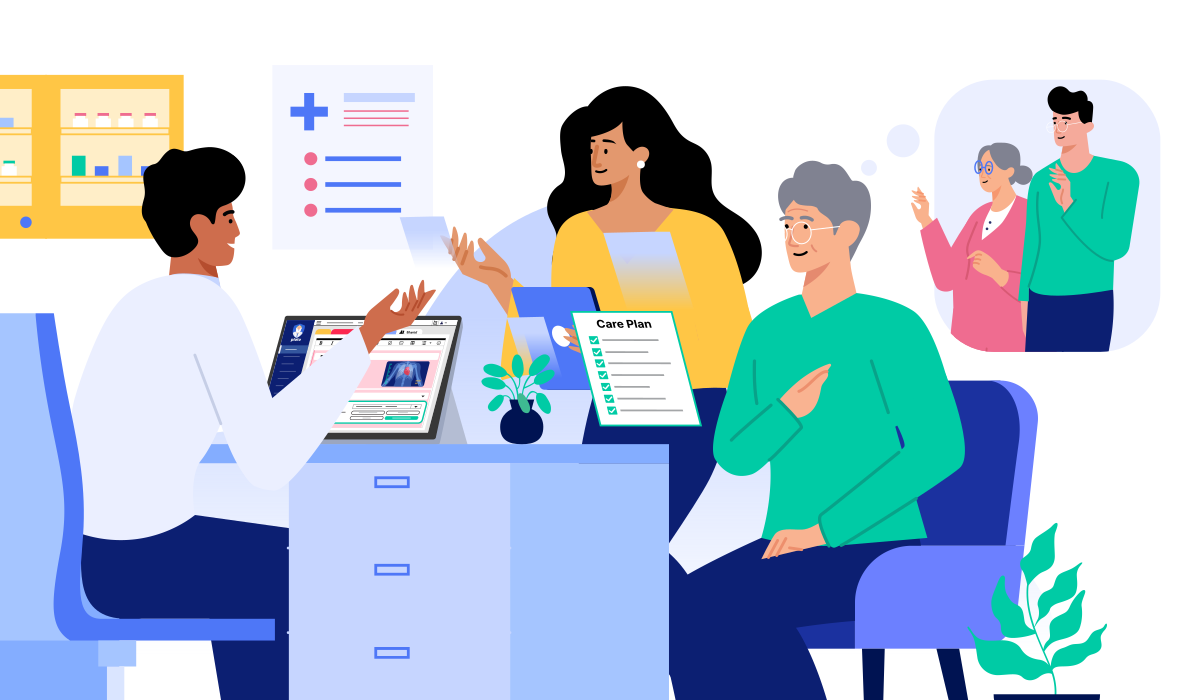
Imagine you’ve just diagnosed your 60-year-old patient, Mr Tan, with hypertension. As part of his care plan, Mr Tan must use a home monitor to regularly track his blood pressure reading. Silvia, his daughter and caregiver, explains, “Dr Sander, I can take my dad’s blood pressure reading at home, but we’re unsure where to get this monitor and how to use it.”
You recommend a validated blood pressure monitor and demonstrate its use. Mr Tan and his daughter listen closely. “Dr Sander, could you repeat the steps again please? I’m worried I’ll forget them,” Silvia asks apologetically. “Don’t worry. Later, my nurse will share with you a summary note of today’s visit. It will contain key details about Mr Tan’s diagnosis and care plan, including video links to my professional YouTube channel on how to use the monitor and hypertension care. Any time you’re unsure about the care steps, refer to the note for accurate guidance,” you assure her.
Silvia nods in relief, “Thanks Dr Sander! This is so helpful! My dad tends to get his health information online, which isn't always reliable. It’s a relief to know he can rely on a credible source. My dad uses a smartphone, though he’s not very tech-savvy. However, I can help him access the note, it seems easy to use.” Mr Tan chimes in, “I agree. I think my kakis will also appreciate and benefit from your care. I'm going to share about your practice with them.”
Generally, patients and caregivers find it hard to remember verbal instructions, especially when it involves a complex diagnosis or overwhelming info. Misremembering information is easy—and affects the patient’s care back home. Empower patients and caregivers by letting them conveniently refer to your written instructions when in doubt. A shared note summarises what was discussed in the visit, so patients and caregiver don’t need to rely on their recollection. Shared notes remind patients of your role as the primary care provider—and reinforce that they should come back to your clinic for holistic and preventive care.
Elderly patients and caregivers may also struggle with misinformation online, which impacts their care. Anchor them to the truth by providing an accurate source to turn to. Clear, precise communication from your written notes help them better understand the diagnosis and treatment, ultimately driving improved care outcomes (Kessels, 2003; Vahdat et al., 2014).
1. Empower Patients and Caregivers in Care
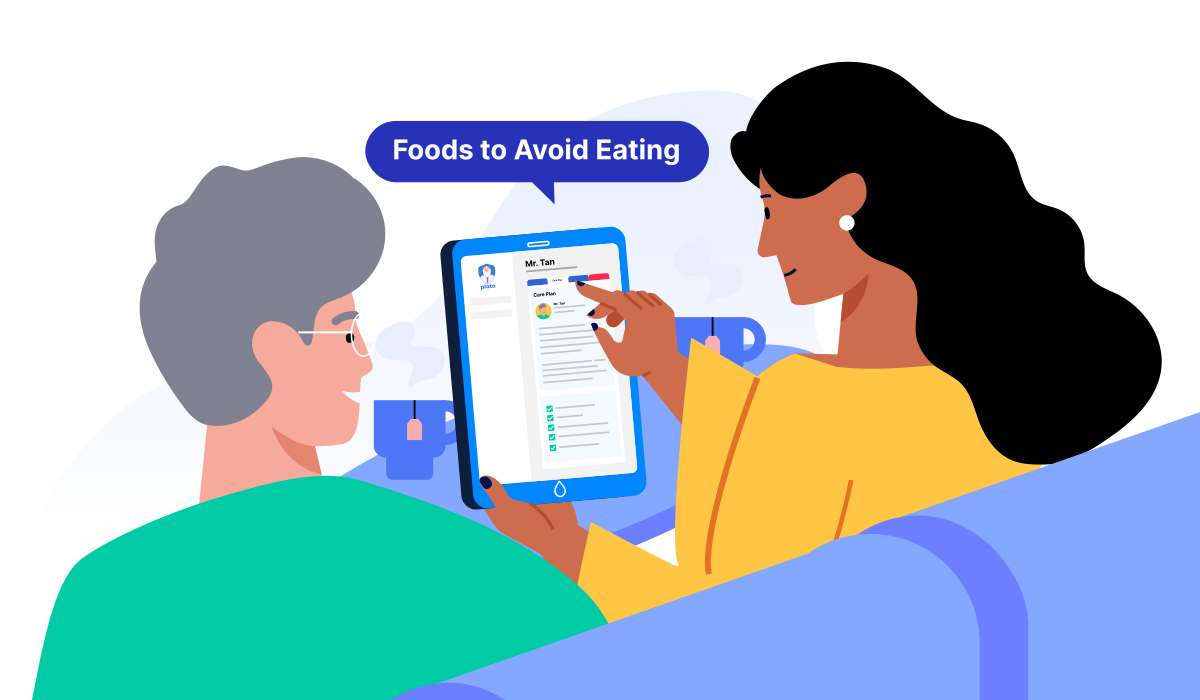
Shared notes empower patients and caregivers through education. A GP’s written note not only brings greater clarity to the patient’s diagnosis and care plan, but also contains reliable medical information to support care. As fake news grows more ubiquitous, patients and caregivers can easily fall prey to medical misinformation, especially the elderly. Older patients frequently search for health information online, but often lack the confidence to sufficiently evaluate the quality of this data (Turner et al., 2018). Vulnerable groups require a trusted authority from whom they can get reliable health information. Sharing notes improves patients’ and caregivers’ health knowledge, in turn driving better care quality and communication. These benefits are not just theoretical—studies show nearly all patients and caregivers who have experienced shared notes want to continue (Wolff, Darer, et al., 2016).
2. Improve Care Quality
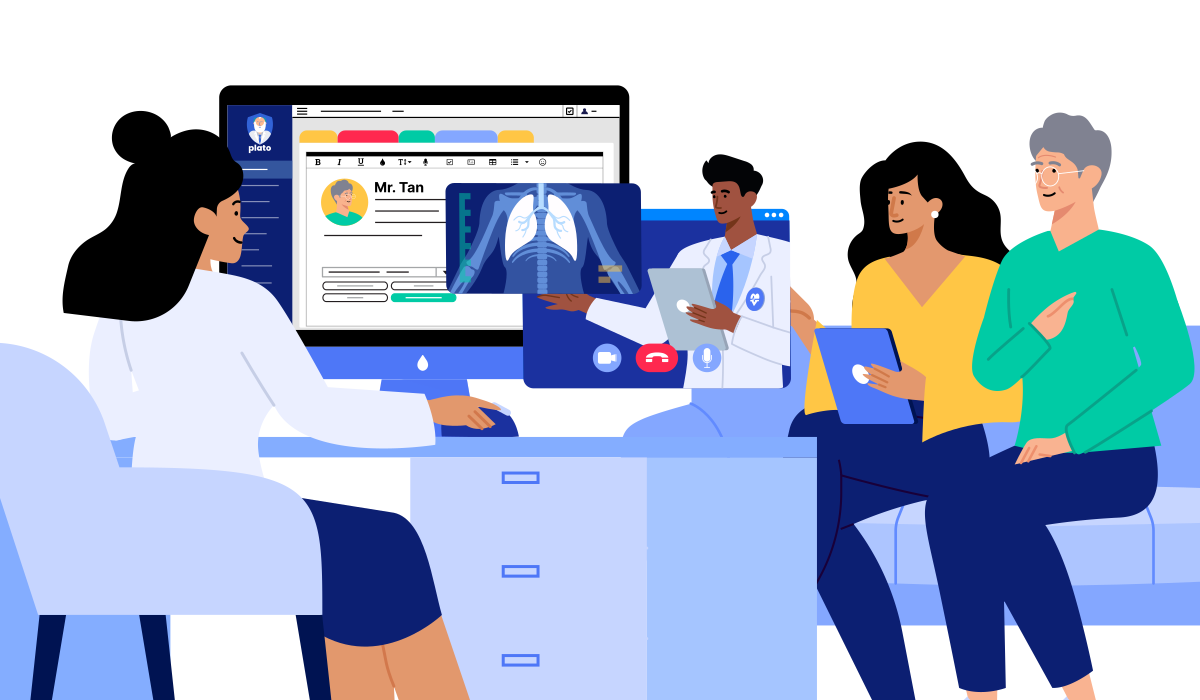
Shared notes give GPs an accurate and complete picture of their patient’s health, so they can make better clinical decisions. Fragmented care puts patients at risk of completing unrequired tests or procedures. This diminishes care quality and raises healthcare costs (Frandsen et al., 2015). Sometimes, doctors rely on their patients’ self-reported data to close knowledge gaps, but this is prone to recall bias. Relying on a patient’s guesswork creates opportunity for poor decisions, duplicate tests and medical errors (Topp et al., 2019). Patients also get frustrated when they become “messengers” in their care. In the study by Sada et al. (2011), one medical oncologist shared, “Some patients [say] I just talked to your surgeon about my case. Why do I have to talk to you again [about] the whole thing?” With shared notes, GPs rely on factual data shared by providers, improving care coordination and quality.
3. Build and Strengthen Community Ties
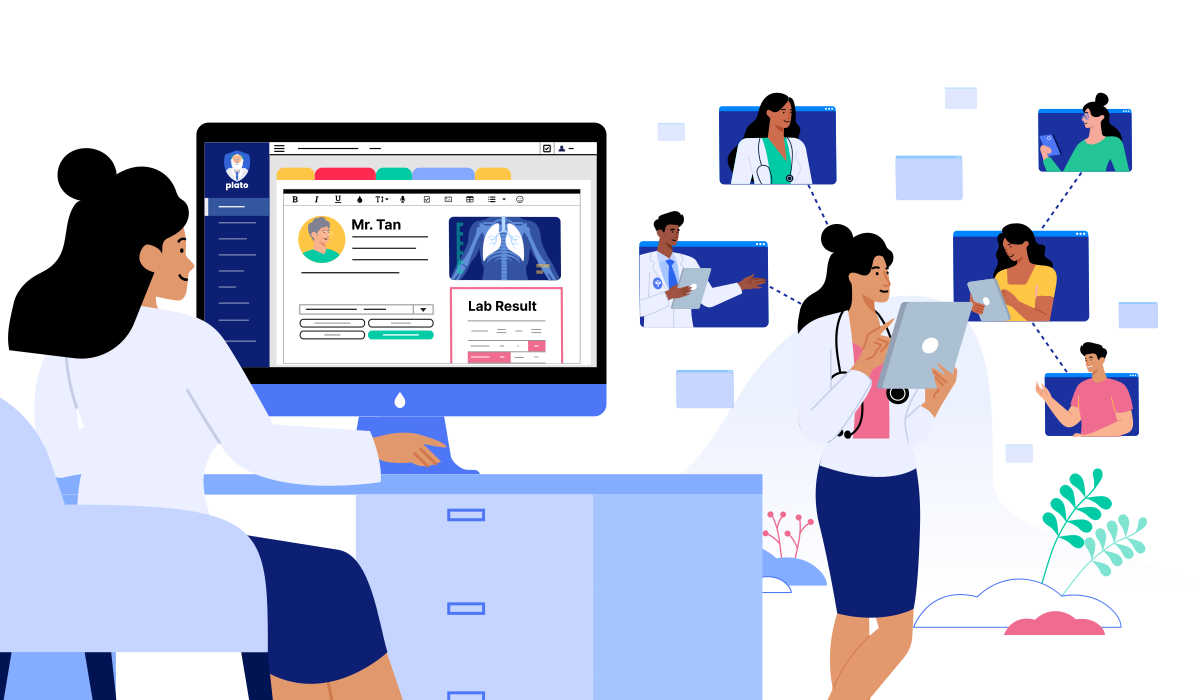
Note sharing is a form of patient-centric care that strengthens community ties. Shared notes make it convenient for patients and caregivers to recall what was discussed in visits anytime, anywhere. In the OpenNotes pilot study by Delbanco et al. (2012), a patient feedback that after using shared notes, she became more knowledgeable going into her visits and felt more confident asking her provider precise questions. As a result, her time spent in visits became more productive. Shared notes became valuable to her care, to the extent that her loyalty to a healthcare provider depended on whether they had shared notes available at their practice (Anselmo & Chimowitz, 2016).
Common Use Cases for Sharing Notes
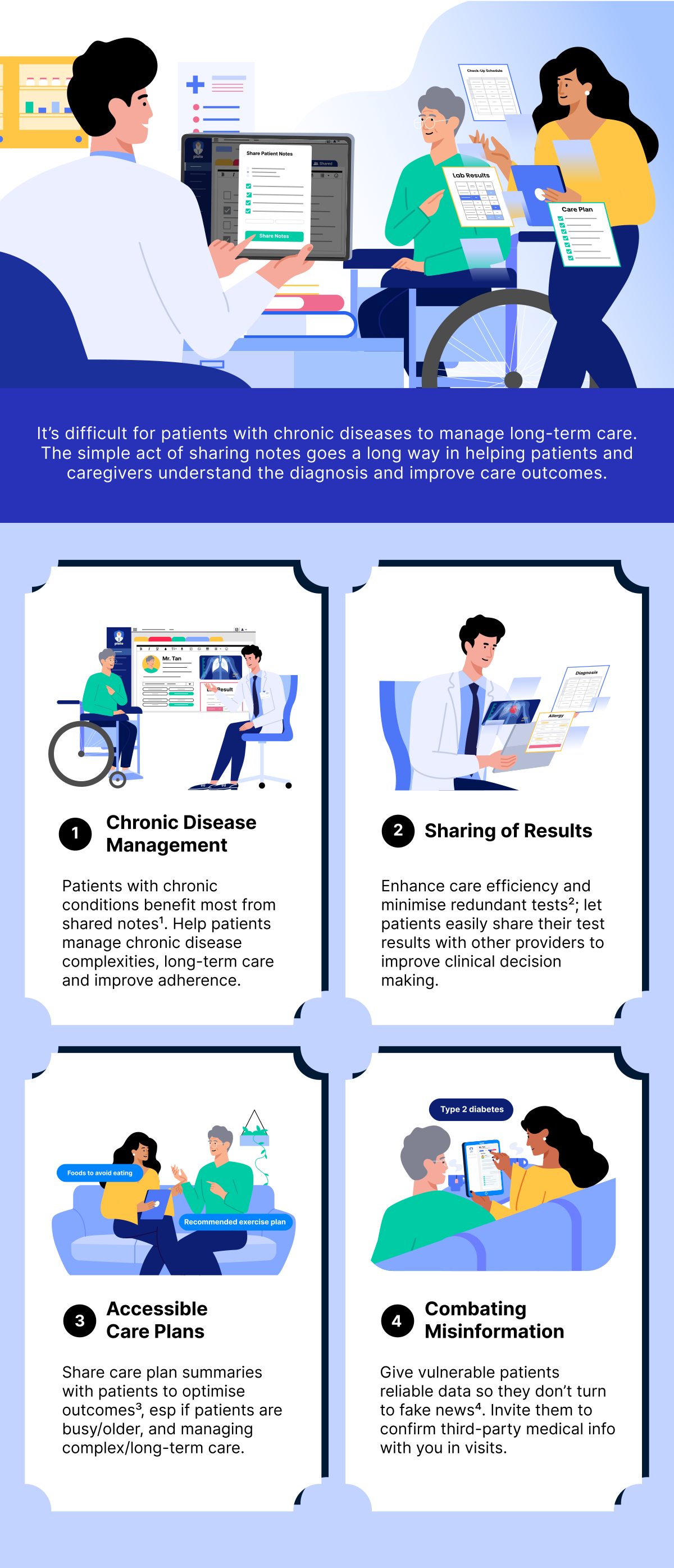
1. Chronic Disease Management
Patients with chronic, complex or long-term conditions benefit the most from shared notes (Zanaboni et al., 2020). Chronic diseases can be overwhelming and confusing for patients. For example, a patient with multiple chronic diseases will need to manage their appointments, consult different clinicians, undergo various treatments and take an assortment of medicines—all of which can be exhausting. When doctors share notes with their patients, it helps them remember what was discussed in visits, better understand the next steps in their care journey, commit to their treatments, and understand how their chronic diseases may be linked. Research by Maly et al. (1999) found that after patients with chronic disease were given copies of their progress notes, they became more satisfied with their physician’s care and reported an 8.3% improvement in their overall health condition.
2. Sharing of Results
When patients have a shared record of their test results, it improves efficiency in care and minimises unneeded tests, which inflates healthcare expenses. For example, imagine your patient has been experiencing dizziness and intense headaches. You suspect he may have cerebrovascular disease. You require his lipid profile as part of your clinical investigation. Thanks to shared notes, he retrieves his blood test results from his health screening earlier this year on his smartphone. You review the findings to get an accurate picture of your patient’s condition. Without shared notes, your patient would have had to undergo another blood test, which involves fasting and returning to your clinic to get his blood drawn. This is tedious. It would take days before you receive the results, causing a delay in his diagnosis and care. With shared notes, your patient avoids a redundant blood test and lets you deliver care more accurately and efficiently (Vreeland et al., 2016).
3. Treatment Plans
Treatment plans can be difficult for patients and caregivers to remember, especially if they are busy working adults, getting on in age, or if the plan involves complex or long-term chronic care management. Thankfully, written notes can help patients and caregivers better adhere to care plans (Kessels, 2003). Imagine you have a patient with type 2 diabetes. You share with her key details about her care plan, including types of food to avoid eating, suggested exercise routines, and more information about how diabetes may increase her risk of other types of diseases. By educating your patient about her care, she is more aware about her medical condition and the importance of looking after her health. Sharing care plan summaries help your patients and their caregivers better manage care at home, so they maximise treatment benefits.
4. Combating Misinformation
Older adults are some of the largest consumers of healthcare and commonly get their health data online. Unfortunately, they are also the most likely to believe and share medical misinformation (Brashier & Schacter, 2020; Ohlheiser, 2020; Turner et al., 2018). When patients apply unproven interventions to their care treatment, it affects their care progress and outcome. Support vulnerable patients by giving them reliable data from the start so they avoid turning to dubious online sources. Meet your patients’ and caregivers’ information needs by sharing reliable notes, and invite them to confirm third-party medical information with you in visits.
How to Share Notes with Patients
GPs can share notes with their patients directly from their Plato EMR. Note sharing in Plato works on a select basis: providers decide what notes are shared with their patients. Doctors new to note sharing usually start by sharing key details on their patient’s diagnosis, a summary of their care plan and direct lab/radiology results. As you grow comfortable sharing notes, consider sharing select folders from your EMR with patients, such as their medical history. The clinician who shares the note owns the note. Unlike email and messaging services, Plato lets doctors fully control who has access to their shared notes at all times—providers can rescind access to shared notes, if they wish. Patients can securely view their shared notes as read-only on a simple and attractive web-based interface made by Plato. Patients need not download any app or use a third-party patient portal.
Start Sharing Notes with Patients
Share Your First Note
Are you ready to introduce note sharing with patients at your clinic? Before you start, it’s important for your clinic to establish protocols and policies to best manage this practice. Notes that you share with patients should be organised, relevant and helpful (Strum, 2019). When you use best practices to share notes, there should be minimal changes to your workload (Delbanco et al., 2012; Scandurra et al., 2015).
Step 1: Educate Staff
- Explain the purpose and benefits of sharing notes for patients and clinicians (Miralles et al., 2021).
- Decide who can create, share and update notes. Will all staff who author notes be able to share notes by default? (Yu et al., 2017) In Plato, you can set access restrictions to control who can share notes.
- Share notes in a timely manner. Set up follow-up guidelines if necessary, e.g. invitations and reminders to read notes (AAN, n.d.)
- Address practice-specific/FAQs by clinicians (Miralles et al., 2021; OpenNotes, n.d.-b). E.g. How will staff manage patients’ questions or requests for updates about their shared notes? Let patients know that they can discuss questions in the next visit. If they have an urgent question or update, they can teleconsult with their clinician nurse using PlatoConnect.
Helpful Resources:
-
Benefits of note sharing for patients and clinicians
-
How to address common questions by clinicians about note sharing
Step 2: Educate Patients
- Explain the purpose and benefits of sharing notes for patients (Miralles et al., 2021). Consider adding a page on your clinic’s website about shared notes for patients - this may also attract patients to your practice.
- Invite patients to read their notes. Improve patient engagement and care outcomes by informing patients when their shared notes are available (Mafi et al., 2016)
- Address FAQs by patients (OpenNotes, n.d.-c). E.g. How can patients get the most out of their shared notes? Encourage patients to read their notes after their visit. This will help them better understand their condition and the next steps in their care journey. If the note includes prescribed medicine, the patient should check that what they are taking matches the note’s content, including dosage.
Helpful Resources:
-
Introduce shared notes to patients and explain how it works
-
Inform patients when a new shared note is available
-
Explain how patients can access their notes
-
Address FAQs by patients
Step 3: Set Documentation Standards
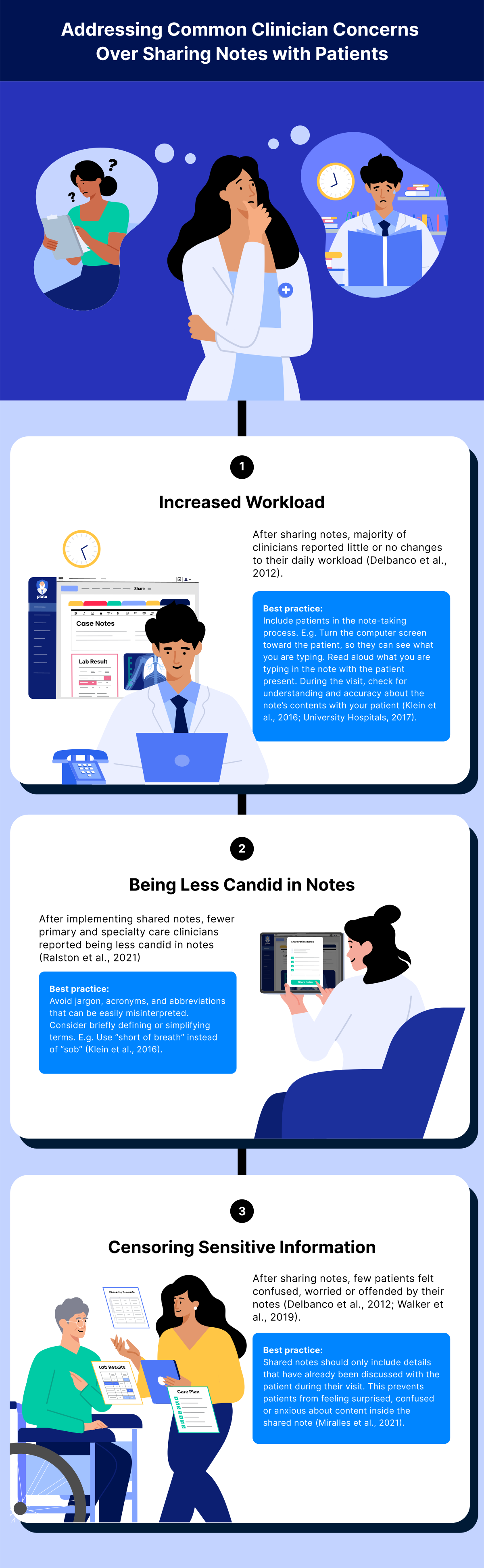
- Involve patients in the note-taking process. Minimise questions post-visit by checking for understanding and accuracy about the note’s contents with your patient during their consultation (Klein et al., 2016; University Hospitals, 2017).
- Shared notes should only include details already discussed in the visit (Miralles et al., 2021).Notes should never contain information that has not been discussed with the patient. This prevents patients from feeling surprised, confused or anxious about the content of any note.
- Never oversimplify your notes. You may minimally adapt your notes to support patients with limited health literacy, but maintaining accuracy for record-keeping is vital (Cruz, n.d.).
- Avoid jargon, acronyms, and abbreviations that can be easily misinterpreted by patients. For example, use “short of breath” instead of “sob” (Klein et al., 2016).
- Generally, notes should be positive, supportive and give a balanced perspective(Klein et al., 2016).
Helpful Resources:
-
Suggestions to keep in mind when drafting notes
-
Suggestions for implementing shared notes at your clinical practice
Start Sharing Notes
Still Concerned about Sharing Notes?
Are you still unsure about sharing your first note? Some clinicians anticipate an increase in workload or major changes to their workflow from sharing notes. However, research shows this does not happen. After clinicians share notes, their concerns tend to diminish and they are likely to continue sharing notes (Delbanco et al., 2012; DesRoches et al., 2020; Ralston et al., 2021; Scandurra et al., 2015). Common clinical concerns include an increase in workload (longer visits, more questions from patients, taking longer to create notes), being less candid in notes, and censoring information to avoid upsetting or worrying patients. Often, these considerations are put to rest after clinicians start note sharing. When you manage shared notes using best practices, there should be minimal changes to your workflow. For starters, you can consider sharing summaries, care plans and direct lab/radiology results.
Clinicians who agreed sharing notes with patients was beneficial overall
- Before sharing notes
- 29%
- After sharing notes
- 71%
Share Your First Note
CHAPTER 4
Share Notes with Providers
Why Share Notes with Your Colleagues?
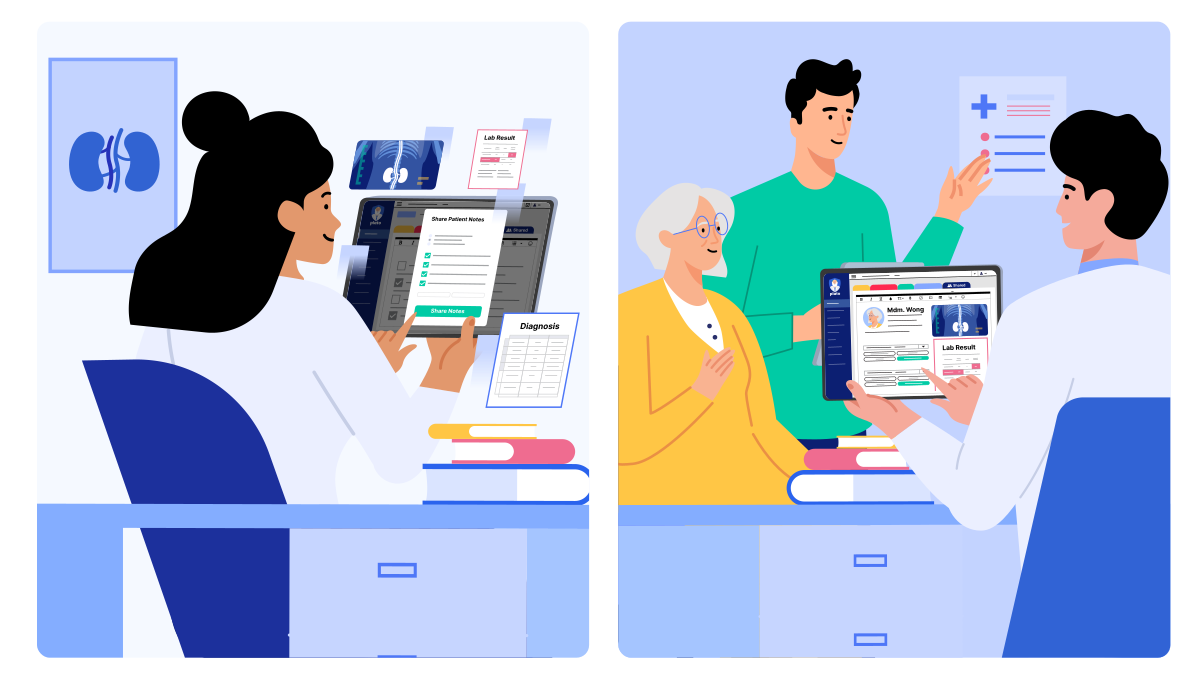
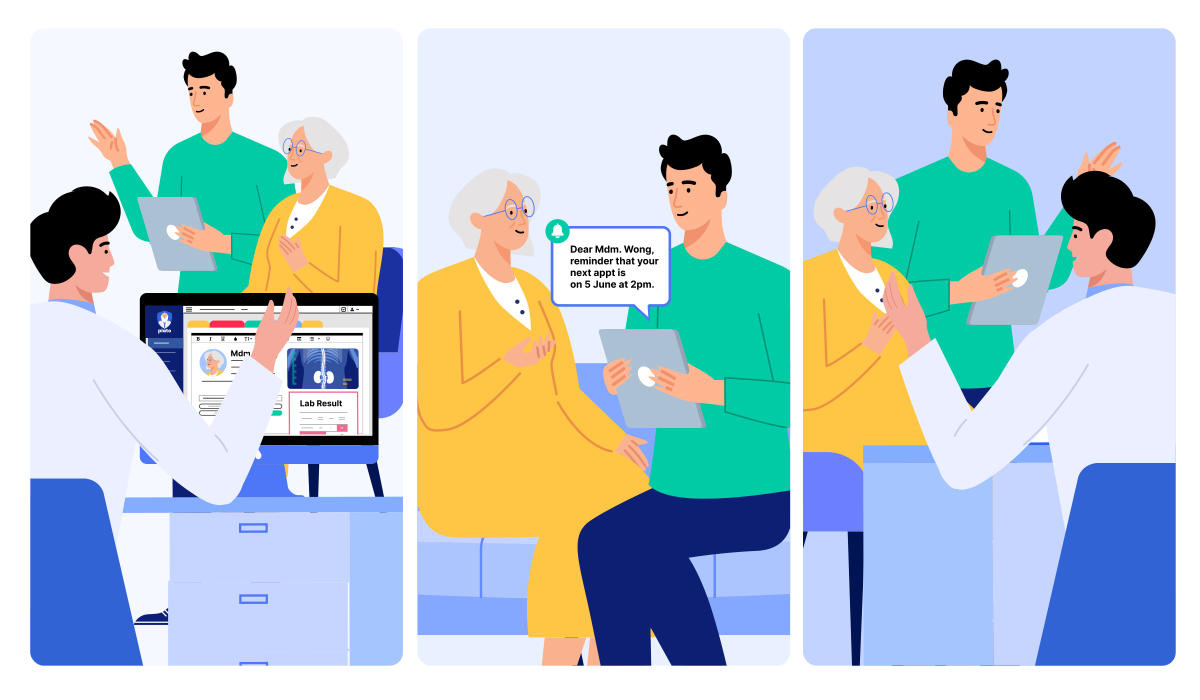
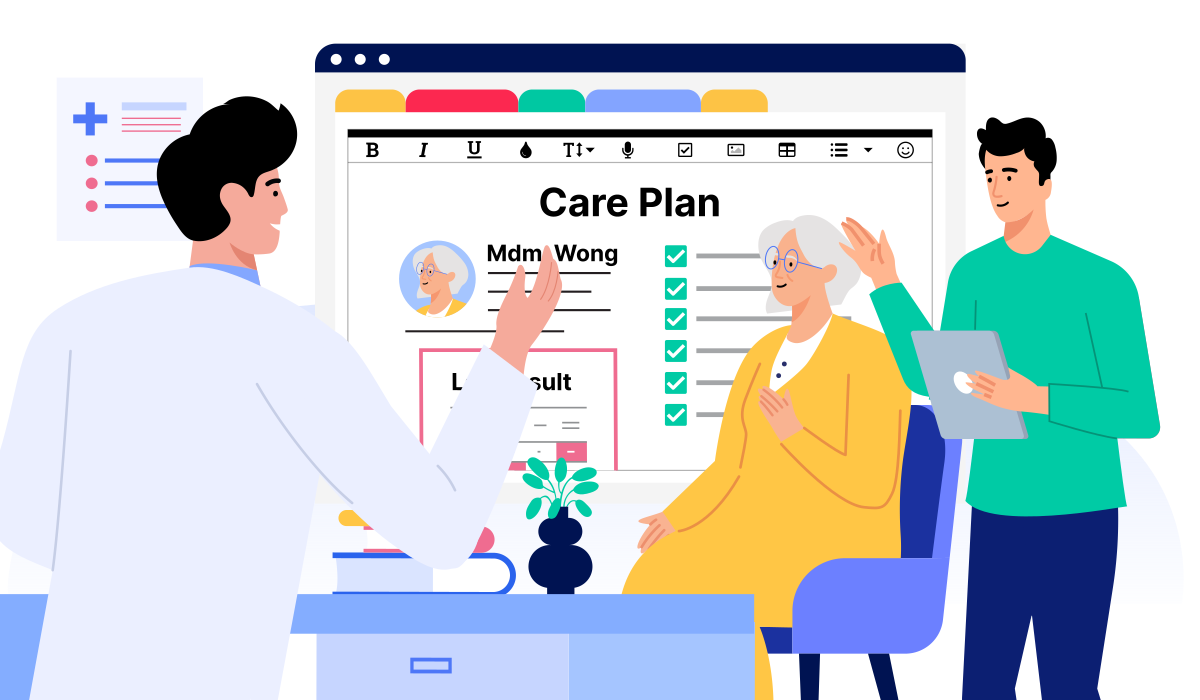
Your 60-year-old patient, Mdm Wong, has come to collect her blood test results. You’ve advised her to take a blood test regularly as part of her preventive care. Since Mdm Wong has type 2 diabetes, she has a higher risk of developing other diseases with age. Her latest result suggests she may have early stage chronic kidney disease. You decide to refer her to your colleague, Dr Amara, who is a nephrologist, for further evaluation. As usual, you manually draft a referral letter and copy-paste your notes for context, but the process is slow. Is there a faster way to do this? you ponder.
With shared notes, there is. Now, you can securely share select folders from your EMR with Dr Amara. In a few clicks, Dr Amara receives the context she needs for decision making, such as key data on Mdm Wong’s diabetes and test results. Following up on care becomes easier too. Instead of manually sharing updates, Dr Amara can share her notes with you using Plato, so you’re instantly updated on Mdm Wong’s kidney condition.
By the time Mdm Wong and her caregiver return to your clinic for her follow-up, you’re already up to speed on her kidney diagnosis and treatment. Neither Mdm Wong nor her caregiver has to act as the “messenger” in her care, manually passing on information between healthcare providers. They are impressed by how well you’ve coordinated Mdm Wong’s care, which boosts their confidence and trust in you as her primary care provider.
Note sharing does more than just simplify teamwork and tighten the collaboration loop. Sharing key data with colleagues improves efficiency in care by automating work, reducing manual data entry and closing knowledge gaps in patient care. As a result, patients leave your GP clinic feeling more satisfied, assured and loyal to your practice.
1. Drive Patient Loyalty
GPs often work together with specialists and allied health professionals to deliver shared care. Notes sharing lets GPs give referral partners a full picture of their patient’s health easily, and makes it simple for GPs to follow up on their patient’s shared care. According to a study by Press Ganey (2019), good provider teamwork is the greatest predictor of patient loyalty. Patients are more likely to recommend your GP practice when care is safe and well-coordinated.
Collaborative care teams that share key data to improve communication and teamwork are more likely to experience the following benefits (D’Amore et al., 2021;Janssen et al., 2020; Kane et al., 2013; Liu et al., 2021; Morley & Cashell, 2017; O’Hanlon, 2021; Rosen et al., 2018):
Boost patient loyalty: When clinicians in the same care team contradict one another, it confuses patients over which doctor to trust. On the other hand, when clinicians work well together, it increases the trust patients have in their healthcare providers. Since patient trust is a key factor in determining patient loyalty, GPs who share notes are more likely to build a loyal patient base and establish good rapport with their community.
Higher quality of care: Care team members that effectively share key data make better clinical decisions. They are empowered to deliver accurate and timely diagnosis and treatments, which improves patient safety and care quality. When your patients’ health improves under your care, their trust in and loyalty to your practice also grows.
Improved job satisfaction: Good communication in collaboration strengthens referrer relationships, enhances the GP’s role as the primary care provider and improves work morale. When GPs feel satisfied by their work, they will feel motivated to continue establishing good collegial and community relationships around their practice.
Minimise healthcare costs: When providers share key data about their patient’s medical condition and history, it minimises unnecessary tests, procedures and clinical admissions, which can balloon a patient’s healthcare expenses. Patients trust providers who prioritise delivering safe, efficient and effective care.
Suggestions on sharing notes in care teams:
- Take the lead by sharing information from key visits that you think are critical for colleagues to review firsthand.
- Invite team members to share key summary notes/test results to give context for better decision making and care.
- Share lab/radiology results to minimise redundant tests.
2. Improve Primary Care
GPs are often the first point of contact for patients in their healthcare journey. When GPs have a full picture of their patient’s health, they are better positioned to make quality care decisions and deliver preventive care. For example, if a GP knows their patient has type 2 diabetes, they will be more aware of their patient’s risk in developing other diseases with age. They can then recommend routine checkups, so diseases are promptly diagnosed and treated. With shared notes, GPs rely on concrete data, instead of guesswork, to make accurate decisions in primary care. Following up on care also becomes easier with shared notes: GPs receive patient updates quicker from referral partners, thereby enhancing their role as the primary care provider.
Suggestions on sharing notes to improve primary care:
- Share a summary of your patient’s medical condition and history with colleagues, so they can get a full picture of your patient's condition.
- Share your patient’s medicine or allergy lists with colleagues to tighten the collaboration loop and prevent medical errors.
- Invite colleagues to share updates on your patient’s diagnosis/care, including direct lab/radiology results. Avoid relying on patients to bring copies of or self-report results, which is prone to recall bias.
3. Speed Up the Referral Process
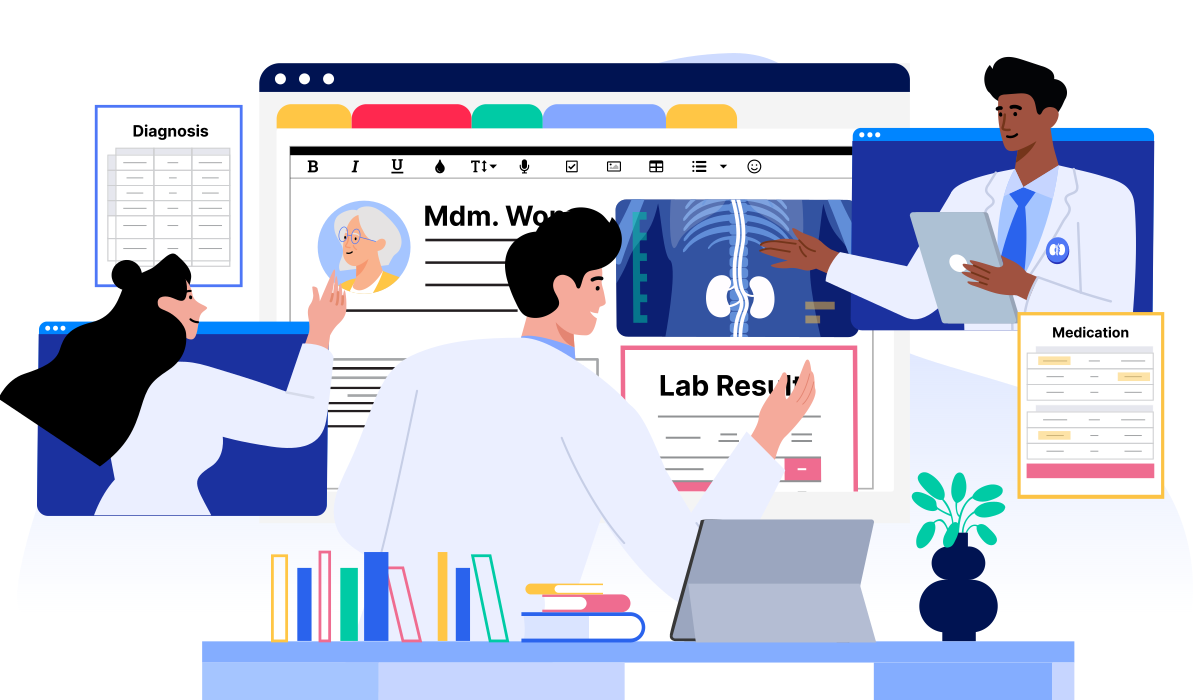
For GPs, time is of the essence. Each day, you see a high volume of patients. Where can you carve out the time to focus more on patients? Research by Oxford Internet Institute found that 44% of all admin tasks in GP clinics can either be mostly, or entirely, automated to improve care quality and work satisfaction (Willis et al., 2020). Automating repetitive and admin-intensive tasks, like the referral process, saves time. Normally, you might manually find, collate and draft information for your referral letters. To add context, you’d probably copy-paste your notes inside. Overall, this process is slow and tedious. Why not automate work by sharing notes instead? in a few clicks, share select folders containing key patient data with your colleagues, without leaving your EMR. If you use Plato, you don’t even have to draft referral letters from scratch. Accelerate drafting by using templates, then share key folders with your referral letter.
Suggestions on sharing notes to speed up referrals:
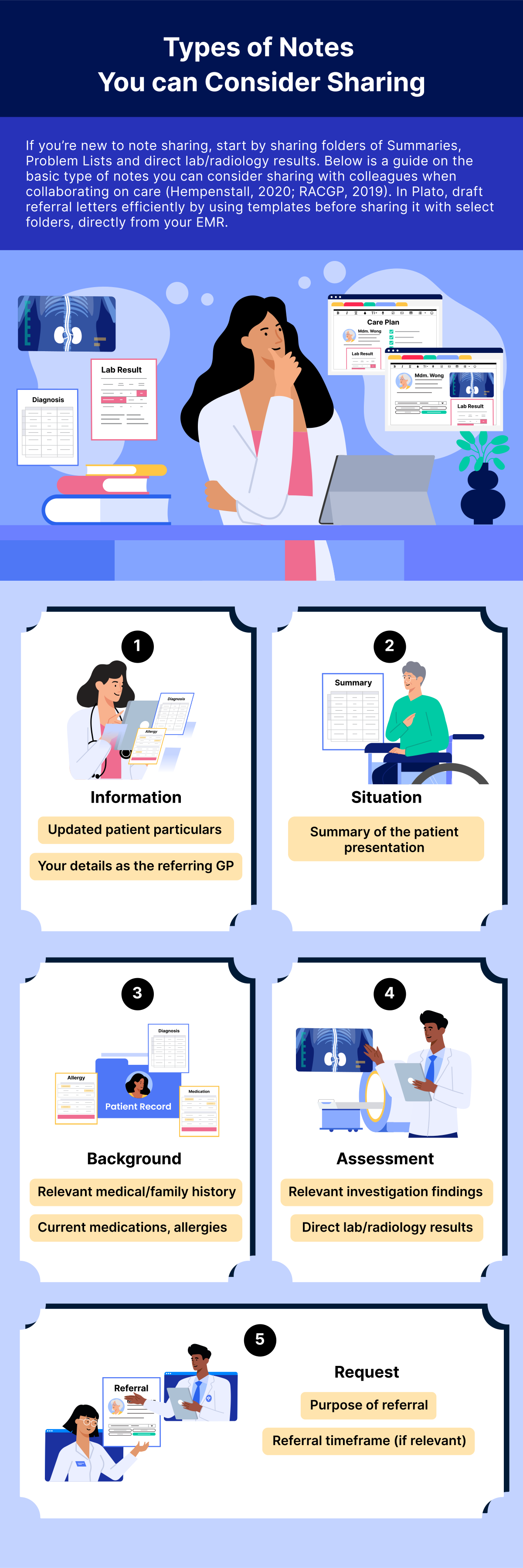
- Improve efficiency by sharing select folders with colleagues, directly from your EMR. Remove the hassle of copy-pasting your notes into referral letters.
- Share notes with your referral letter. In Plato, you can use a template to quickly draft letters and minimise repetitive data entry.
- Avoid redundant tests by inviting colleagues to share key summary notes, including test results, with you.
Start Sharing Notes with Colleagues
Share Your First Note
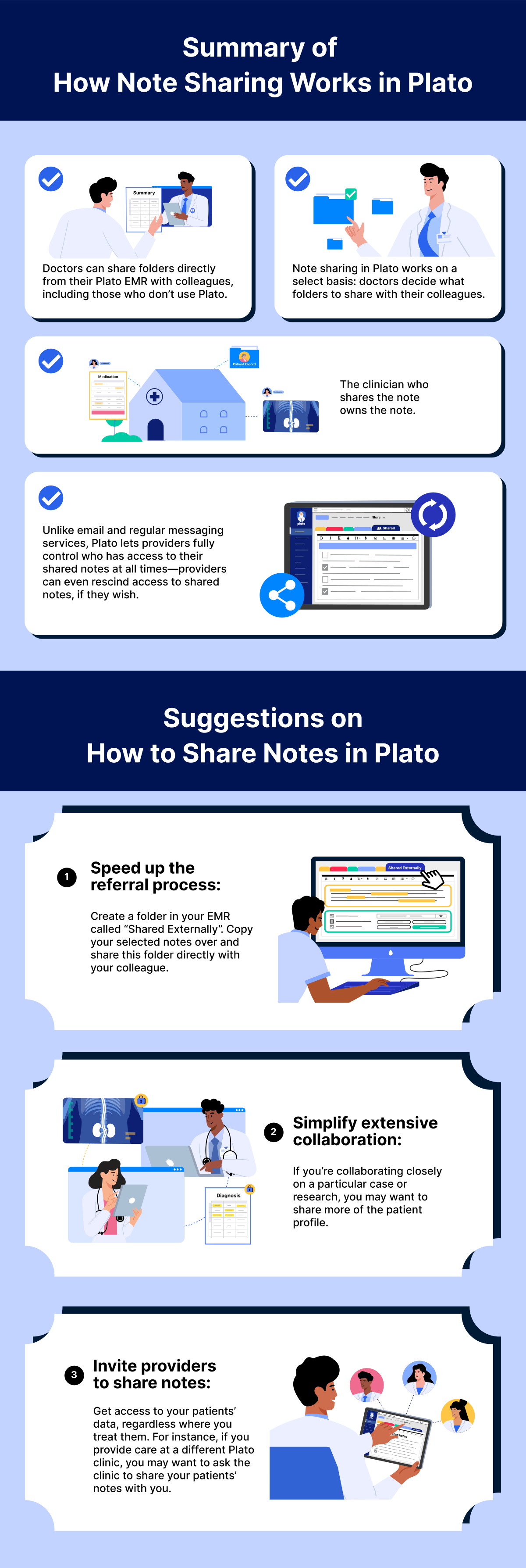
How are Notes Shared Between Providers in Plato?
Note sharing in Plato works on a select basis: providers decide what folders to share with colleagues. Many healthcare providers start by sharing folders of Summaries, Problem Lists or direct lab/radiology results. The clinician who shares the note owns the note. Unlike normal email and messaging services, Plato lets providers fully control who has access to their shared notes at all times—providers can even rescind access to shared notes, if they wish.
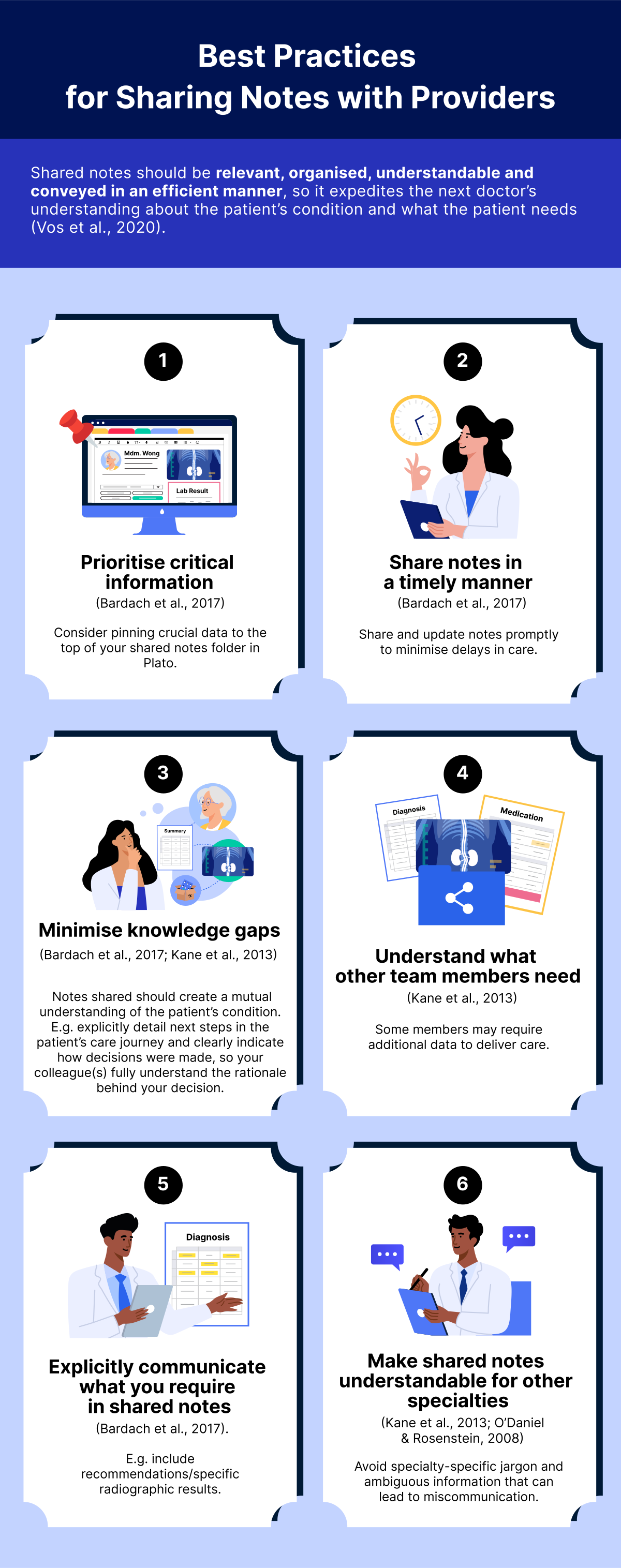
Tip on Drafting Notes
Nurses can help doctors draft notes to optimise resource allocation and simultaneously become stakeholders of note sharing in Plato. This is similar to what’s commonly done at multidisciplinary team meetings, where an experienced nurse is tasked with taking notes that are subsequently reviewed and approved by the lead clinician (Kane et al., 2013).
Start Sharing Notes
On a Final Note
Thank you for reading Plato’s whitepaper. We hope you enjoyed “The Collaborative GP Clinic” by Plato and that it’s given you the tools to effectively engage other patients, caregivers and providers.
Ready to share your first note, but not using Plato? Find out more: Book a demo.
Already using Plato? Share your first note.
References
AAN. (n.d.). Sharing Information Electronically With Patients. American Academy of Neurology. Retrieved 2021, from https://www.aan.com/tools-and-resources/practicing-neurologists-administrators/health-information-technology/electronic-health-records/notes-release-toolkit/
Accenture. (2012). Most Patients Want to Self-Manage Healthcare Online, Accenture Survey Finds. https://newsroom.accenture.com/industries/health-public-service/most-patients-want-to-self-manage-healthcare-online-accenture-survey-finds.htm
Anselmo, M., & Chimowitz, H. (2016). Patient Access to Medical Notes in Primary Care: Improving Engagement and Safety. AHRQ. https://www.ahrq.gov/sites/default/files/wysiwyg/professionals/quality-patient-safety/patient-family-engagement/pfeprimarycare/opennotes-1.pdf
Bardach, S. H., Real, K., & Bardach, D. R. (2017). Perspectives of healthcare practitioners: An exploration of interprofessional communication using electronic medical records. Journal of Interprofessional Care, 31(3), 300–306. https://doi.org/10.1080/13561820.2016.1269312
Bell, S. K., Folcarelli, P., Fossa, A., Gerard, M., Harper, M., Leveille, S., Moore, C., Sands, K. E., Sarnoff Lee, B., Walker, J., & Bourgeois, F. (2018). Tackling Ambulatory Safety Risks Through Patient Engagement. Journal of Patient Safety. Published. https://doi.org/10.1097/pts.0000000000000494
Brashier, N. M., & Schacter, D. L. (2020). Aging in an Era of Fake News. Current Directions in Psychological Science, 29(3), 316–323. https://journals.sagepub.com/doi/10.1177/0963721420915872#_i9
Consult QD. (2018). Nursing’s Role in Today’s Patient Experience. Cleveland Clinic. https://consultqd.clevelandclinic.org/nursings-role-in-todays-patient-experience/
Cruz, J. S. (n.d.). Benefits of Sharing Notes With Patients. Today’s Geriatric Medicine. https://www.todaysgeriatricmedicine.com/news/ex_101416.shtml
D’Amore, J. D., McCrary, L. K., Denson, J., Li, C., Vitale, C. J., Tokachichu, P., Sittig, D. F., McCoy, A. B., & Wright, A. (2021). Clinical data sharing improves quality measurement and patient safety. Journal of the American Medical Informatics Association, 28(7), 1534–1542. https://academic.oup.com/jamia/article/28/7/1534/6169467
Deloitte. (2013). Digital collaboration: Delivering innovation, productivity and happiness. https://www2.deloitte.com/content/dam/Deloitte/se/Documents/technology-media-telecommunications/deloitte-digital-collaboration.pdf
Delbanco, T., Walker, J., Bell, S. K., Darer, J. D., Elmore, J. G., Farag, N., Feldman, H. J., Mejilla, R., Ngo, L., Ralston, J. D., Ross, S. E., Trivedi, N., Vodicka, E., & Leveille, S. G. (2012). Inviting Patients to Read Their Doctors’ Notes: A Quasi-experimental Study and a Look Ahead. Annals of Internal Medicine, 157(7), 461. https://doi.org/10.7326/0003-4819-157-7-201210020-00002
DesRoches, C. M., Leveille, S., Bell, S. K., Dong, Z. J., Elmore, J. G., Fernandez, L., Harcourt, K., Fitzgerald, P., Payne, T. H., Stametz, R., Delbanco, T., & Walker, J. (2020). The Views and Experiences of Clinicians Sharing Medical Record Notes With Patients. JAMA Network Open, 3(3). https://doi.org/10.1001/jamanetworkopen.2020.1753
Desai, A. D., Jacob-Files, E. A., Wignall, J., Wang, G., Pratt, W., Mangione-Smith, R., & Britto, M. T. (2018). Caregiver and Health Care Provider Perspectives on Cloud-Based Shared Care Plans for Children With Medical Complexity. Hospital Pediatrics, 8(7), 394–403. https://doi.org/10.1542/hpeds.2017-0242
Engelbart, C. (1962). Augmenting Human Intellect: A Conceptual Framework - 1962 (AUGMENT,3906,) -. Doug Engelbart Institute. https://web.archive.org/web/20110504035147/https://www.dougengelbart.org/pubs/augment-3906.html
Esch, T., Mejilla, R., Anselmo, M., Podtschaske, B., Delbanco, T., & Walker, J. (2016). Engaging patients through open notes: an evaluation using mixed methods. BMJ Open, 6(1), e010034. https://doi.org/10.1136/bmjopen-2015-010034
Foote, K. D. (2017). A Brief History of Cloud Computing. DATAVERSITY. https://www.dataversity.net/brief-history-cloud-computing/
Fossa, A. J., Bell, S. K., & DesRoches, C. (2018). OpenNotes and shared decision making: a growing practice in clinical transparency and how it can support patient-centered care. Journal of the American Medical Informatics Association, 25(9), 1153–1159. https://doi.org/10.1093/jamia/ocy083
Forrester Research. (2020). The Total Economic ImpactTM Of Google G Suite. Forrester. https://services.google.com/fh/files/blogs/total_economic_impact_gsuite_forrester.pdf
Fowles, J. B., Kind, A. C., Craft, C., Kind, E. A., Mandel, J. L., & Adlis, S. (2004). Patients’ Interest in Reading Their Medical Record. Archives of Internal Medicine, 164(7), 793. https://doi.org/10.1001/archinte.164.7.793
Frandsen, B. R., PhD, Joynt, K. E., MD, Rebitzer, J. B., PhD, & Jha, A. K., MD. (2015). Care Fragmentation, Quality, and Costs Among Chronically Ill Patients. AJMC. https://www.ajmc.com/view/care-fragmentation-quality-costs-among-chronically-ill-patients
Gerard, M., Fossa, A., Folcarelli, P. H., Walker, J., & Bell, S. K. (2017). What Patients Value About Reading Visit Notes: A Qualitative Inquiry of Patient Experiences With Their Health Information. Journal of Medical Internet Research, 19(7), e237. https://doi.org/10.2196/jmir.7212
Gewirtz, D. (2018). Alas, poor Lotus/IBM Notes, we knew ye well. ZDNet. https://www.zdnet.com/article/alas-poor-lotusibm-notes-we-knew-ye-well/
Hempenstall, A. (2020). How to write a good referral. Onthewards. https://onthewards.org/how-to-write-a-good-referral/
Jackson, S. L., Mejilla, R., Darer, J. D., Oster, N. V., Ralston, J. D., Leveille, S. G., Walker, J., Delbanco, T., & Elmore, J. G. (2014). Patients Who Share Transparent Visit Notes With Others: Characteristics, Risks, and Benefits. Journal of Medical Internet Research, 16(11), e247. https://doi.org/10.2196/jmir.3363
Janssen, M., Fluit, C. R. M. G., Sagasser, M. H., Kusters, L. H. J., Scherpbier-de Haan, N. D., & de Graaf, J. (2020). Competencies for collaboration between general practitioners and medical specialists: a qualitative study of the patient perspective. BMJ Open, 10(7), e037043. https://doi.org/10.1136/bmjopen-2020-037043
Kane, B. T., Toussaint, P. J., & Luz, S. (2013). Shared decision making needs a communication record. Proceedings of the 2013 Conference on Computer Supported Cooperative Work - CSCW ’13. Published. https://www.researchgate.net/publication/226691111_Information_Sharing_at_Multidisciplinary_Medical_Team_Meetings
Kessels, R. P. C. (2003). Patients’ memory for medical information. JRSM, 96(5), 219–222. https://www.ncbi.nlm.nih.gov/pmc/articles/PMC539473/
Klein, J. W., Jackson, S. L., Bell, S. K., Anselmo, M. K., Walker, J., Delbanco, T., & Elmore, J. G. (2016). Your Patient Is Now Reading Your Note: Opportunities, Problems, and Prospects. The American Journal of Medicine, 129(10), 1018–1021. https://doi.org/10.1016/j.amjmed.2016.05.015
Liu, S., Li, G., Liu, N., & Hongwei, W. (2021). The Impact of Patient Satisfaction on Patient Loyalty with the Mediating Effect of Patient Trust. INQUIRY: The Journal of Health Care Organization, Provision, and Financing, 58, 004695802110072. https://www.ncbi.nlm.nih.gov/pmc/articles/PMC8040618/
Mafi, J. N., Mejilla, R., Feldman, H., Ngo, L., Delbanco, T., Darer, J., Wee, C., & Walker, J. (2016). Patients learning to read their doctors’ notes: the importance of reminders. Journal of the American Medical Informatics Association, 23(5), 951–955. https://academic.oup.com/jamia/article/23/5/951/2379793
Maly, R. C., Bourque, L. B., & Engelhardt, R. F. (1999). A randomized controlled trial of facilitating information giving to patients with chronic medical conditions: effects on outcomes of care. The Journal of family practice, 48(5), 356–363. https://pubmed.ncbi.nlm.nih.gov/10334612/
Martin, D. B. (2015). “Write It Down Like You Told Me”: Transparent Records and My Oncology Practice. Journal of Oncology Practice, 11(4), 285–286. https://doi.org/10.1200/jop.2014.003095
Michael, M., & Bordley, C. (1982). Do Patients Want Access to Their Medical Records? Medical Care, 20(4), 432–435. https://www.jstor.org/stable/3764021
Miliard, M. (2015). OpenNotes: “This is not a software package, this is a movement.” Healthcare IT News. https://www.healthcareitnews.com/news/opennotes-not-software-package-movement
Miralles, P., DesRoches, C., & Brown, M. (2021). Sharing Clinical Notes With Patients. American Medical Association. https://www.ama-assn.org/system/files/2021-04/sharing-clinical-notes-with-patients-toolkit.pdf
Morley, L., & Cashell, A. (2017). Collaboration in Health Care. Journal of Medical Imaging and Radiation Sciences, 48(2), 207–216. https://doi.org/10.1016/j.jmir.2017.02.071
Moscovitch, B. (2020). Americans Want Federal Government to Make Sharing Electronic Health Data Easier. The Pew Charitable Trusts. https://www.pewtrusts.org/en/research-and-analysis/articles/2020/09/16/americans-want-federal-government-to-make-sharing-electronic-health-data-easier
O’Daniel M, Rosenstein AH. Professional Communication and Team Collaboration. In: Hughes RG, editor. Patient Safety and Quality: An Evidence-Based Handbook for Nurses. Rockville (MD): Agency for Healthcare Research and Quality (US); 2008 Apr. Chapter 33. Available from: https://www.ncbi.nlm.nih.gov/books/NBK2637/
O’Hanlon, S. (2021). Why data sharing matters for excellent care. NHS Confederation. https://www.nhsconfed.org/articles/why-data-sharing-matters-excellent-care
Ohlheiser, A. (2020). Older users share more misinformation. Your guess why might be wrong. MIT Technology Review. https://www.technologyreview.com/2020/05/26/1002243/misinformation-older-adults/
OpenNotes. (n.d.-a). OpenNotes. Retrieved 2021, from https://www.opennotes.org/
OpenNotes. (n.d.-b). Effects of Open Notes: FAQs for Clinicians. Retrieved 2021, from https://www.opennotes.org/effects-of-opennotes-faqs/
OpenNotes. (n.d.-c). Reading Your Notes: FAQs for Patients. Retrieved 2021, from https://www.opennotes.org/reading-your-notes-faqs-for-patients/
Press Ganey. (2019). A Unified Approach to Driving Patient and Physician Loyalty. https://healthcare.pressganey.com/2019-Loyalty
RACGP. (2019). Referring to other medical specialists: A guide for ensuring good referral outcomes for your patients. Royal Australian College of General Practitioners. https://www.racgp.org.au/FSDEDEV/media/documents/Running%20a%20practice/Practice%20resources/Referring-to-other-medical-specialists.pdf
Ralston, J. D., Yu, O., Penfold, R. B., Gundersen, G., Ramaprasan, A., & Schartz, E. M. (2021). Changes in Clinician Attitudes Toward Sharing Visit Notes: Surveys Pre-and Post-Implementation. Journal of General Internal Medicine. Published. https://www.ncbi.nlm.nih.gov/pmc/articles/PMC8061150/
Rayner, J., Khan, T., Chan, C., & Wu, C. (2020). Illustrating the patient journey through the care continuum: Leveraging structured primary care electronic medical record (EMR) data in Ontario, Canada using chronic obstructive pulmonary disease as a case study. International Journal of Medical Informatics, 140, 104159. https://www.sciencedirect.com/science/article/abs/pii/S1386505619310743
Richman, L. S., & Slovak, J. (1987). SOFTWARE CATCHES THE TEAM SPIRIT New computer programs may soon change the way groups of people work together -- and start delivering the long-awaited payoff from office automation. - June 8, 1987. Fortune Magazine. https://money.cnn.com/magazines/fortune/fortune_archive/1987/06/08/69109/index.htm
Rosen, M. A., DiazGranados, D., Dietz, A. S., Benishek, L. E., Thompson, D., Pronovost, P. J., & Weaver, S. J. (2018). Teamwork in healthcare: Key discoveries enabling safer, high-quality care. American Psychologist, 73(4), 433–450. https://doi.org/10.1037/amp0000298
Ross, S. E., Moore, L. A., Earnest, M. A., Wittevrongel, L., & Lin, C. T. (2004). Providing a Web-based Online Medical Record with Electronic Communication Capabilities to Patients With Congestive Heart Failure: Randomized Trial. Journal of Medical Internet Research, 6(2), e12. https://www.ncbi.nlm.nih.gov/pmc/articles/PMC1550594/
Sada, Y., Street, Jr., R. L., Singh, H., Shada, R., & Naik, A. D. (2011). Primary care and communication in shared cancer care: A Qualitative Study. The American Journal of Managed Care, 17(4), 259–265. https://www.ncbi.nlm.nih.gov/pmc/articles/PMC3693186/
Scandurra, I., Jansson, A., Forsberg-Fransson, M. L., & ÅLander, T. (2015). Is ‘Patient’s Online Access to Health Records’ a Good Reform? – Opinions from Swedish Healthcare Professionals Differ. Procedia Computer Science, 64, 964–968. https://doi.org/10.1016/j.procs.2015.08.614
Scherbring, M. (2002). Effect of Caregiver Perception of Preparedness on Burden in an Oncology Population. Oncology Nursing Forum, 29(6), E70–E76. https://doi.org/10.1188/02.onf.e70-e76
Shenkin, B. N., & Warner, D. C. (1973). Giving the Patient His Medical Record: A Proposal to Improve the System. New England Journal of Medicine, 289(13), 688–692. https://doi.org/10.1056/nejm197309272891311
Strum, S. B. (2019). Patients Managing Medications and Reading Their Visit Notes. Annals of Internal Medicine. https://www.acpjournals.org/doi/10.7326/L19-0598
Tapuria, A., Porat, T., Kalra, D., Dsouza, G., Xiaohui, S., & Curcin, V. (2021). Impact of patient access to their electronic health record: systematic review. Informatics for Health and Social Care, 46(2), 194–206. https://doi.org/10.1080/17538157.2021.1879810
Topp, J., Andrees, V., Heesen, C., Augustin, M., & Blome, C. (2019). Recall of health-related quality of life: how does memory affect the SF-6D in patients with psoriasis or multiple sclerosis? A prospective observational study in Germany. BMJ Open, 9(11), e032859. https://doi.org/10.1136/bmjopen-2019-032859
Turner, A. M., Osterhage, K. P., Taylor, J. O., Hartzler, A. L., & Demiris, G. (2018). A Closer Look at Health Information Seeking by Older Adults and Involved Family and Friends: Design Considerations for Health Information Technologies. AMIA Annual Symposium Proceedings, 1036–1045. https://www.ncbi.nlm.nih.gov/pmc/articles/PMC6371280/
University Hospitals. (2017). Writing Patient-Friendly Notes. https://www.opennotes.org/wp-content/uploads/2018/01/UniversityHospitals_TipsforWritingPatientFriendlyNotes.pdf
Vahdat, S., Hamzehgardeshi, L., Hessam, S., & Hamzehgardeshi, Z. (2014). Patient Involvement in Health Care Decision Making: A Review. Iranian Red Crescent Medical Journal, 16(1). https://www.ncbi.nlm.nih.gov/pmc/articles/PMC3964421/
Vos, J. F. J., Boonstra, A., Kooistra, A., Seelen, M., & van Offenbeek, M. (2020). The influence of electronic health record use on collaboration among medical specialties. BMC Health Services Research, 20(1). https://doi.org/10.1186/s12913-020-05542-6
Vreeland, A., Persons, K. R., Primo, H., Bishop, M., Garriott, K. M., Doyle, M. K., Silver, E., Brown, D. M., & Bashall, C. (2016). Considerations for Exchanging and Sharing Medical Images for Improved Collaboration and Patient Care: HIMSS-SIIM Collaborative White Paper. Journal of Digital Imaging, 29(5), 547–558. https://www.ncbi.nlm.nih.gov/pmc/articles/PMC5023527/
Walker, J., & Leveille, S. (2013). How Nurses Can Empower Patients Through Shared Notes. RWJF. https://www.rwjf.org/en/blog/2013/01/how_nurses_can_empow.html
Walker, J., Leveille, S., Bell, S., Chimowitz, H., Dong, Z., Elmore, J. G., Fernandez, L., Fossa, A., Gerard, M., Fitzgerald, P., Harcourt, K., Jackson, S., Payne, T. H., Perez, J., Shucard, H., Stametz, R., DesRoches, C., & Delbanco, T. (2019). OpenNotes After 7 Years: Patient Experiences With Ongoing Access to Their Clinicians’ Outpatient Visit Notes. Journal of Medical Internet Research, 21(5), e13876. https://doi.org/10.2196/13876
Willis, M., Duckworth, P., Graham, L., Osborne, M., Meyer, E. T., & Coulter, A. (2020). The Future of Healthcare: Computerisation, Automation and General Practice Services. Oxford Internet Institute. https://healthautomation.oii.ox.ac.uk/wp-content/uploads/sites/79/2020/06/FOH-GP-Automation-final_June2020.pdf
Wolff, J. L., Berger, A., Clarke, D., Green, J. A., Stametz, R., Yule, C., & Darer, J. D. (2016). Patients, care partners, and shared access to the patient portal: online practices at an integrated health system. Journal of the American Medical Informatics Association, 23(6), 1150–1158. https://doi.org/10.1093/jamia/ocw025
Wolff, J. L., Darer, J. D., Berger, A., Clarke, D., Green, J. A., Stametz, R. A., Delbanco, T., & Walker, J. (2016). Inviting patients and care partners to read doctors’ notes: OpenNotes and shared access to electronic medical records. Journal of the American Medical Informatics Association, 24(e1), e166–e172. https://doi.org/10.1093/jamia/ocw108
Yu, M. M., Weathers, A. L., Wu, A. D., & Evans, D. A. (2017). Sharing notes with patients. Neurology: Clinical Practice, 7(2), 179–185. https://doi.org/10.1212/cpj.0000000000000335
Zanaboni, P., Kummervold, P. E., Sørensen, T., & Johansen, M. A. (2020). Patient Use and Experience With Online Access to Electronic Health Records in Norway: Results From an Online Survey. Journal of Medical Internet Research, 22(2), e16144. https://doi.org/10.2196/16144