The Collaborative Specialist Clinic
How notes sharing saves time, builds relationships, and improves patient outcomes.
Introduction
Plato was born from the idea of bringing tried-and-tested tech innovation to healthcare—and this remains our mission today. When Plato began in 2015, web-based software was being heavily used in IT, banking, and MNCs, but it had not yet arrived in healthcare. Understanding that doctors want to use the latest proven technology at their practice, Plato worked with providers to bring a web-based EMR-first product to their clinics.
Now, collaborative technologies have been tried and tested. In almost every industry, software is driving collaboration and improving communication—from Google Workspace allowing teams to collaborate on documents, to Microsoft 365 moving physical offices to the secure cloud. Software has transformed how people work—for the better.
In healthcare, Plato is driving—and simplifying—collaboration in care with notes sharing. Providers can securely share key data with colleagues, without leaving their EMR. Imagine referring a patient to your colleague: instead of copy-pasting your notes into a referral letter, share select folders in a few clicks. Your colleague will instantly receive vital data regarding shared care for your patient, regardless whether they use Plato.
Patients and caregivers benefit from note sharing too. Patients and caregivers sometimes forget critical details about their diagnosis. Caregivers may misremember care steps. Provide patients and caregivers a care summary or results to refer to, so their recollection of details discussed in visits is accurate. More than that, empower patients and caregivers with the information they need to effectively improve care outcomes.
Curious about shared notes? This whitepaper will show you:
- Why you should share notes with providers, patients and caregivers
- How you can securely share notes using Plato
- Best practices for managing shared notes at your clinic
Plato is more than just a clinic management software. Plato is the Operating System for your Clinic—the core platform around which all your clinic’s operations revolve. With note sharing, Plato has expanded its scope for automating work to include every stage of the patient journey and also collaboration in care. Today, thousands of practices in Singapore, Malaysia and Hong Kong trust Plato as their Clinic’s Operating System. Manage your practice from the Plato platform, collaborate easily with colleagues and automate work so you can focus on patient care and growing your practice.
Table of Contents
CHAPTER 1
Rise of Shared Notes
Long before note sharing gained traction worldwide, healthcare professionals were already envisioning a reality where doctors, patients and caregivers communicate openly to improve care processes and outcomes. As early as 1973, the notion of giving patients access to their notes was already a topic of discussion in the New England Journal of Medicine (NEJM).
1973: The Idea of Note Sharing was Published
The advent of note sharing can be traced back to Shenkin and Warner’s 1973 NEJM article titled, “Giving the Patient His Medical Record: A Proposal to Improve the System”. In this piece, the pair discussed how sharing records with patients could benefit healthcare in four major ways:
- Sustain high quality of care
- Improve clinician-patient relations
- Maintain continuity of care
- Avoid unneeded bureaucracy
2010: OpenNotes Movement was Born
OpenNotes was started by Tom Delbanco, MD, and Jan Walker, RN, MBA, from Beth Israel Deaconess Medical Center and Harvard Medical School. In the 1980s, Delbanco, aka the “Father of OpenNotes”, ran an experiment where patients at a hospital carried around their notes while receiving care. Patients could write their own records, along with their doctors writing theirs, and compare notes. “[T]he doctors thought the patients were crazy. It was a little early,” recounted Delbanco (Miliard, 2015). In 2010, Delbanco received a grant to conduct a similar experiment, but on a larger scale using electronic portals, thereby igniting the start of OpenNotes and its pilot study. Delbanco and Walker invited doctors from three different primary care settings to volunteer in the OpenNotes pilot study: urban hospital Beth Israel Deaconess Medical Center (BIDMC), Geisinger Health System (GHS) that comprised predominantly rural practices, and urban safety-net hospital Harborview Medical Center (HMC).
2012: Pilot Study on Effects of OpenNotes was Published
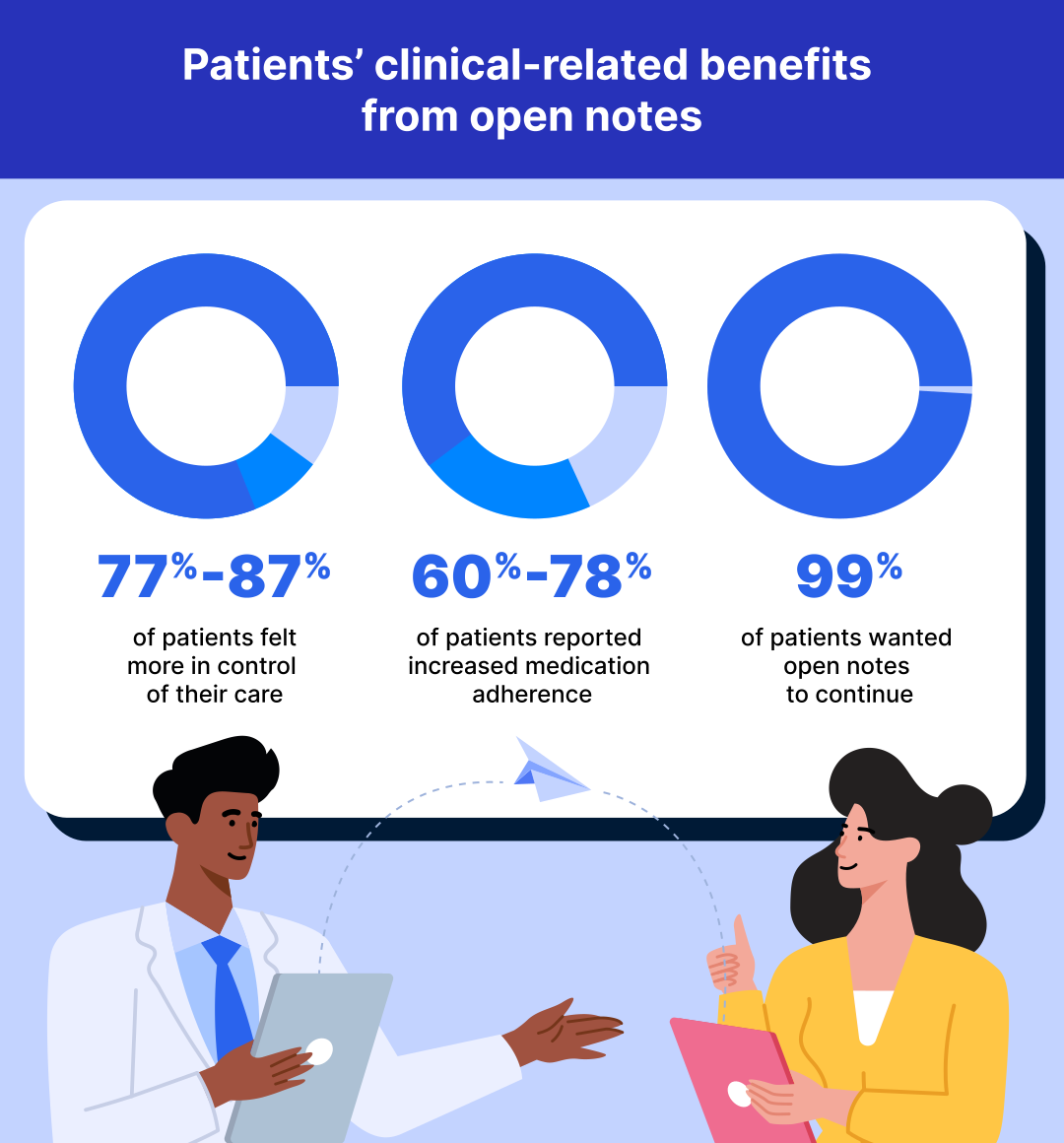
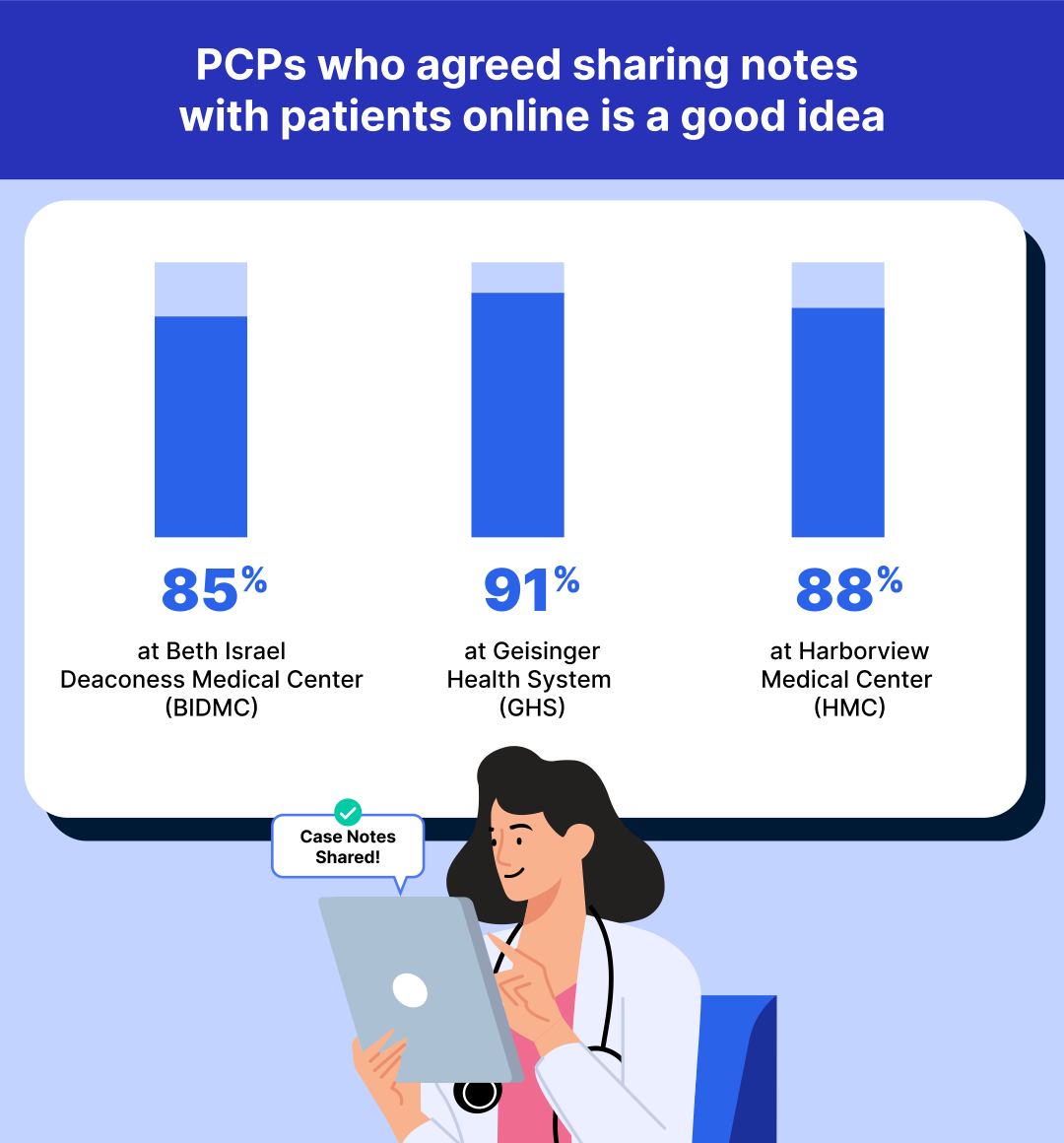
The aim of the pilot study was to investigate the effects of OpenNotes on doctors and patients, as well as its implication for the future of healthcare. By fall of 2011, participants at BIDMC, GHS and HMC had undergone 12 to 19 months of experience with OpenNotes. In October 2012, the Annals of Internal Medicine published Delbanco et al.’s pilot study titled “Inviting Patients to Read Their Doctors' Notes: A Quasi-experimental Study and a Look Ahead”. The 1-year pilot study involved 105 Primary Care Providers (PCPs) and 13,564 patients across BIDMC, GHS and HMC. Results were largely positive: the majority of patients reported clinical-related benefits (Figure 1), such as feeling more in control of their care and better adherence to their medicines. At the end of the study, almost all patients wanted to continue sharing notes. The majority of PCPs also agreed that sharing notes with patients online was a good idea (Figure 2)
After clinicians shared notes with patients, their concerns about an increase in workload diminished. They became more comfortable with the idea of sharing notes and were more likely to continue (Delbanco et al., 2012; DesRoches et al., 2020; Ralston et al., 2021; Scandurra et al., 2015). Since the benefits of note sharing greatly outweigh the risks, it’s unsurprising that numerous healthcare systems around the world now share notes with their patients (Walker et al., 2019).
Today: Who is Sharing Notes with Patients?
Nordic countries like Sweden, Finland and Iceland take the lead in giving patients access to their notes for all public and private healthcare services. For years, esteemed institutions in the US like Mayo Clinic, Cleveland Clinic, and John Hopkins Medicine have been sharing notes to enhance care quality and outcomes. MD Anderson Cancer Centre has been sharing notes with patients since 2009 with no detrimental results, and largely positive feedback from both patients and doctors (Martin, 2015).
CHAPTER 2
Why Introduce Note Sharing?
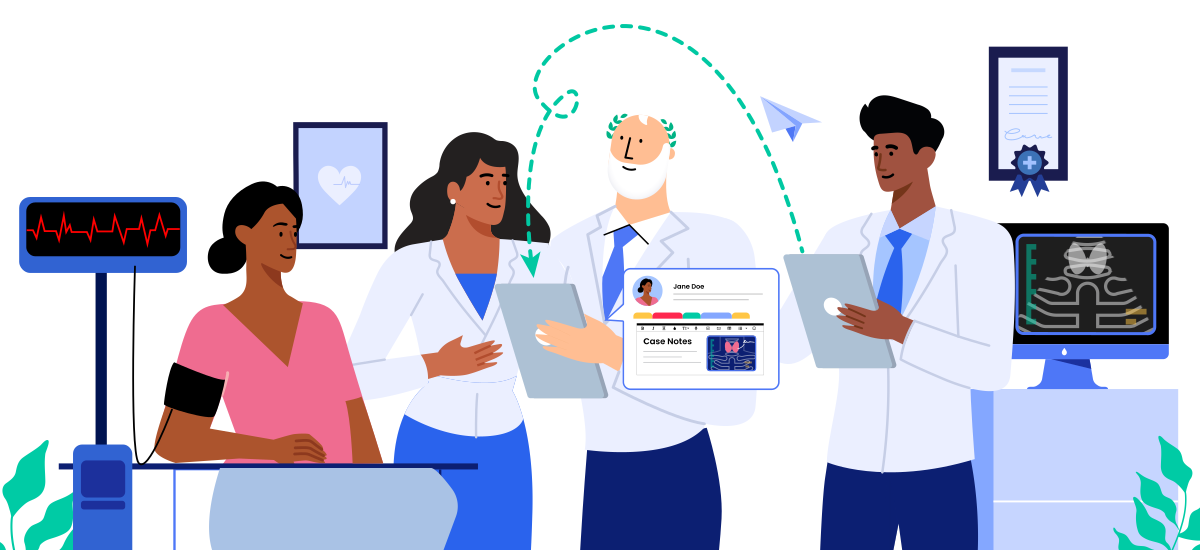
Plato is an EMR-first software. When Plato began, its mission was to give doctors a configurable EMR they could adapt to their preferences. Prior to Plato, doctors would often adopt an electronic billing system, but stay on paper records, because paper was flexible. Doctors switching to Plato found it had the same flexibility as paper—they could write, draw, and organise notes their way.
As doctors made the shift from electronic billing systems to Plato, an integrated clinic management system, software was “eating the world”. Industries moved from locally installed software to web, then to collaborative software. Once it became easier to store and manage information, it also became simpler to share information. In other sectors, collaboration has reduced repetitive work, decreased miscommunication, and saved time.
Now, collaboration is poised to improve healthcare. Collaboration in care is currently clunky: doctors and nurses must leave their EMR to write letters and emails to other healthcare providers, caregivers, and patients. The scope of Plato’s mission has also expanded: it now allows collaboration, enabling you to securely share select folders from your EMR. Plato is more than just a clinic platform—it’s your clinic’s Operating System, driving automation across every patient journey at your practice.
Collaboration is Inevitable and Impactful
Before Google Workspace, Microsoft 365 and Amazon Web Services, early tech pioneers were already thinking up ways to drive collaboration with software, then known as ‘groupware’ in the late 1980s (Engelbart, 1962).
Like an electronic sinew that binds teams together, the new ‘groupware’ aims to place the computer squarely in the middle of communications among managers, technicians, and anyone else who interacts in groups, revolutionising the way they work.
In the article "Software Catches the Team Spirit" on Fortune Magazine
Software quickly changed how people worked together for the better. For example, IBM’s Lotus Notes—an initial collaborative enterprise software—was a game changer. “[E]nterprise after enterprise, big companies and all, were depending on Notes to transform how they did business. They never had anything to help collaboration before. Notes opened up the opportunity for teams, departments, and even inter-company projects to communicate.” (Gewirtz, 2018).
In 2006, the introduction of cloud collaboration solutions such as Amazon Web Services and Google Docs revolutionised the collaboration experience (Foote, 2017). Suddenly, geographic barriers were eradicated. Employees could collaborate with anytime-anywhere access, work on documents simultaneously, and communicate more effectively with team members, no matter where they were in the world. Companies could also reduce their high communication and infrastructure costs from legacy IT systems.
Today, Software Drives Collaboration
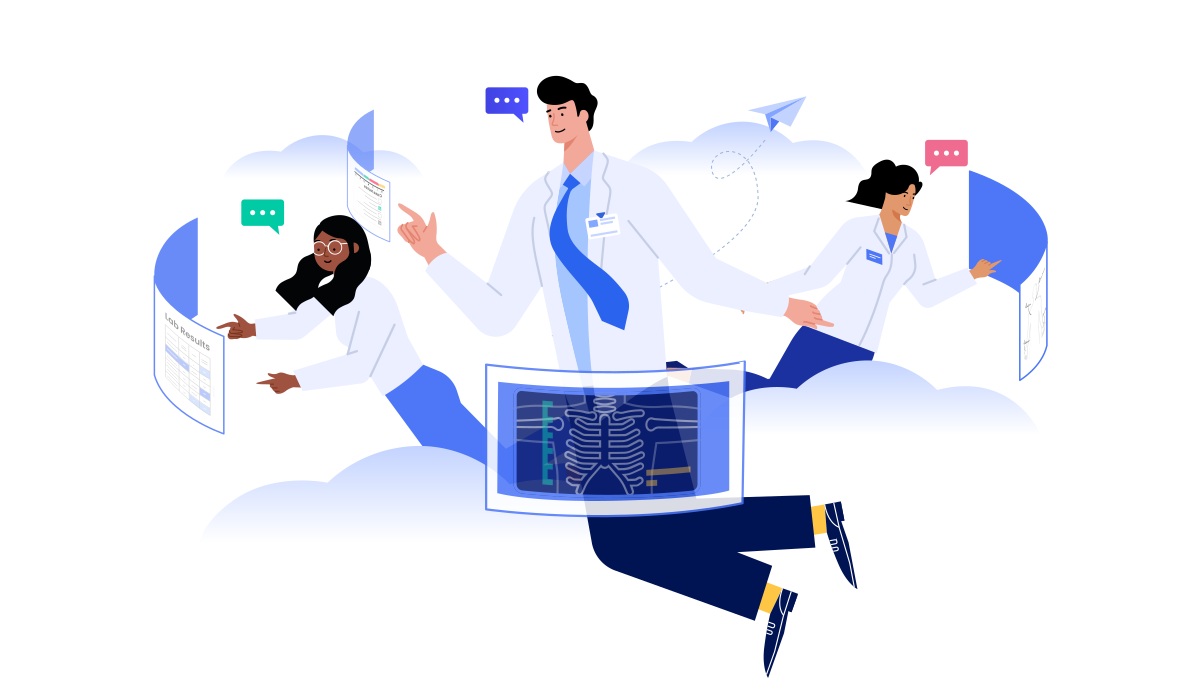
Benefits of Collaborative Software
As more businesses worldwide collaborate using software, it’s become increasingly clear that the advantages include both hard and soft benefits.
Collaborative software improves (Deloitte, 2013; Forrester Research, 2020):
- Communication;
- Productivity;
- Transparency;
- Innovation;
- Engagement;
- Job satisfaction; and
- Bottom-line profit
For example, Google Workspace simplifies collaborations to free up resources for companies, so they can focus on introducing more automations and improvements. Employees’ time is freed to add value directly to the business, instead of struggling with inefficient technologies and processes (Forrester Research, 2020). Since collaborative software simplifies teamwork and provides other soft benefits, employees with access to such technology have been found to be up to 20% happier at their jobs (Deloitte, 2013).
The Spillover Effect into Healthcare
Collaborative software can likewise improve the way healthcare providers work together and share information. For example, you might currently copy-paste your notes into referral letters. When you use Plato, you automate the referral process by securely sharing select folders with your colleagues, directly from your EMR. In a few clicks, you give your colleagues the data they need to continue care and reduce unnecessary work. Patients also stand to gain from note sharing. Doctors can empower their patients in care by inviting them to read key details about their diagnosis and care plan. When patients fully understand their health conditions and treatments, they become more adherent to medicines and experience better outcomes.
Why Share Notes in Plato?
1. Collaborate More Easily to Improve Care
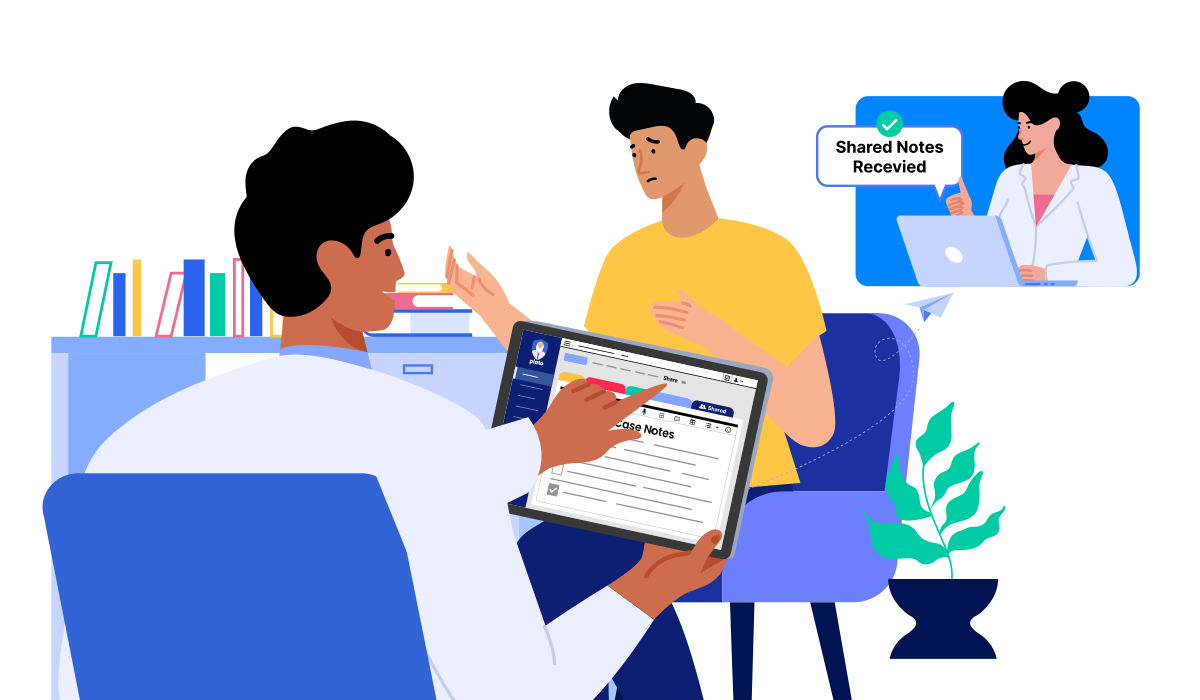
Imagine you’re a nephrologist. Your patient, Evan, suffers from chronic kidney disease. Lately, Evan has been experiencing shortness of breath and chest discomfort. You suspect he may have a heart disease related to his kidney condition. You refer him to your colleague Dr Alexander, who is a cardiologist, for further evaluation and diagnosis. As your draft Evan’s referral later, you manually find, copy, and paste in your notes to provide context. This is tedious and adds to your workload. Wouldn’t it be great if you could automate the referral process instead? Plato simplifies collaboration by letting you securely share select folders from your EMR with colleagues, regardless whether they use Plato. In one click, you can safely share a folder containing key details about Evan’s condition with Dr Alexander, so he has all the data he needs to promptly diagnose and treat Evan. Let’s say you and Dr Alexander end up working together to deliver long-term shared care to Evan. Instead of manually copying, pasting and sending your notes each time there is an update, just add your new note into the shared folder, so Dr Alexander automatically receives updates on Evan’s health. Likewise, Dr Alexander can keep you up to speed on Evan’s heart condition, by securely sharing his notes with you in this same shared folder in Plato. When information is shared efficiently and promptly, healthcare providers can deliver more precise and timely care to maximise benefits for their patients.
Collaborative clinical teams that share information to improve communication and teamwork are more likely to experience the following benefits (Janssen et al., 2020; Kane et al., 2013; Morley & Cashell, 2017; Rosen et al., 2018):
Higher quality of care: Clinicians demonstrate improved decision making and increased innovation. Strong collaboration enhances patient safety through fewer medical errors.
Increased patient satisfaction: When clinicians in the same care team contradict one another, it confuses patients over which doctor to trust. On the other hand, clinicians who work well together in care teams increase the trust that patients have in their healthcare providers.
Better patient engagement: When teams communicate information that is consistent, responsive and understandable to the patient, it minimises confusion and helps the patient better manage their care.
Improved job satisfaction: Good collaboration strengthens referrer relationships, improves morale and gives clinicians a greater sense of ownership over, and commitment to, their roles and responsibilities.
2. Empower Your Patients to Manage Their Care
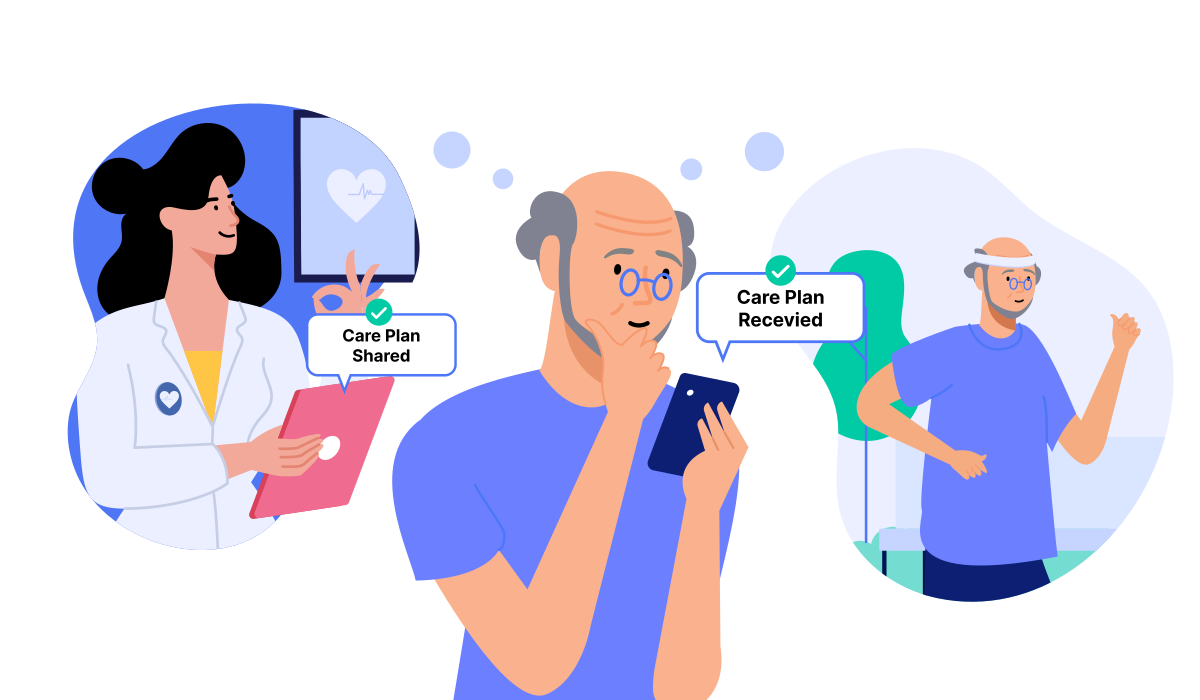
Let’s say you’re a patient who has just been diagnosed with coronary artery disease. Your cardiologist, Dr Myia, is sharing about your diagnosis, but your mind is elsewhere. I already have diabetes, how could this happen to me? In a daze, you ask Dr Myia what you should do. Dr Myia responds encouragingly, “If you make certain lifestyle changes and continue to manage your diabetes, you can stop or slow the progression of your heart disease.” Dr Myia explains your care plan in detail, which includes no smoking, eating heart-healthy foods and exercising regularly. You grow lost in the sea of information. “Dr Myia, I’m sorry but I won’t remember all this.” Dr Myia nods empathetically, “Don’t worry. My nurse will send you a summary note of today’s visit. It has key details about your diagnosis, care plan and lab results. When you are back home or in a comfortable setting, read the notes to better understand your health condition, types of food to avoid, and recommended exercises to complete. Don’t stress about retaining all the information today. Your notes will help you manage your care.” You breathe a sigh of relief. “Thank you, Dr Myia. I would have either forgotten or misremembered what was discussed in today’s visit. Having notes to refer to is indeed helpful.”
Generally, patients find it difficult to retain verbal medical information, more so if they are elderly, anxious or dealing with overwhelming data. Doctors can help their patients remember what was discussed by sharing written notes (Kessels, 2003). Research studies show that sharing notes with patients can help them (Delbanco et al., 2012; Tapuria et al., 2021; Vahdat et al., 2014):
- Better understand their health condition
- Take greater control of their care
- Experience better treatment outcomes
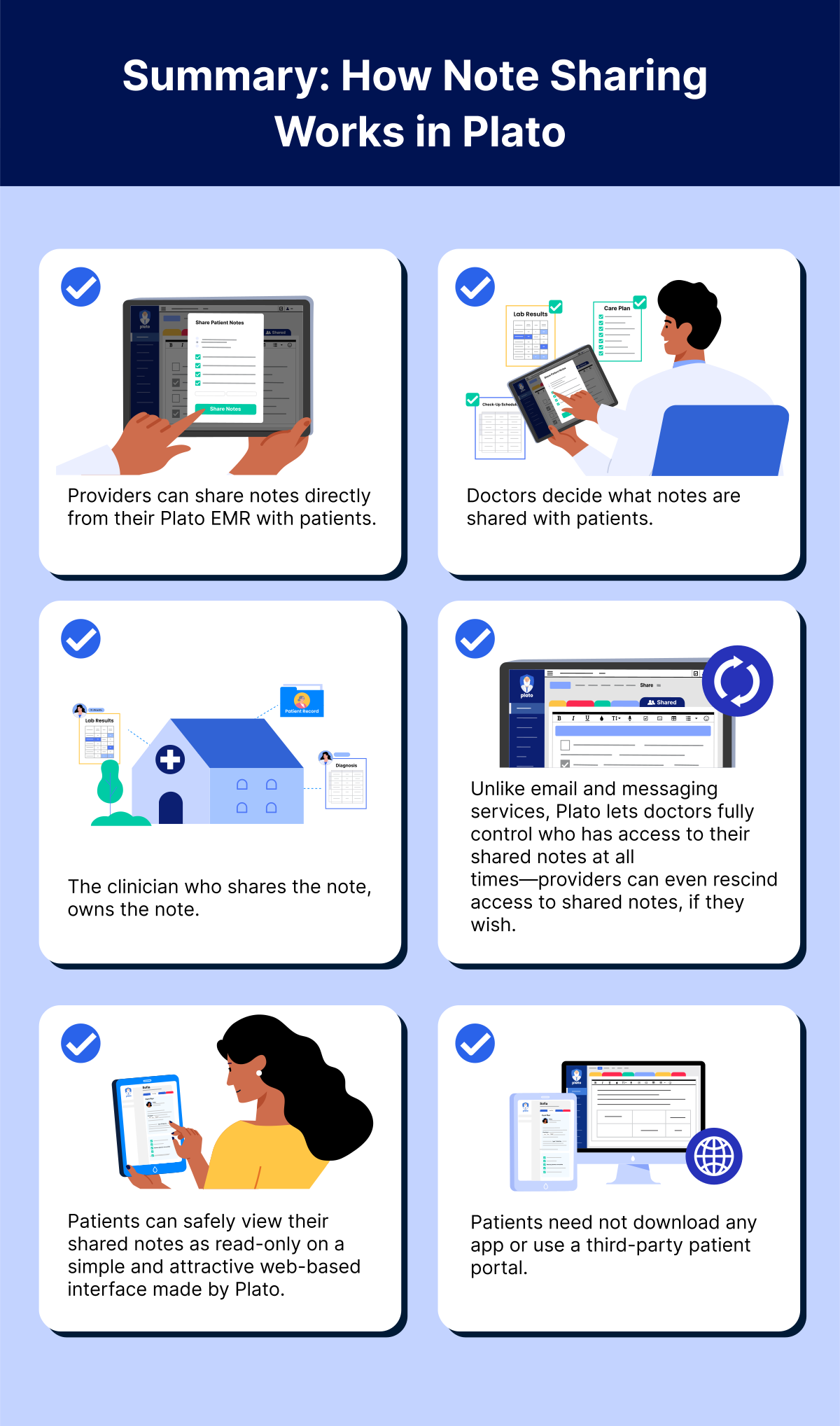
In Plato, you can securely share notes directly with patients from your EMR. Patients can safely access their read-only notes on a simple and beautiful web-based interface, created by Plato. Your patient need not download any apps or use any third-party patient portal.
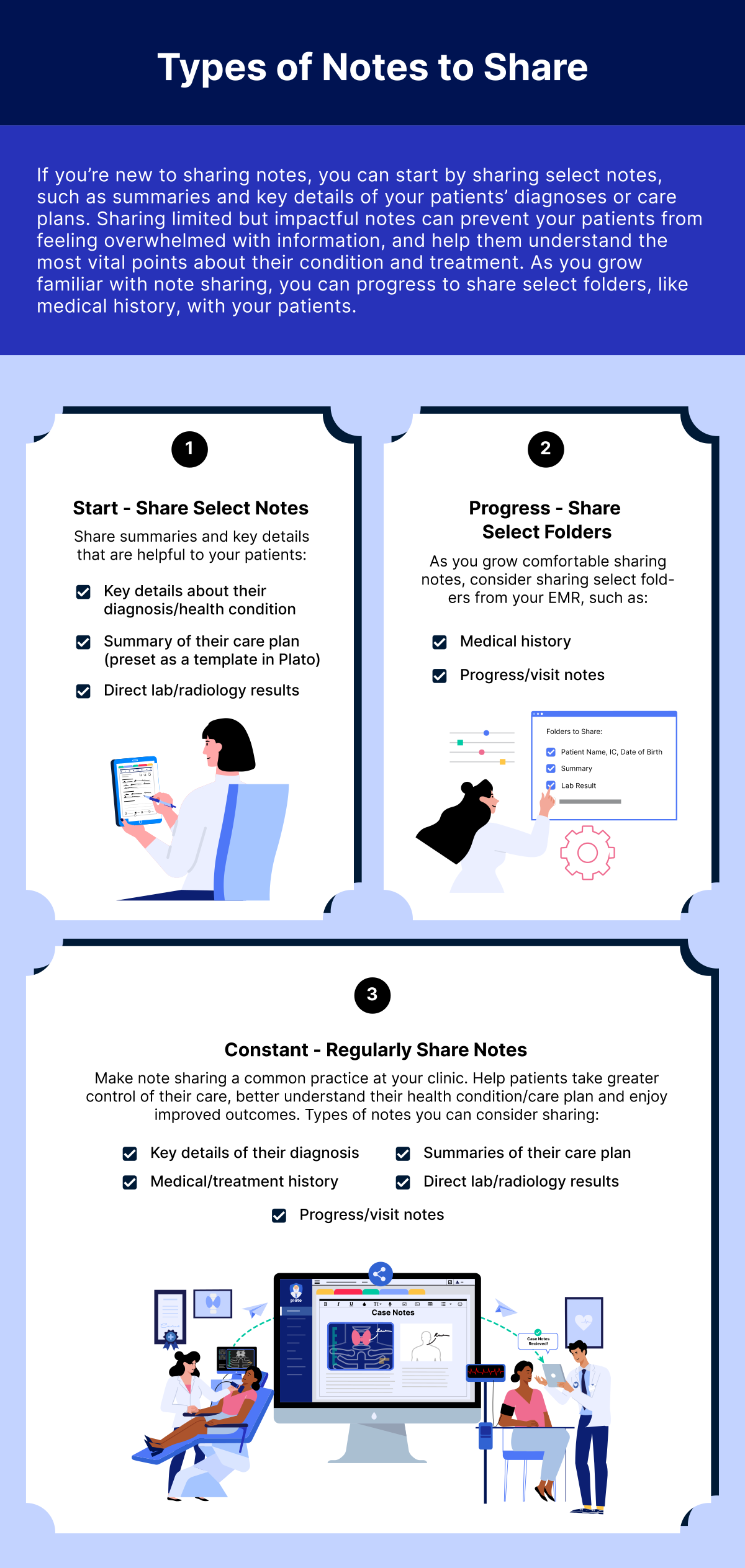
Some clinicians may feel anxious about sharing their first note with a patient. You can slowly introduce note sharing by sharing with patients:
- Key details about their diagnosis
- Summary of their care plan (preset as a template in Plato)
- Direct lab/radiology results
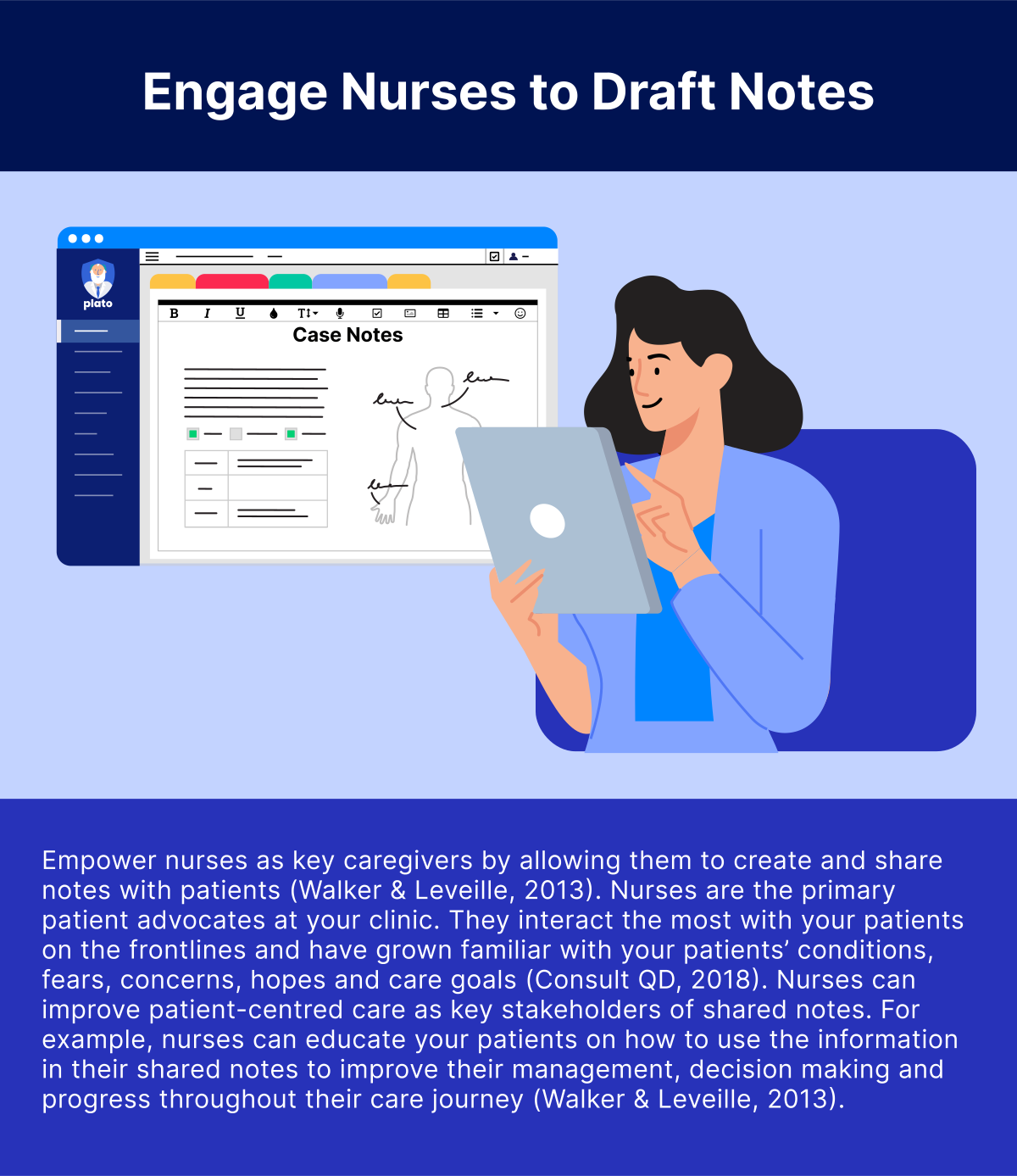
Since nurses are the primary patient advocates at your clinic, empower them in their role as caregivers by allowing them to create and share notes with patients (Walker & Leveille, 2013). Nurses interact the most with your patients on the frontlines. They are familiar with your patients’ conditions, fears, concerns, hopes and care goals (Consult QD, 2018). When nurses create notes to share with patients, it helps them provide better patient-centred care. Nurses can educate patients on how to use the information in their shared notes to enhance care management, decision making and progress (Walker & Leveille, 2013).
3. Help Caregivers Provide Better Support
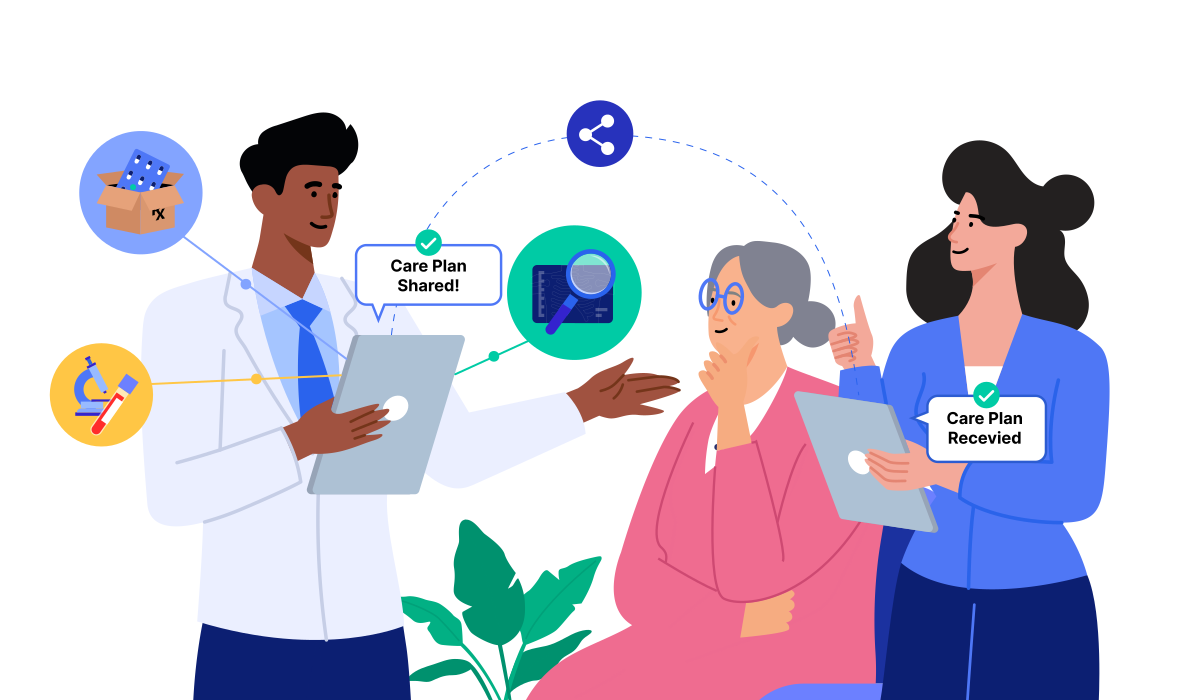
When caregivers read notes shared in Plato, they gain a better understanding about the patient’s health condition. This helps them feel prepared to provide the quality support to optimise the patient’s care outcome. Patients may choose to give caregivers access to their notes for different reasons, including care management support, emergency reasons and to aid the patient’s lack of tech experience or limited health literacy (Wolff, Berger, et al., 2016).
Patients and their caregivers can experience the following benefits by reading shared notes (Wolff, Berger, et al., 2016; Wolff, Darer, et al., 2016):
- Greater understanding about the patient’s health condition
- More likely to agree about the patient’s treatment plan
- Better able to remember the patient’s care plan
- Having more productive discussions about the patient’s care
- Better able to prepare questions for the doctor
- Improved medication adherence by the patient
- Enhance patient’s confidence in care management
- Help bridge patient shortfalls in health literacy and tech expertise
CHAPTER 3
Share Notes with Providers
Why Share Notes with Your Colleagues?
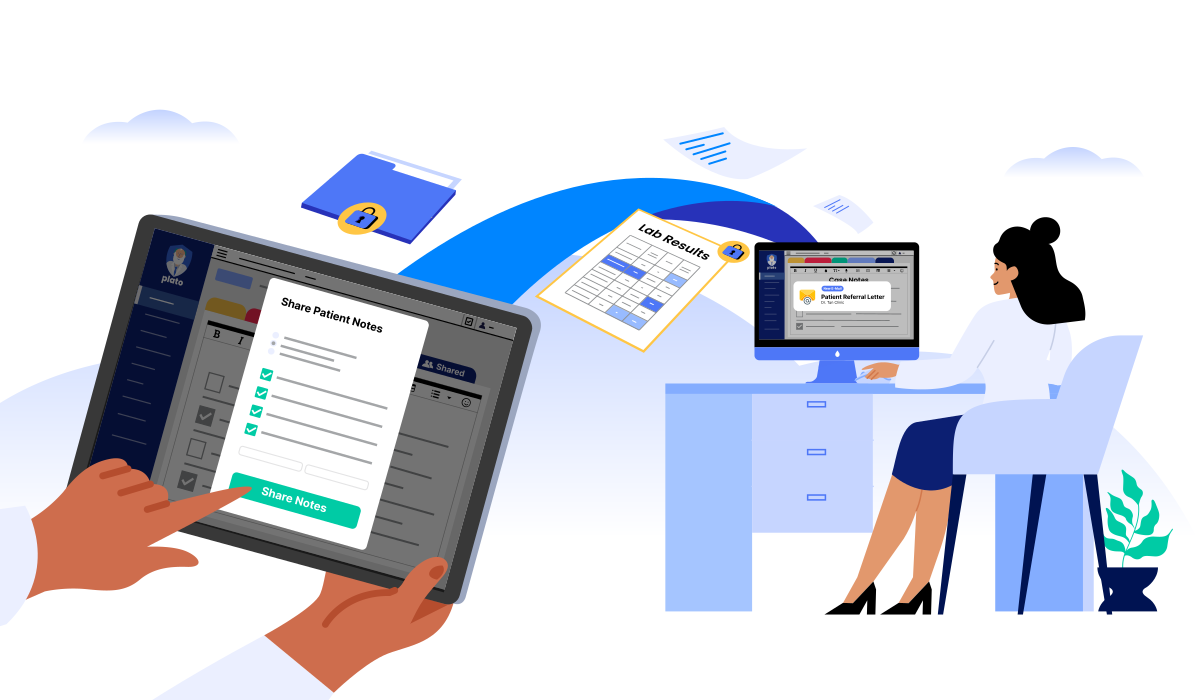
Imagine referring your patient to a colleague—as usual, you manually fill up the referral letter and copy-paste your notes inside. This creates more work. If you use Plato, you can securely share select folders directly from your EMR with colleagues, regardless whether they use Plato. Note sharing simplifies collaboration, automates the referral process, and minimises errors/poor clinical decisions.
1. Simplify Collaboration
Doctors must work closely together on complex patient cases. Note sharing puts team members on the same page, so clinicians get a holistic view of the patient’s medical condition, history, progress and care plan. Cases like cancer or multimorbidity involve different clinical specialists that require higher levels of coordination and communication to function as an efficient team (Kane et al., 2013). Let’s say you’re part of a care team for a patient with bowel cancer. The team comprises six members: clinician nurse specialist; surgeon; radiologist; oncologist; pathologist; gastroenterologist. Each specialist provides their own expertise and analysis of the patient’s condition. Team members must reach a consensus on diagnosis and treatment based on their analyses and combined proficiencies. When team members share vital data to support clinical investigations and decision making, it not only improves care coordination, patient outcomes, job satisfaction and work relationships, but also reduces operational inefficiencies, medical lapses and clinician burnout (Smith et al., 2018; TigerConnect, 2020).
Suggestions on sharing notes in care teams:
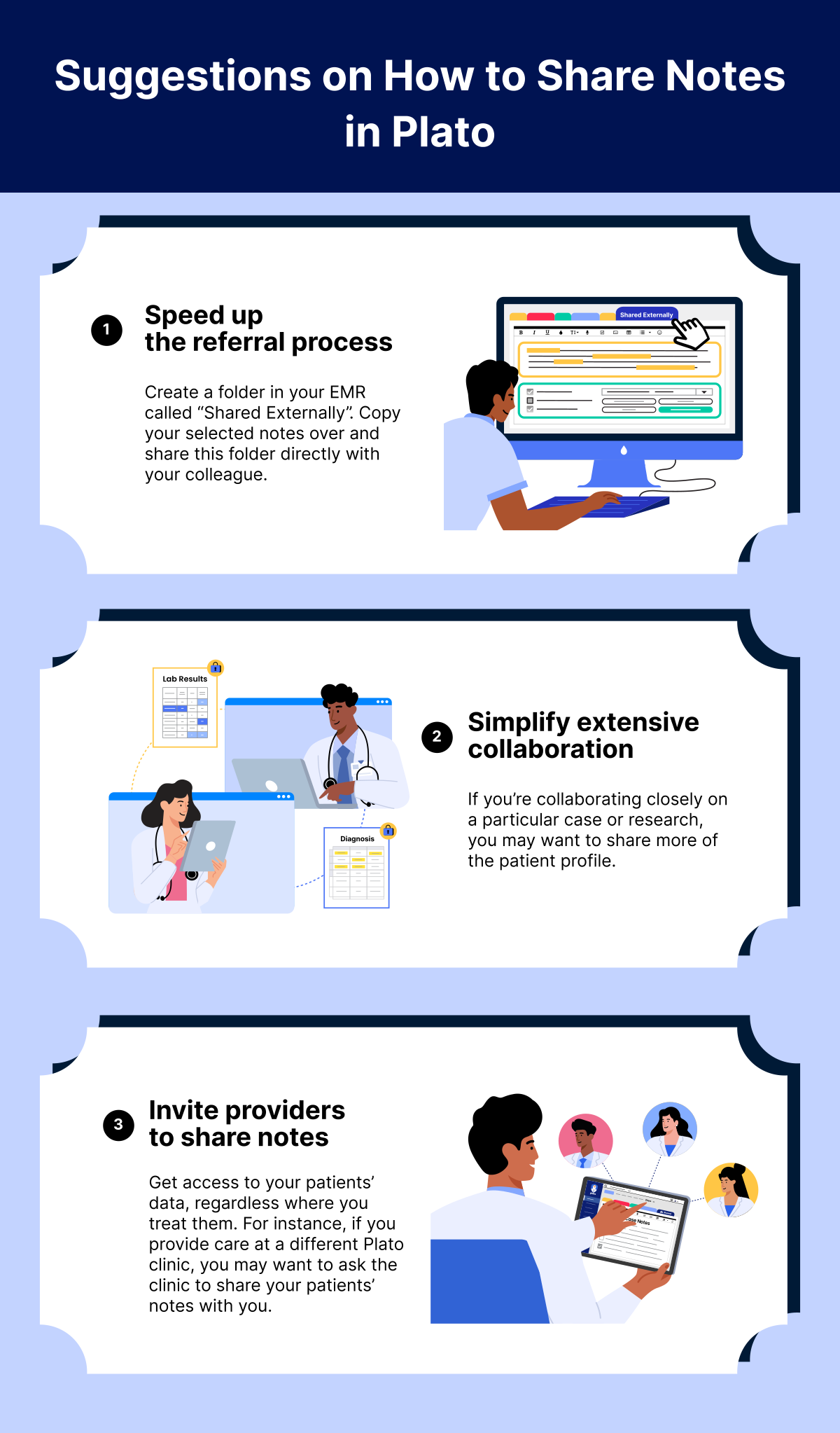
- Take the lead by sharing information from key visits that you think are critical for colleagues to review firsthand.
- Invite team members to share key summary notes/tests to give context for better decision making and care.
- Share lab/radiology results to minimise redundant/duplicate tests.
2. Automate the Referral Process
Normally, doctors might manually find, collate and draft information inside their referral letters. To add context, some clinicians copy and paste their notes inside. Understandably, this process is strenuous and certain details may be omitted by accident as a result. Instead of creating more work for yourself through data entry, automate the referral process by sharing select folders with your colleagues, directly from your Plato EMR. Referral letters are admin-intensive. As a result, it’s not uncommon for referral letters to be incomplete, inaccurate, or lacking contextual data for clinical decision making, such as a patient’s medical history (Chase et al., 2014; DeAngelis et al., 2010; Janssen et al., 2020). Poorly written referral letters can lead to delayed treatments and affect patient outcomes (M. Patel et al., 2011). Doctors might communicate verbally to overcome knowledge gaps, but this, too, can threaten care quality. Many communication failures occur during verbal exchanges of data while patients are transferred between healthcare providers (Kane et al., 2013). Lack of proper documentation in collaboration compromises care quality, coordination and accountability. When you share notes in Plato, you and your colleagues can get access to relevant, well-documented information that improves the efficiency of referrals.
Suggestions on sharing notes to speed up referrals:
- Improve efficiency by sharing select folders with colleagues, directly from your EMR. Remove the hassle of manually copying and pasting your notes into referral letters.
- Share notes together with your referral letter. In Plato, you can use a template to quickly draft letters and minimise data entry.
- Avoid duplicate/redundant tests by inviting colleagues to share key summary notes/test results with you.
3. Minimise Errors/Poor Clinical Decisions
Sometimes, doctors may rely on data reported by the patient or caregiver to close knowledge gaps. However, recall bias is extremely common—patients and caregivers either misrember or fail to accurately recall events, memories and details, like test results. When you share notes using Plato, you minimise the chances of medical errors and poor clinical decisions from occurring as a result of recall bias (McPhail & Haines, 2010; Spencer et al., 2017; Topp et al., 2019). Studies have found that 40% to 80% of medical data provided by healthcare practitioners is forgotten by patients almost instantly. Nearly half of the information recalled by patients also tends to be incorrect (Anderson et al., 1979; Kessels, 2003). Age, stress and education level can affect a patient’s ability to remember information precisely (Birtwell & Sandberg, 2014; Burakevych et al., 2015; Kessels, 2003; Laws et al., 2018; Nguyen et al., 2018). When you share notes, colleagues can rely on accurate data to deliver care to your patient, instead of depending on guesswork.
Suggestions on sharing notes to minimise errors/poor clinical decisions:
- Share your patient's medical history with colleagues, so they get an accurate overview of your patient's condition. Avoid relying on self-reported data that’s prone to recall bias.
- Share direct lab/radiology results with colleagues, so they are not reliant on patients to bring copies of or self report test results.
Start Sharing Notes in Plato
Types of Notes You can Consider Sharing
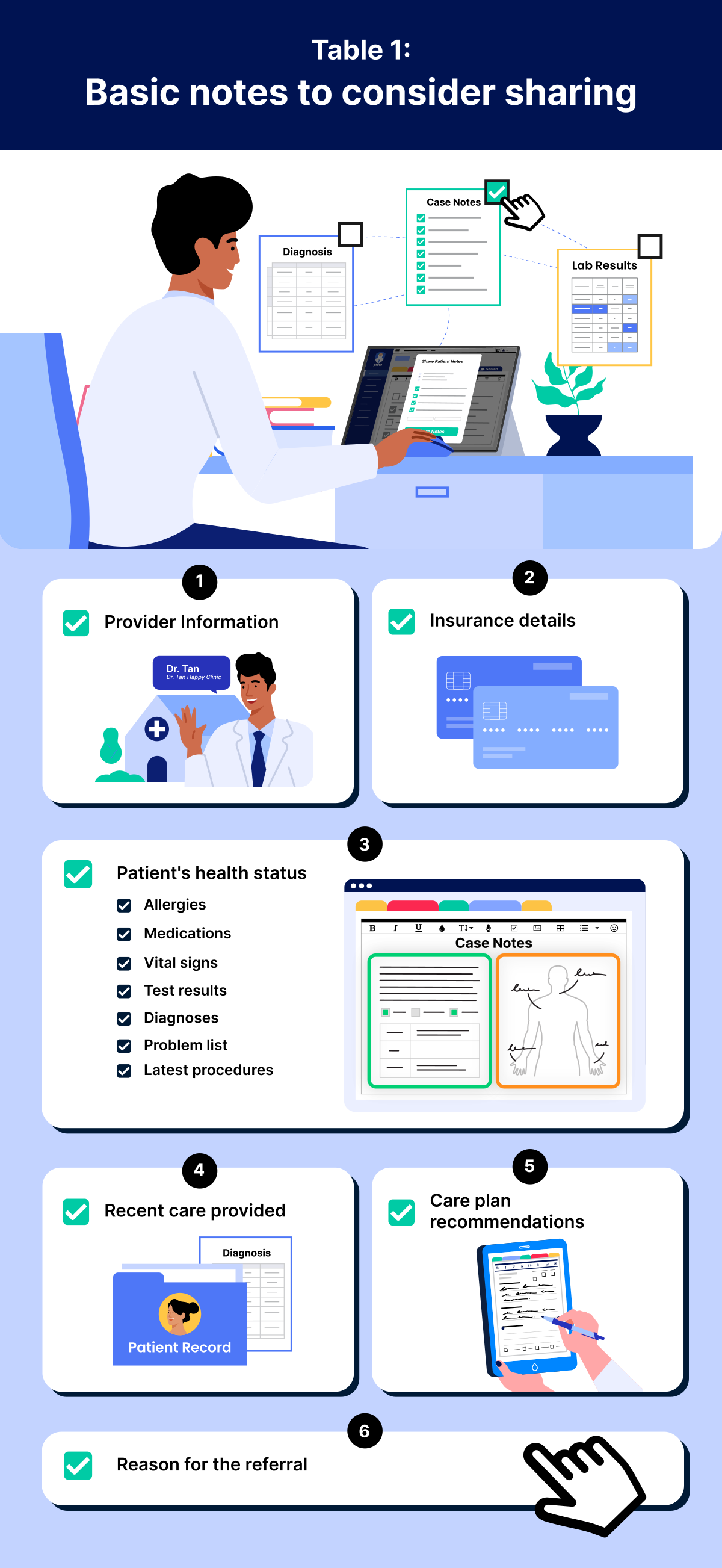
If you’re new to note sharing, you can start by sharing folders of Summaries, Problem Lists and direct lab/radiology results. When collaborating extensively in multidisciplinary teams, consider using structured or semi-structured pro forma reports to communicate crucial data.
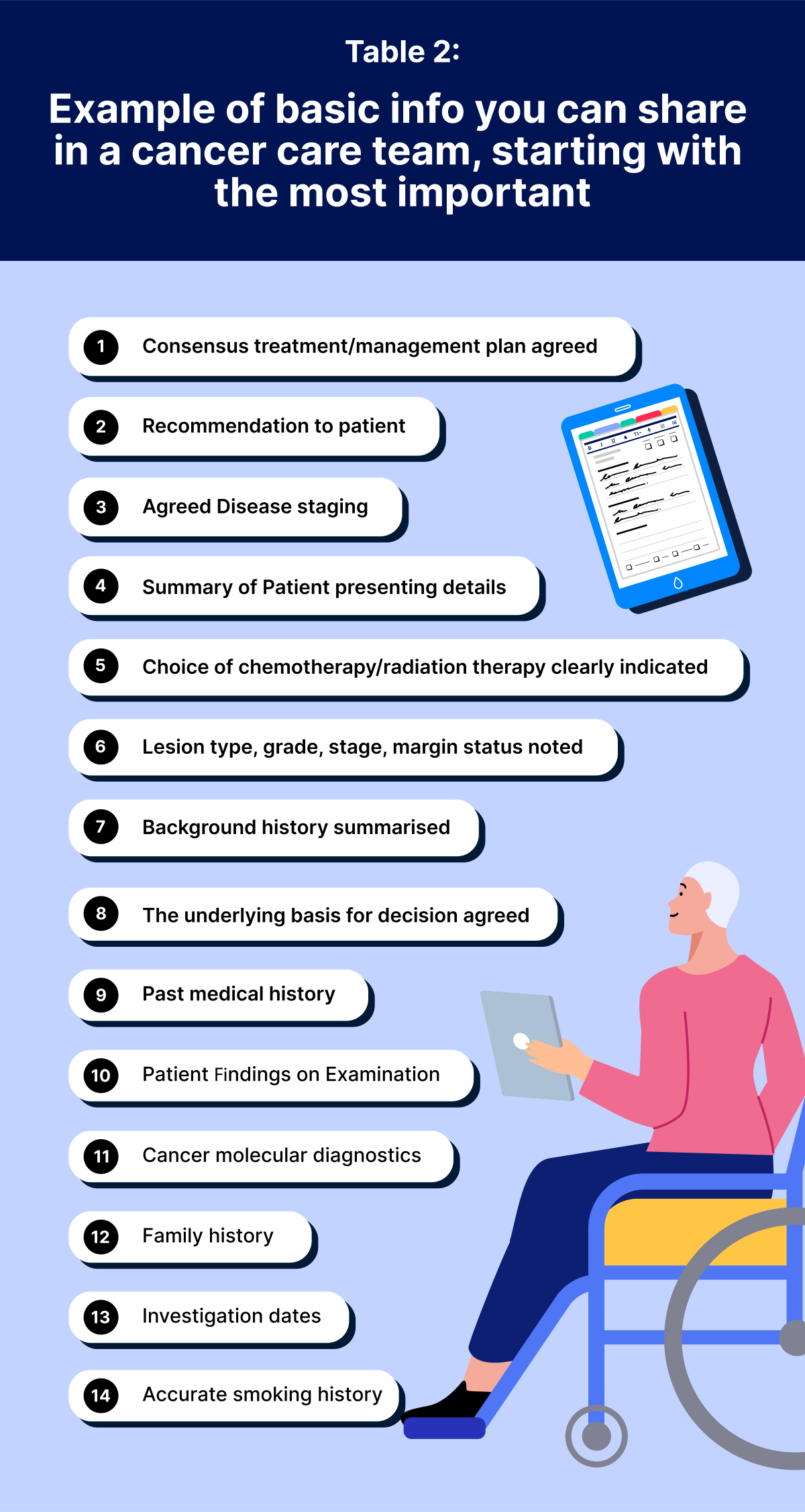
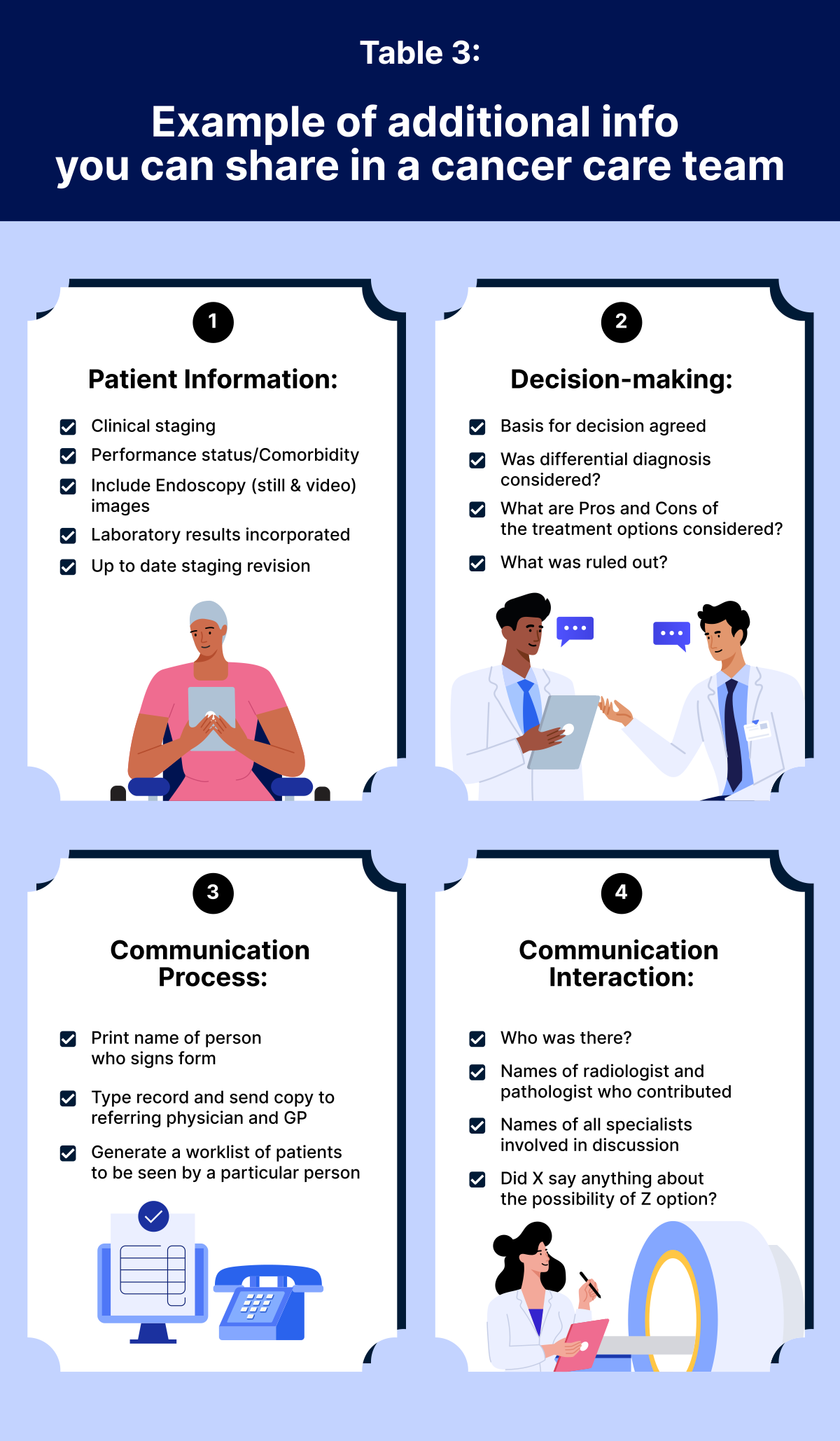
Table 1 shows the basic information you can consider including in your shared notes. Tables 2 and 3 show examples of basic and additional info you can share in a cancer care team respectively. You can use these as guides when deciding what information to share in your notes.
Share Your First Note
How are Notes Shared Between Providers in Plato?
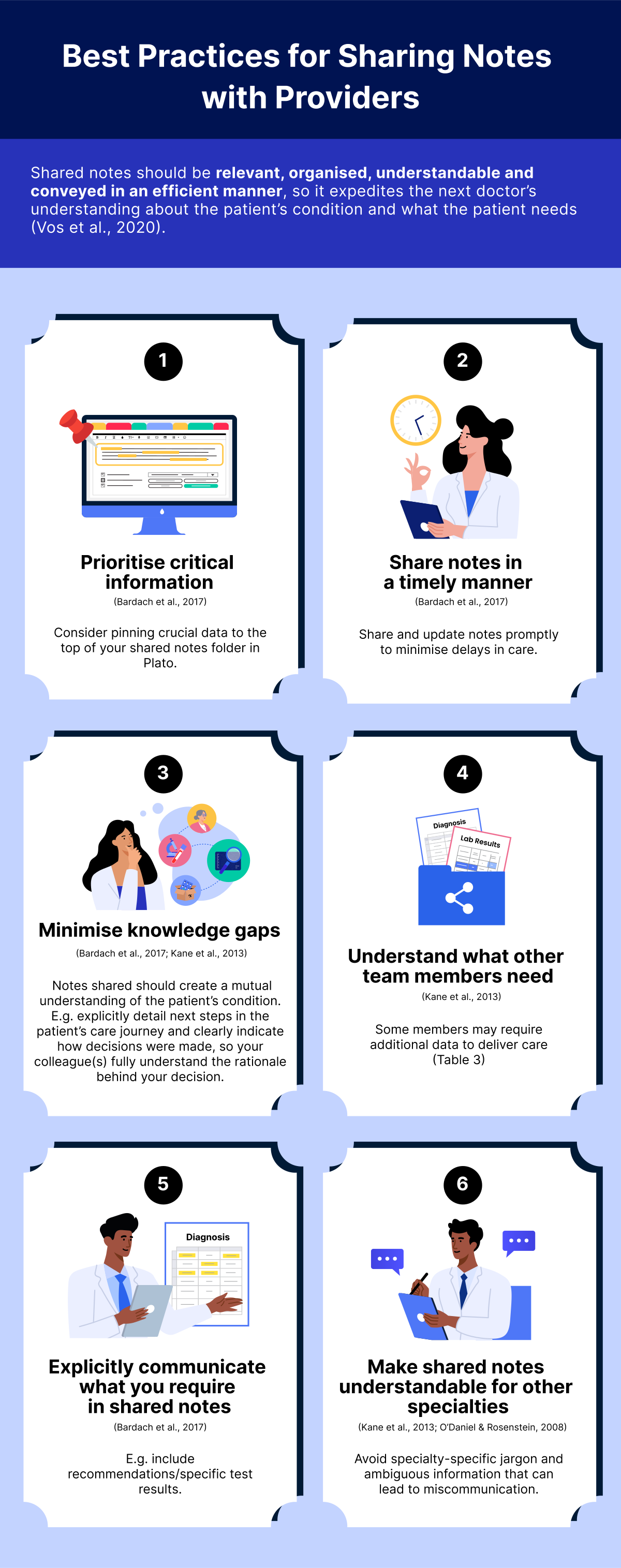
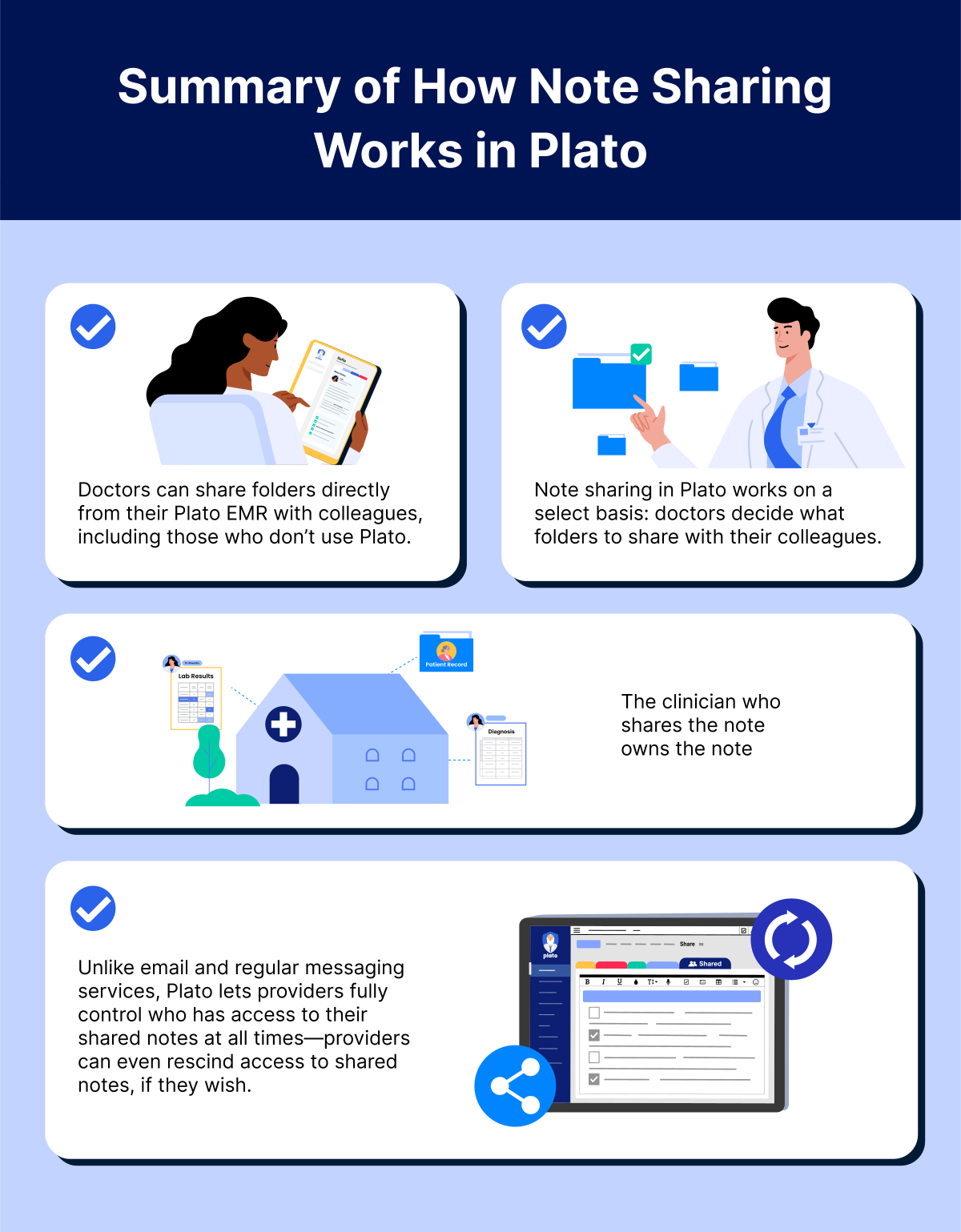
Note sharing in Plato works on a select basis: providers decide what folders to share with colleagues. Many healthcare providers start by sharing folders of Summaries, Problem Lists or direct lab/radiology results. The clinician who shares the note owns the note. Unlike normal email and messaging services, Plato lets providers fully control who has access to their shared notes at all times—providers can even rescind access to shared notes, if they wish.
Tip on Drafting Notes
Nurses can help doctors draft notes to optimise resource allocation and simultaneously become stakeholders of note sharing in Plato. This is similar to what’s commonly done at multidisciplinary team meetings, where an experienced nurse is tasked with taking notes that are subsequently reviewed and approved by the lead clinician (Kane et al., 2013).
Share Your First Note
CHAPTER 4
Share Notes with Patients
Why Share Notes with Your Patients?
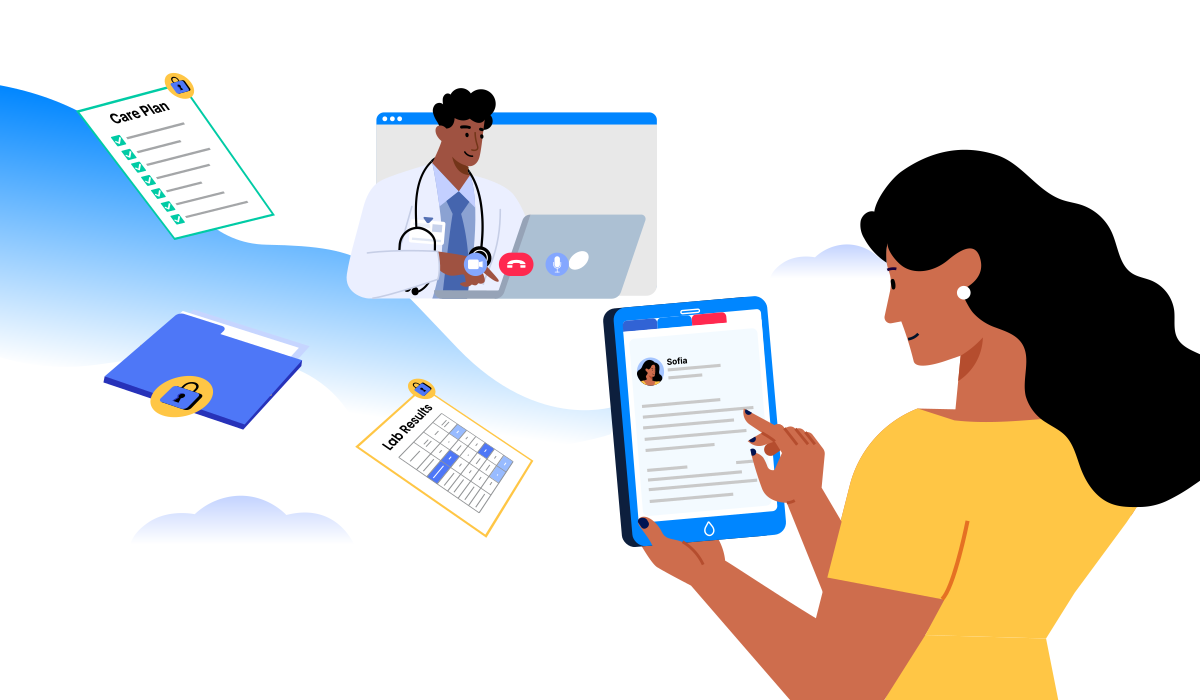
Imagine you’re a patient who has recently experienced sudden, unexpected weight loss. Could this be a result of work stress? Perhaps I’m not eating enough. Perplexed, you book an appointment to see your healthcare provider, Dr Sander. After running some tests, Dr Sander informs you of your diagnosis, “Ms Sofia, you have type 2 diabetes.” You look at Dr Sander wide-eyed in disbelief. Diabetes? How could this happen? How serious is my condition? While you are lost in your own thoughts, you vaguely hear Dr Sander say that your diabetes is manageable if you follow your care plan. You have myriad questions you want to ask Dr Sander, but your mind has gone blank.
Visits can be stressful for patients, especially when it involves a severe or complex diagnosis. When patients are anxious, they can easily misremember or forget what’s communicated in their visit. As a result, they might not fully understand how to manage their condition and care at home. Empower your patients to take control of their health by sharing notes. Patients find it easier to recall details accurately when spoken information in visits is supported by written notes (Kessels, 2003). When patients read their notes, it helps them clearly understand their health condition and care plan. Patients who actively participate in their care have better medicine adherence and are more likely to enjoy positive health outcomes (Vahdat et al., 2014).

Common Use Cases for Sharing Notes with Patients
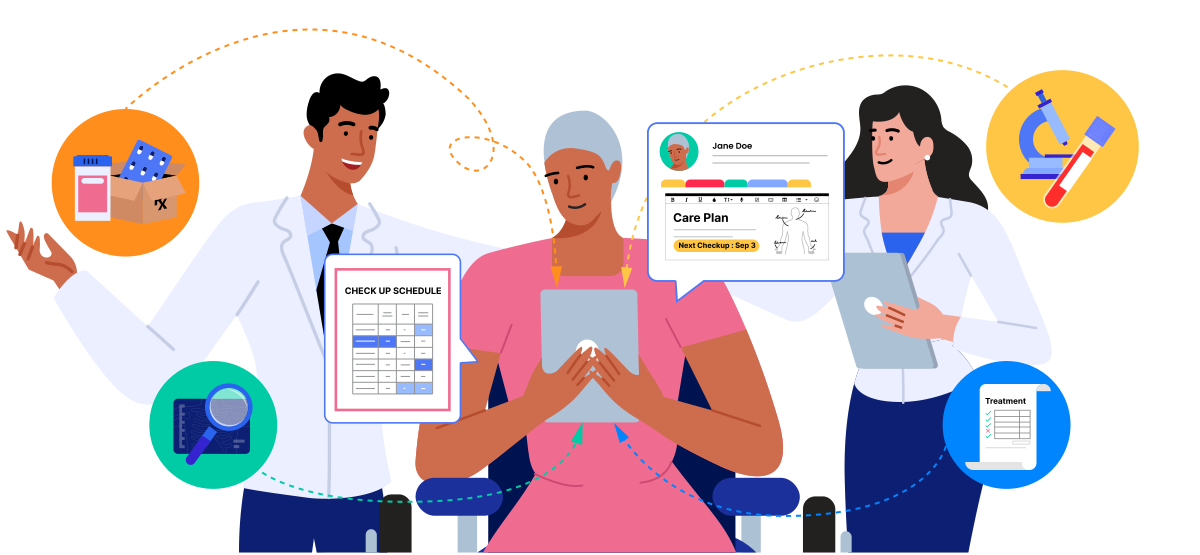
Patients who have complex diagnoses or treatments may find it hard to manage their care. The simple act of sharing notes can go a long way in helping them understand, accept and improve their health conditions. Patients with complex, long-term or chronic conditions have been found to benefit the most from shared notes (Zanaboni et al., 2020).
Complex Care
Complex illnesses can be overwhelming and confusing for patients. For example, a patient with multiple chronic diseases will need to manage their appointments, consult different specialists, undergo various treatments and take an assortment of medicines—all of which can be exhausting. When doctors share notes with their patients, it helps them remember what was discussed in visits, better understand the next steps in their care journey and commit to their medicines/treatments. Research by Maly et al. (1999) found that after patients with chronic disease were given copies of their progress notes, they became more satisfied with their physician’s care and reported an 8.3% improvement in their overall health condition. Cancer patients also find shared notes valuable, since they often face a larger information burden than other patients. In research by Salmi et al. (2020), 70% of oncology clinicians and 98% of patients agreed that sharing notes was beneficial. The team concluded few differences between the views of oncology clinicians and all other clinicians, suggesting that all specialties and their patients can benefit from sharing notes.
Share Direct Lab/Radiology Results
When patients have a shared record of their completed tests, it improves efficiency in care and minimises redundant or duplicate testing. Tests can significantly add to a patient’s healthcare expenses, especially imaging. For example, a patient visits a rheumatologist about arthritis in his hands. The rheumatologist asks the patient if he had any MRI done recently. The patient checks his shared notes to see if he has the test result on hand. Bingo! He finds the MRI report inside his shared notes. The patient pulls up the MRI report on his mobile phone and shows it to his doctor. The rheumatologist reviews the findings to get a holistic picture of his patient’s condition, before making a clinical decision. Without shared notes, the rheumatologist might have had to request for, then wait, and finally review the MRI report from the patient’s past provider. This could take days, or even weeks, and delay care. With shared notes, the patient avoids a redundant MRI test and receives more efficient care (Vreeland et al., 2016).
Treatment Plans
Care plans can be difficult for the patient to remember, especially if they are busy working adults or getting on in years. Patients tend to remember diagnosis-related information better than instructions on treatment. Thankfully, written notes can help patients retain verbal information better (Kessels, 2003). For example, you have a cardiovascular patient who has been prescribed to engage in moderate activity every day for at least 30 minutes. Your instructions include detailed notes about warming up and cooling down via a variety of stretches. You have also provided guidance on what to do if your patient cannot complete the 30-minute exercise. In addition, your patient has been prescribed 5 types of medicines, each with a different dosage. By sharing a summary of the entire treatment plan, your patient can better manage their care at home. They can refer to their notes whenever they are unsure about the care plan, which helps them better adhere to their medicines and exercise routine.
How to Share Notes with Patients
Start Sharing Notes
Share Your First Note
Are you ready to introduce note sharing with patients at your clinic? Before you start, it’s important for your clinic to establish protocols and policies to best manage this practice. Notes that you share with patients should be organised, relevant and helpful (Strum, 2019). When you use best practices to share notes, there should be minimal changes to your workload (Delbanco et al., 2012; Scandurra et al., 2015).Step 1: Educate Staff
-
Explain the purpose and benefits of sharing notes for patients and clinicians (Miralles et al., 2021).
-
Decide who can create, share and update notes. Will all staff who author notes be able to share notes by default? (Yu et al., 2017) In Plato, you can set access restrictions to control who can share notes.
-
Share notes in a timely manner. Set up follow-up guidelines if necessary, e.g. invitations and reminders to read notes (AAN, n.d.)
-
Address practice-specific/FAQs by clinicians (Miralles et al., 2021; OpenNotes, n.d.-b). E.g. How will staff manage patients’ questions or requests for updates about their shared notes? Let patients know that they can discuss questions in the next visit. If they have an urgent question or update, they can teleconsult with their clinician nurse using PlatoConnect.
Helpful Resources:
-
Benefits of note sharing for patients and clinicians
-
How to address common questions by clinicians about note sharing
Step 2: Educate Patients
-
Explain the purpose and benefits of sharing notes for patients (Miralles et al., 2021). Consider adding a page on your clinic’s website about shared notes for patients - this may also attract patients to your practice.
-
Invite patients to read their notes. Improve patient engagement and care outcomes by informing patients when their shared notes are available (Mafi et al., 2016)
- Address FAQs by patients (OpenNotes, n.d.-c). E.g. How can patients get the most out of their shared notes? Encourage patients to read their notes after their visit. This will help them better understand their condition and the next steps in their care journey. If the note includes prescribed medicine, the patient should check that what they are taking matches the note’s content, including dosage.
Helpful Resources:
-
Introduce shared notes to patients and explain how it works
-
Inform patients when a new shared note is available
-
Address FAQs by patients
-
Address FAQs by patients
Step 3: Set Documentation Standards
-
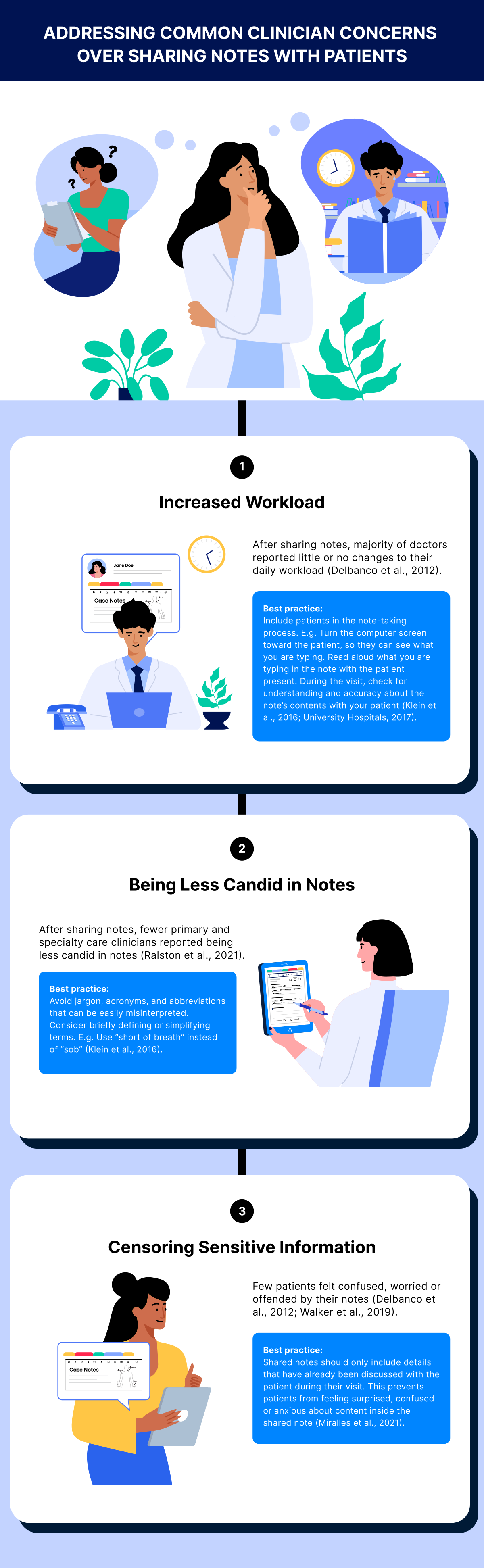
Involve patients in the note-taking process. Minimise questions post-visit by checking for understanding and accuracy about the note’s contents with your patient during their consultation (Klein et al., 2016; University Hospitals, 2017).
-
Shared notes should only include details already discussed in the visit (Miralles et al., 2021). Notes should never contain information that has not been discussed with the patient. This prevents patients from feeling surprised, confused or anxious about the content of any note.
-
Never oversimplify your notes. You may minimally adapt your notes to support patients with limited health literacy, but maintaining accuracy for record-keeping is vital (Cruz, n.d.).
-
Avoid jargon, acronyms, and abbreviations that can be easily misinterpreted by patients. For example, use “short of breath” instead of “sob” (Klein et al., 2016).
- Generally, notes should be positive, supportive and give a balanced perspective (Klein et al., 2016).
Helpful Resources:
-
Suggestions to keep in mind when drafting notes
-
Suggestions for implementing shared notes at your clinical practice
Start Sharing Notes
Still Concerned about Sharing Notes?
Are you still unsure about sharing your first note? Some clinicians anticipate an increase in workload or major changes to their workflow from sharing notes. However, research shows this does not happen. After clinicians share notes, their concerns tend to diminish and they are likely to continue sharing notes (Delbanco et al., 2012; DesRoches et al., 2020; Ralston et al., 2021; Scandurra et al., 2015). Common clinical concerns include an increase in workload (longer visits, more questions from patients, taking longer to create notes), being less candid in notes, and censoring information to avoid upsetting or worrying patients. Often, these considerations are put to rest after clinicians start note sharing. When you manage shared notes using best practices, there should be minimal changes to your workflow. For starters, you can consider sharing summaries, care plans and direct lab/radiology results.
Clinicians who agreed sharing notes with patients was beneficial overall
- Before sharing notes
- 29%
- After sharing notes
- 71%
Share Your First Note
CHAPTER 5
Share Notes with Caregivers
Why Share Notes with Caregivers?
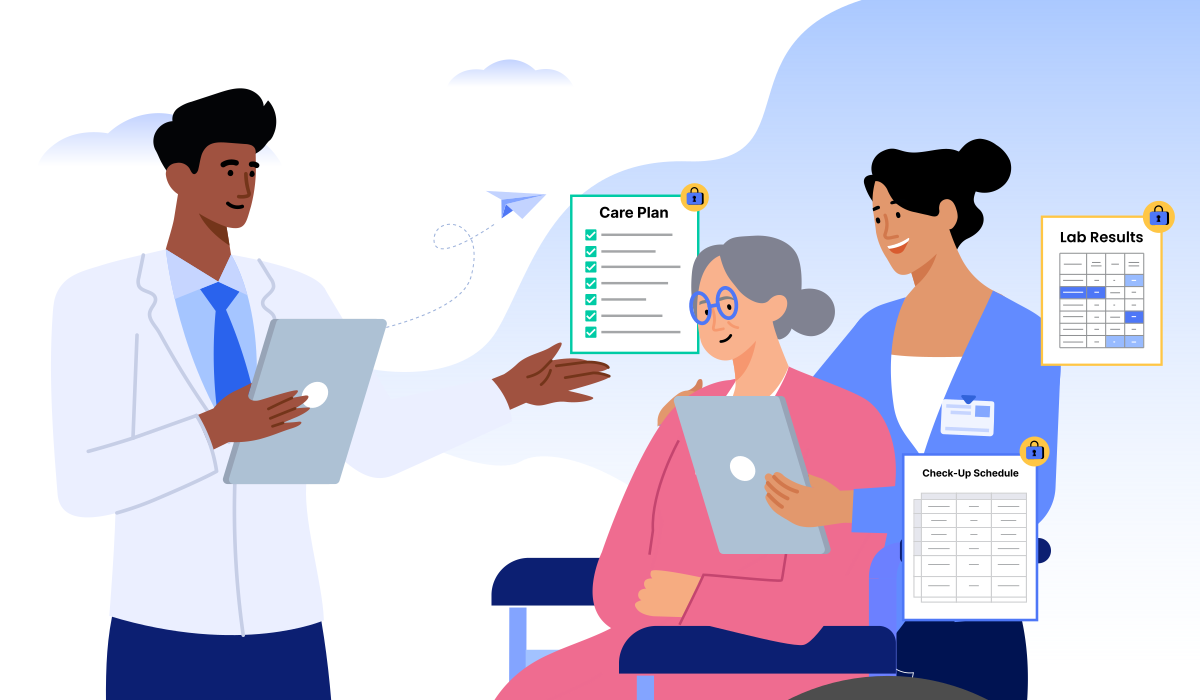
Caregiving is no easy feat. Imagine providing 24/7 support for your child or aged parent. You’re responsible for communicating with doctors about their medical history, organising appointments, ensuring they adhere to medicines, and making decisions with them about their care. On top of all this, you have to juggle a hectic full-time job. With your attention divided, you find it hard to accurately remember details about your loved one’s care plan. Caregivers who are poorly aligned on the patient’s treatment plan provide weak support. This can lead to patient dissatisfaction, delays in diagnosis or treatment, and caregiver frustration or burnout. Sharing notes empowers caregivers to administer quality care by giving them access to the information they need.
Strengthen Communication, Improve Care
Sharing notes with caregivers has been found to be highly beneficial for improving productivity in care communication and support. In the study by Wolff, Darer, et al. (2016), care partners gained greater clarity about their patient’s condition after reading notes shared by the patient’s provider. As a result, care partners became empowered to engage in more productive discussions about the patient’s care, could communicate more clearly with the patient’s provider, and were better prepared at planning questions to ask the doctor during follow-up visits. At the end of the study, almost all the patients and caregivers wanted shared notes to continue.
Drive Better Patient Outcomes
When caregivers provide quality care support, their patients are more likely to experience better health outcomes (Desai et al., 2018; Gerard et al., 2017; Jackson et al., 2014). Caregivers can readily refer to the patient’s shared notes if they need clarification about the patient’s care details. For busy working adults or eldery care partners, shared notes serve as a helpful support tool. For example, if a working caregiver is unable to accompany their eldery parent for a checkup, they can refer to their parent’s shared note post-visit, and learn what was discussed with the doctor. This may be particularly helpful if the patient is not health literate and has trouble relaying information to their caregiver. When caregivers fully understand the care plan, they can administer the support required to maximise the patient’s benefits from treatment.
Reduce Caregiver Stress
Shared notes facilitate communication and care coordination to alleviate stress on caregivers. Lack of information affects a caregiver’s ability to administer proper care, which can fuel caregiver burnout (Cleveland Clinic, 2019). Shared notes minimises the care burden by equipping caregivers with the knowledge they need to administer care effectively (Scherbring, 2002). Similar to patients, few caregivers have found shared notes to be confusing or worrying (Wolff, Darer, et al., 2016). Overall, shared notes have been largely well received by caregivers (Tieu et al., 2015; Wolff, Darer, et al., 2016).
Share Your First Note
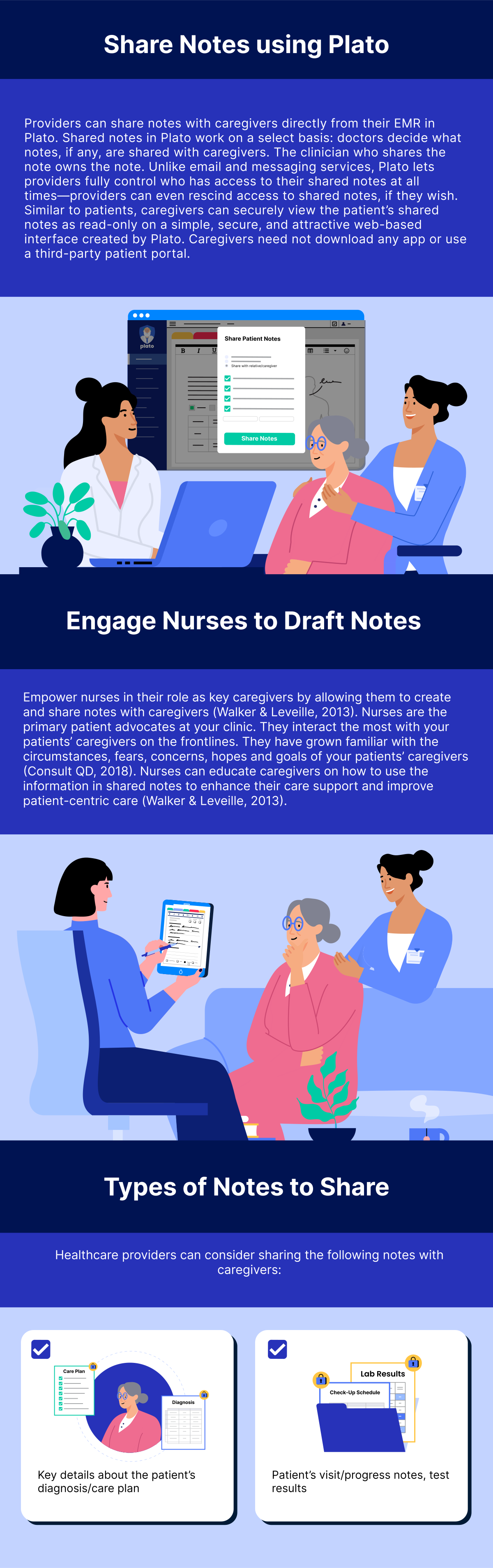
Similar to how you would share notes with patients, it’s important to first establish protocols and policies to best manage sharing notes with caregivers at your clinic. If you are already sharing notes with patients, you can apply the same best practices to sharing notes with caregivers.
Step 1: Educate Employees
- Explain the purpose and benefits for caregivers and staff (Miralles et al., 2021)
- Share notes in a timely manner. Set up follow-up guidelines if necessary, e.g. invitations and reminders to read notes (AAN, n.d.).
Helpful Resources:
-
Benefits of note sharing for caregivers and clinicians
-
Address common questions by clinicians about note sharing
Step 2: Educate Caregivers
-
Explain the purpose and benefits for caregivers and patients (Miralles et al., 2021). Consider adding a page on your clinic’s website about shared notes that caregivers can easily refer to.
- Invite caregivers to read shared notes. Improve caregiver engagement and care outcomes by informing caregivers when a shared note is available (Mafi et al., 2016).
- Address FAQs by caregivers (OpenNotes, n.d.-c) E.g. What if caregivers have questions about shared notes? Let caregivers know they can discuss questions in the next visit. If caregivers have an urgent question or update, invite them to teleconsult with their clinician nurse using PlatoConnect.
Helpful Resources:
-
Introduce shared notes to caregivers and explain how it works
-
Inform caregivers when a new shared note is available
-
Address FAQs by patients and caregivers
-
Address FAQs by patients and caregivers
Step 3: Set Documentation Standards
- Involve patients and caregivers in the note-taking process. Minimise questions post-visit by checking for understanding and accuracy about the note’s contents with your patient and their caregiver during the visit (Klein et al., 2016; University Hospitals, 2017).
- Shared notes should only include details already discussed in the visit (Miralles et al., 2021). This prevents patients and caregivers from feeling surprised, confused or anxious about contents in shared notes.
- Never oversimplify your notes. You may minimally adapt your notes to support patients or caregivers with limited health literacy, but maintaining accuracy for record-keeping is vital (Cruz, n.d.).
- Avoid jargon, acronyms, and abbreviations that can be easily misinterpreted by patients and caregivers. For example, use “short of breath” instead of “sob” (Klein et al., 2016).
- Generally, notes should be positive, supportive and give a balanced perspective (Klein et al., 2016).
Helpful Resources:
-
Suggestions to keep in mind when drafting notes
-
Suggestions for implementing shared notes at your clinical practice
Share Your First Note
On a Final Note
Thank you for reading Plato’s whitepaper. We hope you’ve enjoyed “The Collaborative Specialist Clinic” by Plato.
Automate work and simplify collaboration by sharing select folders with colleagues, regardless whether they use Plato. Empower your patients and their caregivers by sharing notes with them too. Help your patients better understand their diagnosis and care plan, so they can take greater control of their care. Give caregivers the knowledge they need to deliver care effectively.
Want to share notes? Plato is the only platform you need: Book a Demo.
Already using Plato? Learn How to Share Your First Note.
References
AAN. (n.d.). Sharing Information Electronically With Patients. American Academy of Neurology. Retrieved 2021, from https://www.aan.com/tools-and-resources/practicing-neurologists-administrators/health-information-technology/electronic-health-records/notes-release-toolkit/
Accenture. (2012). Most Patients Want to Self-Manage Healthcare Online, Accenture Survey Finds. https://newsroom.accenture.com/industries/health-public-service/most-patients-want-to-self-manage-healthcare-online-accenture-survey-finds.htm
Anderson, J. L., Dodman, S., Kopelman, M., & Fleming, A. (1979). Patient information recall in a rheumatology clinic. Rheumatology, 18(1), 18–22. https://doi.org/10.1093/rheumatology/18.1.18
Armstrong, S. (2017). Patient access to health records: striving for the Swedish ideal. BMJ, j2069. https://doi.org/10.1136/bmj.j2069
Bardach, S. H., Real, K., & Bardach, D. R. (2017). Perspectives of healthcare practitioners: An exploration of interprofessional communication using electronic medical records. Journal of Interprofessional Care, 31(3), 300–306. https://doi.org/10.1080/13561820.2016.1269312
Bell, S. K., Folcarelli, P., Fossa, A., Gerard, M., Harper, M., Leveille, S., Moore, C., Sands, K. E., Sarnoff Lee, B., Walker, J., & Bourgeois, F. (2018). Tackling Ambulatory Safety Risks Through Patient Engagement. Journal of Patient Safety. Published. https://doi.org/10.1097/pts.0000000000000494
Birtwell, K. B., & Sandberg, E. H. (2014). Caregivers’ memory for medical information: The effects of stress and the presence of a young child. Journal of Communication in Healthcare, 7(3), 171–180. https://doi.org/10.1179/1753807614y.0000000057
Brussels Health Network. (2021). My Shared Health Record. https://brusselshealthnetwork.be/en/patients/im-inquiring/my-shared-health-record/
Burakevych, N., McKinlay, C. J. D., Alsweiler, J. M., & Harding, J. E. (2015). Accuracy of caregivers’ recall of hospital admissions: implications for research. Acta Paediatrica, 104(11), 1199–1204. https://doi.org/10.1111/apa.13208
Burton, L. C., Anderson, G. F., & Kues, I. W. (2004). Using Electronic Health Records to Help Coordinate Care. The Milbank Quarterly, 82(3), 457–481. https://doi.org/10.1111/j.0887-378x.2004.00318.x
Chase, D. A., Ash, J. S., Cohen, D. J., Hall, J., Olson, G. M., & Dorr, D. A. (2014). The EHR’s roles in collaboration between providers: A qualitative study. AMIA . . . Annual Symposium Proceedings, 1718–1727. https://www.ncbi.nlm.nih.gov/pmc/articles/PMC4419964/
Cheung, E. (2019). How do you get access to your medical records? Hong Kong’s new pilot e-health portal will give patients a. . . South China Morning Post. https://www.scmp.com/news/hong-kong/health-environment/article/3010208/pilot-e-health-portal-give-hong-kong-patients
Cijvat, C. D., Cornet, R., & Hägglund, M. (2021). Factors Influencing Development and Implementation of Patients’ Access to Electronic Health Records—A Comparative Study of Sweden and the Netherlands. Frontiers in Public Health, 9. https://www.frontiersin.org/articles/10.3389/fpubh.2021.621210/full
Cleveland Clinic. (2019). Caregiver Burnout; Causes, Symptoms & Prevention. https://my.clevelandclinic.org/health/diseases/9225-caregiver-burnout
Consult QD. (2018). Nursing’s Role in Today’s Patient Experience. Cleveland Clinic. https://consultqd.clevelandclinic.org/nursings-role-in-todays-patient-experience/
Cruz, J. S. (n.d.). Benefits of Sharing Notes With Patients. Today’s Geriatric Medicine. https://www.todaysgeriatricmedicine.com/news/ex_101416.shtml
DeAngelis, A., Chambers, I., & Hall, G. (2010). The accuracy of medical history information in referral letters. Australian Dental Journal, 55(2), 188–192. https://doi.org/10.1111/j.1834-7819.2010.01221.x
Deloitte. (2013). Digital collaboration: Delivering innovation, productivity and happiness. https://www2.deloitte.com/content/dam/Deloitte/se/Documents/technology-media-telecommunications/deloitte-digital-collaboration.pdf
Delbanco, T., Walker, J., Bell, S. K., Darer, J. D., Elmore, J. G., Farag, N., Feldman, H. J., Mejilla, R., Ngo, L., Ralston, J. D., Ross, S. E., Trivedi, N., Vodicka, E., & Leveille, S. G. (2012). Inviting Patients to Read Their Doctors’ Notes: A Quasi-experimental Study and a Look Ahead. Annals of Internal Medicine, 157(7), 461. https://doi.org/10.7326/0003-4819-157-7-201210020-00002
DesRoches, C. M., Leveille, S., Bell, S. K., Dong, Z. J., Elmore, J. G., Fernandez, L., Harcourt, K., Fitzgerald, P., Payne, T. H., Stametz, R., Delbanco, T., & Walker, J. (2020). The Views and Experiences of Clinicians Sharing Medical Record Notes With Patients. JAMA Network Open, 3(3). https://doi.org/10.1001/jamanetworkopen.2020.1753
Desai, A. D., Jacob-Files, E. A., Wignall, J., Wang, G., Pratt, W., Mangione-Smith, R., & Britto, M. T. (2018). Caregiver and Health Care Provider Perspectives on Cloud-Based Shared Care Plans for Children With Medical Complexity. Hospital Pediatrics, 8(7), 394–403. https://doi.org/10.1542/hpeds.2017-0242
eHealth stakeholder group. (2013). Patient access to the electronic health record. UEMS. https://www.uems.eu/__data/assets/pdf_file/0010/1531/Patient_access_to_EHR_-_FINAL__2_.pdf
Engelbart, C. (1962). Augmenting Human Intellect: A Conceptual Framework - 1962 (AUGMENT,3906,) -. Doug Engelbart Institute. https://web.archive.org/web/20110504035147/https://www.dougengelbart.org/pubs/augment-3906.html
EPR. (2021). Participate in the EPR. Patientrecord.Ch. https://www.patientendossier.ch/en/health-professionals/participate
Esch, T., Mejilla, R., Anselmo, M., Podtschaske, B., Delbanco, T., & Walker, J. (2016). Engaging patients through open notes: an evaluation using mixed methods. BMJ Open, 6(1), e010034. https://doi.org/10.1136/bmjopen-2015-010034
Fischer, K. (2020). Patient Access To Medical Records Is Set To Become Mandatory. Verywell Health. https://www.verywellhealth.com/opennotes-medical-records-5087871
Foote, K. D. (2017). A Brief History of Cloud Computing. DATAVERSITY. https://www.dataversity.net/brief-history-cloud-computing/
Fossa, A. J., Bell, S. K., & DesRoches, C. (2018). OpenNotes and shared decision making: a growing practice in clinical transparency and how it can support patient-centered care. Journal of the American Medical Informatics Association, 25(9), 1153–1159. https://doi.org/10.1093/jamia/ocy083
Forrester Research. (2020). The Total Economic ImpactTM Of Google G Suite. Forrester. https://services.google.com/fh/files/blogs/total_economic_impact_gsuite_forrester.pdf
Fowles, J. B., Kind, A. C., Craft, C., Kind, E. A., Mandel, J. L., & Adlis, S. (2004). Patients’ Interest in Reading Their Medical Record. Archives of Internal Medicine, 164(7), 793. https://doi.org/10.1001/archinte.164.7.793
Frandsen, B. R., PhD, Joynt, K. E., MD, Rebitzer, J. B., PhD, & Jha, A. K., MD. (2015). Care Fragmentation, Quality, and Costs Among Chronically Ill Patients. AJMC. https://www.ajmc.com/view/care-fragmentation-quality-costs-among-chronically-ill-patients
Gerard, M., Fossa, A., Folcarelli, P. H., Walker, J., & Bell, S. K. (2017). What Patients Value About Reading Visit Notes: A Qualitative Inquiry of Patient Experiences With Their Health Information. Journal of Medical Internet Research, 19(7), e237. https://doi.org/10.2196/jmir.7212
Gewirtz, D. (2018). Alas, poor Lotus/IBM Notes, we knew ye well. ZDNet. https://www.zdnet.com/article/alas-poor-lotusibm-notes-we-knew-ye-well/
Grote-Westrick, M. (2021). New German digital project paves the way for online access to personal electronic health records. The BMJ. https://blogs.bmj.com/bmj/2021/02/18/new-german-digital-project-paves-the-way-for-online-access-to-personal-electronic-health-records/
Jackson, S. L., Mejilla, R., Darer, J. D., Oster, N. V., Ralston, J. D., Leveille, S. G., Walker, J., Delbanco, T., & Elmore, J. G. (2014). Patients Who Share Transparent Visit Notes With Others: Characteristics, Risks, and Benefits. Journal of Medical Internet Research, 16(11), e247. https://doi.org/10.2196/jmir.3363
Janssen, M., Fluit, C. R. M. G., Sagasser, M. H., Kusters, L. H. J., Scherpbier-de Haan, N. D., & de Graaf, J. (2020). Competencies for collaboration between general practitioners and medical specialists: a qualitative study of the patient perspective. BMJ Open, 10(7), e037043. https://doi.org/10.1136/bmjopen-2020-037043
Johansen, M. A., Kummervold, P. E., Sørensen, T., & Zanaboni, P. (2019). Health Professionals’ Experience with Patients Accessing Their Electronic Health Records: Results from an Online Survey. MEDINFO 2019: Health and Wellbeing e-Networks for All, 264, 504–508. https://norceresearch.brage.unit.no/norceresearch-xmlui/bitstream/handle/11250/2640345/SHTI-264-SHTI190273.pdf?sequence=2
Jormanainen, V., Parhiala, K., Niemi, A., Erhola, M., Keskimäki, I., & Kaila, M. (2019). Half of the Finnish population accessed their own data: comprehensive access to personal health information online is a corner-stone of digital revolution in Finnish health and social care. Finnish Journal of EHealth and EWelfare, 11(4). https://doi.org/10.23996/fjhw.83323
Kane, B. T., Toussaint, P. J., & Luz, S. (2013). Shared decision making needs a communication record. Proceedings of the 2013 Conference on Computer Supported Cooperative Work - CSCW ’13. Published. https://www.researchgate.net/publication/226691111_Information_Sharing_at_Multidisciplinary_Medical_Team_Meetings
Kessels, R. P. C. (2003). Patients’ memory for medical information. JRSM, 96(5), 219–222. https://www.ncbi.nlm.nih.gov/pmc/articles/PMC539473/
Klein, J. W., Jackson, S. L., Bell, S. K., Anselmo, M. K., Walker, J., Delbanco, T., & Elmore, J. G. (2016). Your Patient Is Now Reading Your Note: Opportunities, Problems, and Prospects. The American Journal of Medicine, 129(10), 1018–1021. https://doi.org/10.1016/j.amjmed.2016.05.015
Lai, L. (2016). Check health records on new portal. The Straits Times. https://www.straitstimes.com/singapore/health/check-health-records-on-new-portal
Laws, M. B., Lee, Y., Taubin, T., Rogers, W. H., & Wilson, I. B. (2018). Factors associated with patient recall of key information in ambulatory specialty care visits: Results of an innovative methodology. PLOS ONE, 13(2), e0191940. https://doi.org/10.1371/journal.pone.0191940
Mafi, J. N., Mejilla, R., Feldman, H., Ngo, L., Delbanco, T., Darer, J., Wee, C., & Walker, J. (2016). Patients learning to read their doctors’ notes: the importance of reminders. Journal of the American Medical Informatics Association, 23(5), 951–955. https://academic.oup.com/jamia/article/23/5/951/2379793
Makeham, M. A., & Ryan, A. (2019). Sharing information safely and securely: the foundation of a modern health care system. Medical Journal of Australia, 210(S6). https://doi.org/10.5694/mja2.50038
Maly, R. C., Bourque, L. B., & Engelhardt, R. F. (1999). A randomized controlled trial of facilitating information giving to patients with chronic medical conditions: effects on outcomes of care. The Journal of family practice, 48(5), 356–363. https://pubmed.ncbi.nlm.nih.gov/10334612/
Martin, D. B. (2015). “Write It Down Like You Told Me”: Transparent Records and My Oncology Practice. Journal of Oncology Practice, 11(4), 285–286. https://doi.org/10.1200/jop.2014.003095
Marwaha, S. (2021). Why can’t you access your health record online? Healthy Debate. https://healthydebate.ca/2018/07/topic/patient-medical-record-online/
McPhail, S., & Haines, T. (2010). Response shift, recall bias and their effect on measuring change in health-related quality of life amongst older hospital patients. Health and Quality of Life Outcomes, 8(1), 65. https://doi.org/10.1186/1477-7525-8-65
Michael, M., & Bordley, C. (1982). Do Patients Want Access to Their Medical Records? Medical Care, 20(4), 432–435. https://www.jstor.org/stable/3764021
Miliard, M. (2015). OpenNotes: “This is not a software package, this is a movement.” Healthcare IT News. https://www.healthcareitnews.com/news/opennotes-not-software-package-movement
Miralles, P., DesRoches, C., & Brown, M. (2021). Sharing Clinical Notes With Patients. American Medical Association. https://www.ama-assn.org/system/files/2021-04/sharing-clinical-notes-with-patients-toolkit.pdf
Moll, J., Rexhepi, H., Cajander, S., Grünloh, C., Huvila, I., Hägglund, M., Myreteg, G., Scandurra, I., & ÅHlfeldt, R. M. (2018). Patients’ Experiences of Accessing Their Electronic Health Records: National Patient Survey in Sweden. Journal of Medical Internet Research, 20(11), e278. https://doi.org/10.2196/jmir.9492
Morley, L., & Cashell, A. (2017). Collaboration in Health Care. Journal of Medical Imaging and Radiation Sciences, 48(2), 207–216. https://doi.org/10.1016/j.jmir.2017.02.071
Moscovitch, B. (2020). Americans Want Federal Government to Make Sharing Electronic Health Data Easier. The Pew Charitable Trusts. https://www.pewtrusts.org/en/research-and-analysis/articles/2020/09/16/americans-want-federal-government-to-make-sharing-electronic-health-data-easier
MTRC. (2019). Regulations for stimulating digital care in the Netherlands. Med Tech Reimbursement Consulting. https://mtrconsult.com/news/regulations-stimulating-digital-care-netherlands
National Centre for eHealth. (n.d.). E-health services available for everyone and at all times in Iceland. Healthcare and Care at Distance. Retrieved August 5, 2021, from https://www.healthcareatdistance.com/media/1121/e-health-services-available-for-everyone-and-at-all-times-in-iceland.pdf
Nguyen, M. H., Smets, E. M. A., Bol, N., Bronner, M. B., Tytgat, K. M. A. J., Loos, E. F., & van Weert, J. C. M. (2018). Fear and forget: how anxiety impacts information recall in newly diagnosed cancer patients visiting a fast-track clinic. Acta Oncologica, 58(2), 182–188. https://doi.org/10.1080/0284186x.2018.1512156
Nøhr, C., Parv, L., Kink, P., Cummings, E., Almond, H., Nørgaard, J. R., & Turner, P. (2017). Nationwide citizen access to their health data: analysing and comparing experiences in Denmark, Estonia and Australia. BMC Health Services Research, 17(1). https://doi.org/10.1186/s12913-017-2482-y
O’Daniel M, Rosenstein AH. Professional Communication and Team Collaboration. In: Hughes RG, editor. Patient Safety and Quality: An Evidence-Based Handbook for Nurses. Rockville (MD): Agency for Healthcare Research and Quality (US); 2008 Apr. Chapter 33. Available from: https://www.ncbi.nlm.nih.gov/books/NBK2637/
OpenNotes. (n.d.-a). OpenNotes. Retrieved 2021, from https://www.opennotes.org/
OpenNotes. (n.d.-b). Effects of Open Notes: FAQs for Clinicians. Retrieved 2021, from https://www.opennotes.org/effects-of-opennotes-faqs/
OpenNotes. (n.d.-c). Reading Your Notes: FAQs for Patients. Retrieved 2021, from https://www.opennotes.org/reading-your-notes-faqs-for-patients/
Parkin, E., & Loft, P. (2020). Patient health records: access, sharing and confidentiality. The House of Commons Library. https://researchbriefings.files.parliament.uk/documents/SN07103/SN07103.pdf
Patel, M., Khan, A. Q., & Thiruchelvam, J. (2011). Importance of quality in referral letters sent for potentially malignant oral, head and neck lesions. Dental Update, 38(3), 192–198. https://doi.org/10.12968/denu.2011.38.3.192
Ralston, J. D., Yu, O., Penfold, R. B., Gundersen, G., Ramaprasan, A., & Schartz, E. M. (2021). Changes in Clinician Attitudes Toward Sharing Visit Notes: Surveys Pre-and Post-Implementation. Journal of General Internal Medicine. Published. https://www.ncbi.nlm.nih.gov/pmc/articles/PMC8061150/
Raptis, D. A., Frei, L., Bindschdler, P., Tschuor, C., & Breitenstein, S. (2020). Attitudes and acceptance of patients undergoing visceral surgery towards an open access electronic medical record – a Swiss-German single-centre study. Swiss Medical Weekly. Published. https://doi.org/10.4414/smw.2020.20328
Richman, L. S., & Slovak, J. (1987). SOFTWARE CATCHES THE TEAM SPIRIT New computer programs may soon change the way groups of people work together -- and start delivering the long-awaited payoff from office automation. - June 8, 1987. Fortune Magazine. https://money.cnn.com/magazines/fortune/fortune_archive/1987/06/08/69109/index.htm
Rosen, M. A., DiazGranados, D., Dietz, A. S., Benishek, L. E., Thompson, D., Pronovost, P. J., & Weaver, S. J. (2018). Teamwork in healthcare: Key discoveries enabling safer, high-quality care. American Psychologist, 73(4), 433–450. https://doi.org/10.1037/amp0000298
Ross, S. E., Moore, L. A., Earnest, M. A., Wittevrongel, L., & Lin, C. T. (2004). Providing a Web-based Online Medical Record with Electronic Communication Capabilities to Patients With Congestive Heart Failure: Randomized Trial. Journal of Medical Internet Research, 6(2), e12. https://www.ncbi.nlm.nih.gov/pmc/articles/PMC1550594/
Salmi, L., Dong, Z. J., Yuh, B., Walker, J., & DesRoches, C. M. (2020). Open Notes in Oncology: Patient versus Oncology Clinician Views. Cancer Cell, 38(6), 767–768. https://doi.org/10.1016/j.ccell.2020.09.016
Scandurra, I., Jansson, A., Forsberg-Fransson, M. L., & ÅLander, T. (2015). Is ‘Patient’s Online Access to Health Records’ a Good Reform? – Opinions from Swedish Healthcare Professionals Differ. Procedia Computer Science, 64, 964–968. https://doi.org/10.1016/j.procs.2015.08.614
Scherbring, M. (2002). Effect of Caregiver Perception of Preparedness on Burden in an Oncology Population. Oncology Nursing Forum, 29(6), E70–E76. https://doi.org/10.1188/02.onf.e70-e76
Séroussi, B., & Bouaud, J. (2016). Adoption of a Nationwide Shared Medical Record in France: Lessons Learnt after 5 Years of Deployment. AMIA Annual Symposium Proceedings. AMIA Symposium, 1100–1109. https://www.ncbi.nlm.nih.gov/pmc/articles/PMC5333332/
Shenkin, B. N., & Warner, D. C. (1973). Giving the Patient His Medical Record: A Proposal to Improve the System. New England Journal of Medicine, 289(13), 688–692. https://doi.org/10.1056/nejm197309272891311
Shu, T., Xu, F., Li, H., & Zhao, W. (2021). Investigation of patients’ access to EHR data via smart apps in Chinese Hospitals. BMC Medical Informatics and Decision Making, 21(S2). https://doi.org/10.1186/s12911-021-01425-w
Smith, C. D., Balatbat, C., Corbridge, S., Dopp, A. L., Fried, J., Harter, R., Landefeld, S., Martin, C. Y., Opelka, F., Sandy, L., Sato, L., & Sinsky, C. (2018). Implementing Optimal Team-Based Care to Reduce Clinician Burnout. NAM Perspectives, 8(9). https://doi.org/10.31478/201809c
Song, S.-. (2018). Taiwan saves budget by sharing medical information through cloud. KBR. https://www.koreabiomed.com/news/articleView.html?idxno=4635
Spencer, E. A., Brassey, J., & Mahtani, K. (2017). Recall bias. Catalogue of Bias Collaboration. https://catalogofbias.org/biases/recall-bias/
Strum, S. B. (2019). Patients Managing Medications and Reading Their Visit Notes. Annals of Internal Medicine. https://www.acpjournals.org/doi/10.7326/L19-0598
Sundhed. (2008). IT brings the Danish health sector together. https://www.sundhed.dk/content/cms/5/3405_it-brings-the-danish-health-sector-together.pdf
Tapuria, A., Porat, T., Kalra, D., Dsouza, G., Xiaohui, S., & Curcin, V. (2021). Impact of patient access to their electronic health record: systematic review. Informatics for Health and Social Care, 46(2), 194–206. https://doi.org/10.1080/17538157.2021.1879810
Tieu, L., Sarkar, U., Schillinger, D., Ralston, J. D., Ratanawongsa, N., Pasick, R., & Lyles, C. R. (2015). Barriers and Facilitators to Online Portal Use Among Patients and Caregivers in a Safety Net Health Care System: A Qualitative Study. Journal of Medical Internet Research, 17(12), e275. https://doi.org/10.2196/jmir.4847
TigerConnect. (2020). 5 Benefits of Interprofessional Collaboration in Healthcare. https://tigerconnect.com/blog/5-benefits-of-interprofessional-collaboration-in-healthcare/
Topp, J., Andrees, V., Heesen, C., Augustin, M., & Blome, C. (2019). Recall of health-related quality of life: how does memory affect the SF-6D in patients with psoriasis or multiple sclerosis? A prospective observational study in Germany. BMJ Open, 9(11), e032859. https://doi.org/10.1136/bmjopen-2019-032859
University Hospitals. (2017). Writing Patient-Friendly Notes. https://www.opennotes.org/wp-content/uploads/2018/01/UniversityHospitals_TipsforWritingPatientFriendlyNotes.pdf
Vahdat, S., Hamzehgardeshi, L., Hessam, S., & Hamzehgardeshi, Z. (2014). Patient Involvement in Health Care Decision Making: A Review. Iranian Red Crescent Medical Journal, 16(1). https://www.ncbi.nlm.nih.gov/pmc/articles/PMC3964421/
Vos, J. F. J., Boonstra, A., Kooistra, A., Seelen, M., & van Offenbeek, M. (2020). The influence of electronic health record use on collaboration among medical specialties. BMC Health Services Research, 20(1). https://doi.org/10.1186/s12913-020-05542-6
Vreeland, A., Persons, K. R., Primo, H., Bishop, M., Garriott, K. M., Doyle, M. K., Silver, E., Brown, D. M., & Bashall, C. (2016). Considerations for Exchanging and Sharing Medical Images for Improved Collaboration and Patient Care: HIMSS-SIIM Collaborative White Paper. Journal of Digital Imaging, 29(5), 547–558. https://www.ncbi.nlm.nih.gov/pmc/articles/PMC5023527/
Walker, J., & Leveille, S. (2013). How Nurses Can Empower Patients Through Shared Notes. RWJF. https://www.rwjf.org/en/blog/2013/01/how_nurses_can_empow.html
Walker, J., Leveille, S., Bell, S., Chimowitz, H., Dong, Z., Elmore, J. G., Fernandez, L., Fossa, A., Gerard, M., Fitzgerald, P., Harcourt, K., Jackson, S., Payne, T. H., Perez, J., Shucard, H., Stametz, R., DesRoches, C., & Delbanco, T. (2019). OpenNotes After 7 Years: Patient Experiences With Ongoing Access to Their Clinicians’ Outpatient Visit Notes. Journal of Medical Internet Research, 21(5), e13876. https://doi.org/10.2196/13876
Wolff, J. L., Berger, A., Clarke, D., Green, J. A., Stametz, R., Yule, C., & Darer, J. D. (2016). Patients, care partners, and shared access to the patient portal: online practices at an integrated health system. Journal of the American Medical Informatics Association, 23(6), 1150–1158. https://doi.org/10.1093/jamia/ocw025
Wolff, J. L., Darer, J. D., Berger, A., Clarke, D., Green, J. A., Stametz, R. A., Delbanco, T., & Walker, J. (2016). Inviting patients and care partners to read doctors’ notes: OpenNotes and shared access to electronic medical records. Journal of the American Medical Informatics Association, 24(e1), e166–e172. https://doi.org/10.1093/jamia/ocw108
Yu, M. M., Weathers, A. L., Wu, A. D., & Evans, D. A. (2017). Sharing notes with patients. Neurology: Clinical Practice, 7(2), 179–185. https://doi.org/10.1212/cpj.0000000000000335
Zanaboni, P., Kummervold, P. E., Sørensen, T., & Johansen, M. A. (2020). Patient Use and Experience With Online Access to Electronic Health Records in Norway: Results From an Online Survey. Journal of Medical Internet Research, 22(2), e16144. https://doi.org/10.2196/16144