Run a Contactless Medical Clinic
About Plato
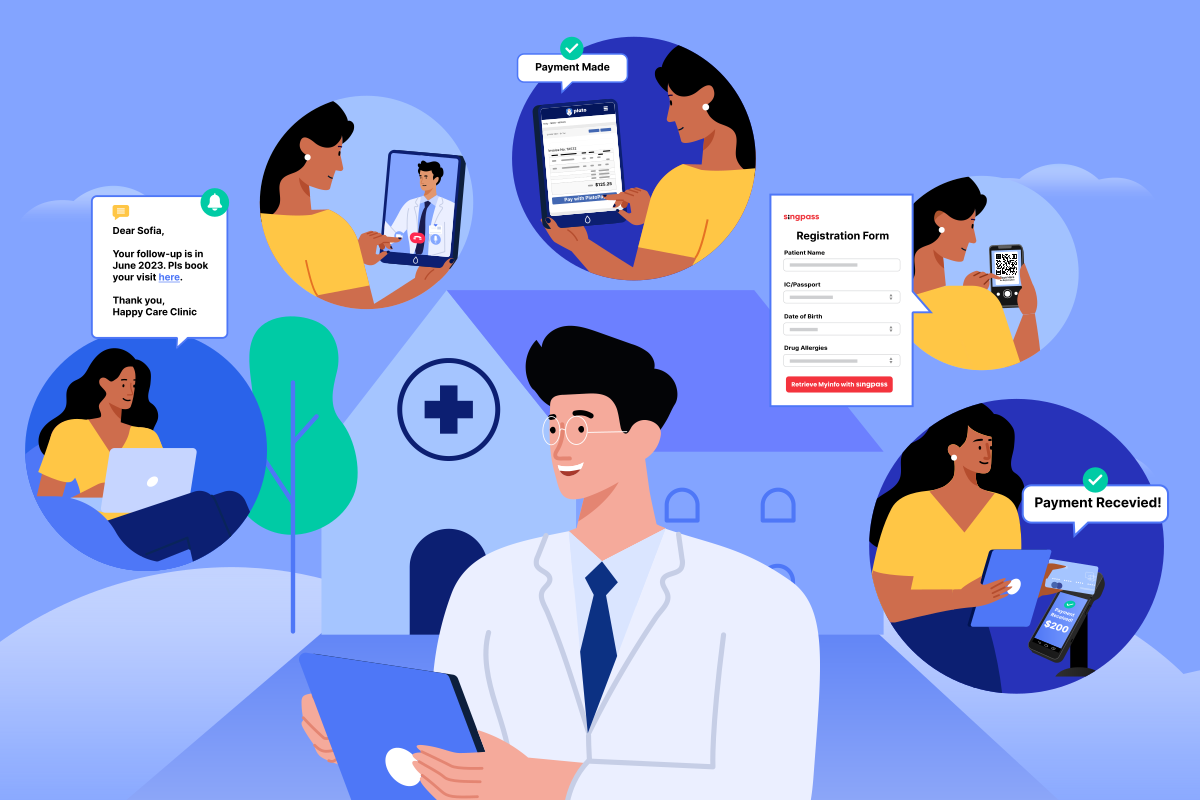
Plato is more than just a clinic software - it’s your clinic’s Operating System. More than 2200 healthcare providers across Singapore, Malaysia, and Hong Kong trust Plato to automate the work of one team member at their practices.
Plato started by building a great EMR for doctors - letting them write, draw, type, and create records their way. Prior to Plato, many doctors used electronic billing systems, but had not yet been able to make the leap to going paperless. To this day, Plato views EMR as a cornerstone of a great clinic management software.
Now that COVID-19 has altered the healthcare landscape, an outpatient clinic’s needs have changed. More doctors are offering virtual consults to repeat patients, particularly those based overseas. Patients also expect that physical clinics be run contactlessly - paper registration forms should be replaced with digital registration processes, payment should be done with a tap, and consent forms and notes should be digitally sent to patients.
Plato is a contactless clinic’s Operating System. Book a training session or demo to find out how to take your clinic contactless, today.
Table of Contents
Why Run a Contactless Clinic?
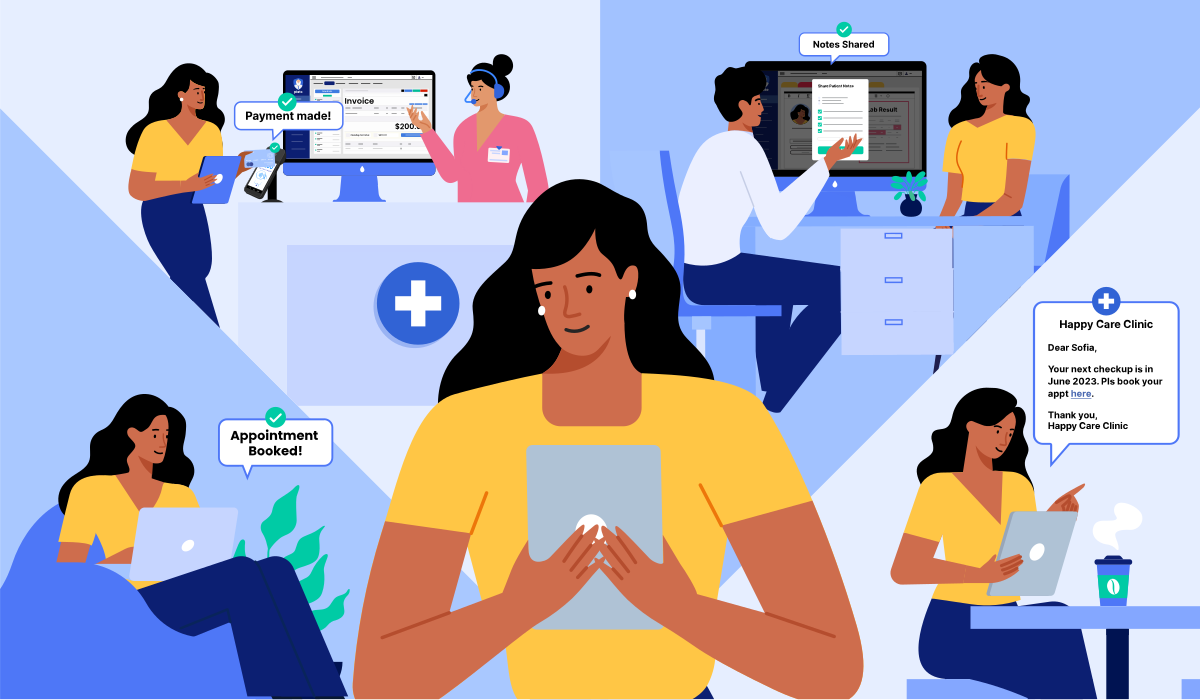
A “Contactless Takeover” is changing how businesses operate—from digital food menus and cinema ticketing machines to automated payments in clinics. Growth in contactless operations—accelerated by strict safe distancing protocols—is creating a permanent change in consumer behaviour. As people become comfortable with a contactless way of life, patients will expect no less from all healthcare providers.
Contactless clinics ensure safer physical visits and increase the scope for automation of work. High volume and tight margin practices can particularly benefit from automation driven by going contactless.
Going Contactless is Relevant Beyond COVID-19
In the immediate horizon, running a contactless dental clinic adds a layer of protection for clinics teams and patients during the pandemic. Diseases can be transmitted through frequently touched objects, such as paper forms and payment terminals.
Studies have shown that the coronavirus can spread from contact with an infected surface and then touching one’s mouth, nose, or eyes. The COVID-19 virus can survive up to 2 to 3 days on plastic and stainless-steel surfaces, and may survive for up to 2 to 3 days on door handles, plastic-coated or laminated worktops, plus other hard surfaces (van Doremalen et al., 2020). For glass—similar to the screens of mobile devices—it’s estimated that the COVID-19 virus can survive for up to 96 hours, or four days at room temperature.
Though disinfecting frequently touched surfaces is a best practice that clinics already exercise, practices can further reduce the chance of any cross-contamination by running a contactless clinic. More importantly, the contactless trend is set to influence how patients consume healthcare in the long run.
Contactless Operations are Here to Stay
Looking forward, the contactless trend is set to continue post COVID-19. Automated ticket machines at cinemas, digital menus for ordering through apps at restaurants, and contactless payments in supermarkets are all examples of how contactless is taking root in everyday life. These changing consumer behaviours will have a spillover effect into healthcare, as patients become more accustomed to a contactless way of consuming products and services. For example, Mastercard’s global consumer survey 2020 found that 75% in Asia Pacific indicate they will continue to use contactless payment solutions, even after the pandemic is over.
Going Contactless Improves Efficiency
Going contactless has brought surprisingly efficient changes in consumer behaviour. For example, widespread SafeEntry scanning has made consumers more comfortable with using QR codes than ever before. Clinics have leveraged this opportunity by adopting pre-registration and self-registration with Singpass. Patients simply need to scan a QR code to share their registration information with patients, eliminating the need for paper registration forms. The prevalence of QR codes has made the adoption of QR code-based registration easy. Because patients already interact with QR codes in their daily life, they are comfortable using a QR code when they see one at a clinic.
Other changes in consumer behaviour as a result of the “Contactless Takeover” include a greater level of comfort with contactless payments, video calls, and more concern over touching shared surfaces. With the right software, these behaviour shifts can be opportunities for automation. Automation is also an investment in your clinic’s future—clinics that automate tasks are better equipped to deal with stressors like skill shortages and rising costs.
How to Run a Contactless Clinic with Plato
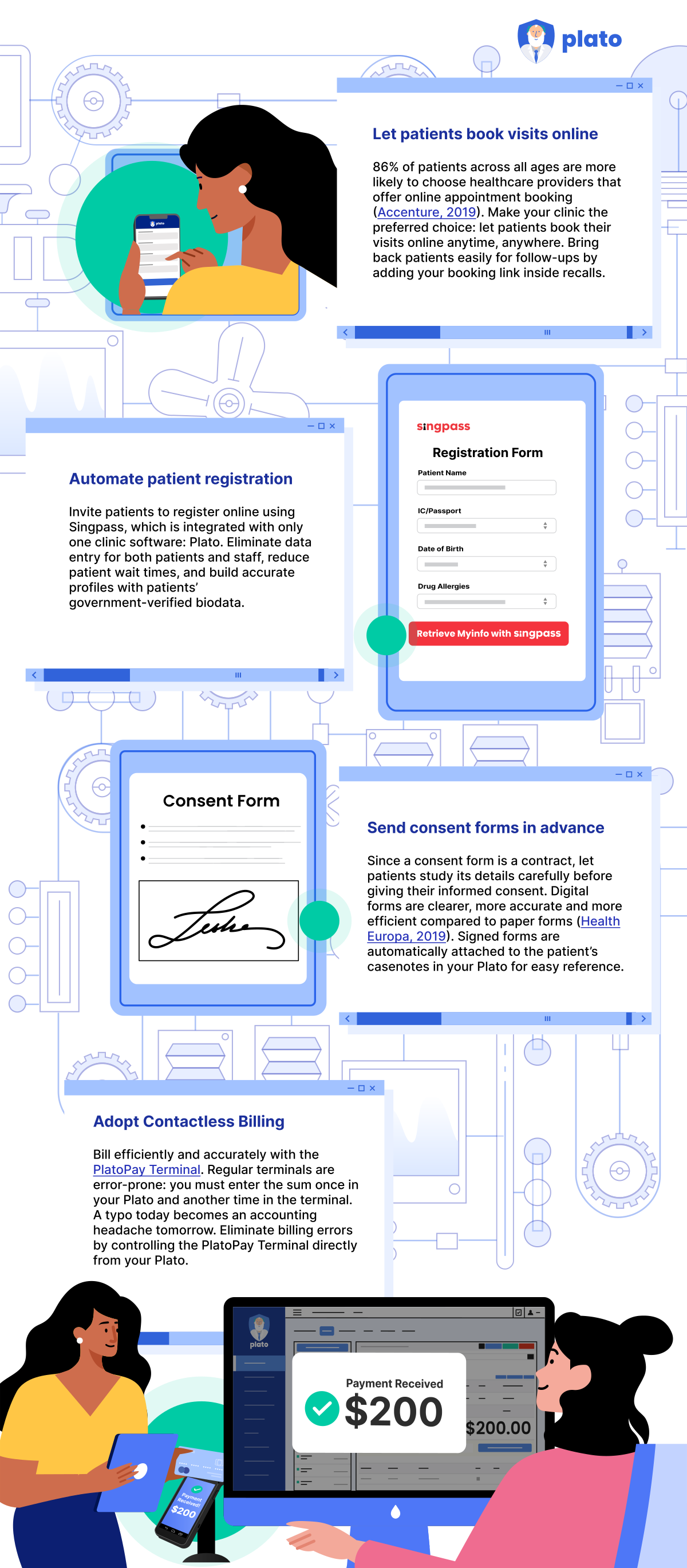
Choose a clinic management software (CMS) with the tools to automate as many clinic tasks as possible. Plato has everything clinics need to run a contactless practice on one platform. Using Plato as an example, this whitepaper will show you why and how clinics can go contactless at the front desk, during consultations and in post-consultation care.

CHAPTER 1/3
At the Front Desk
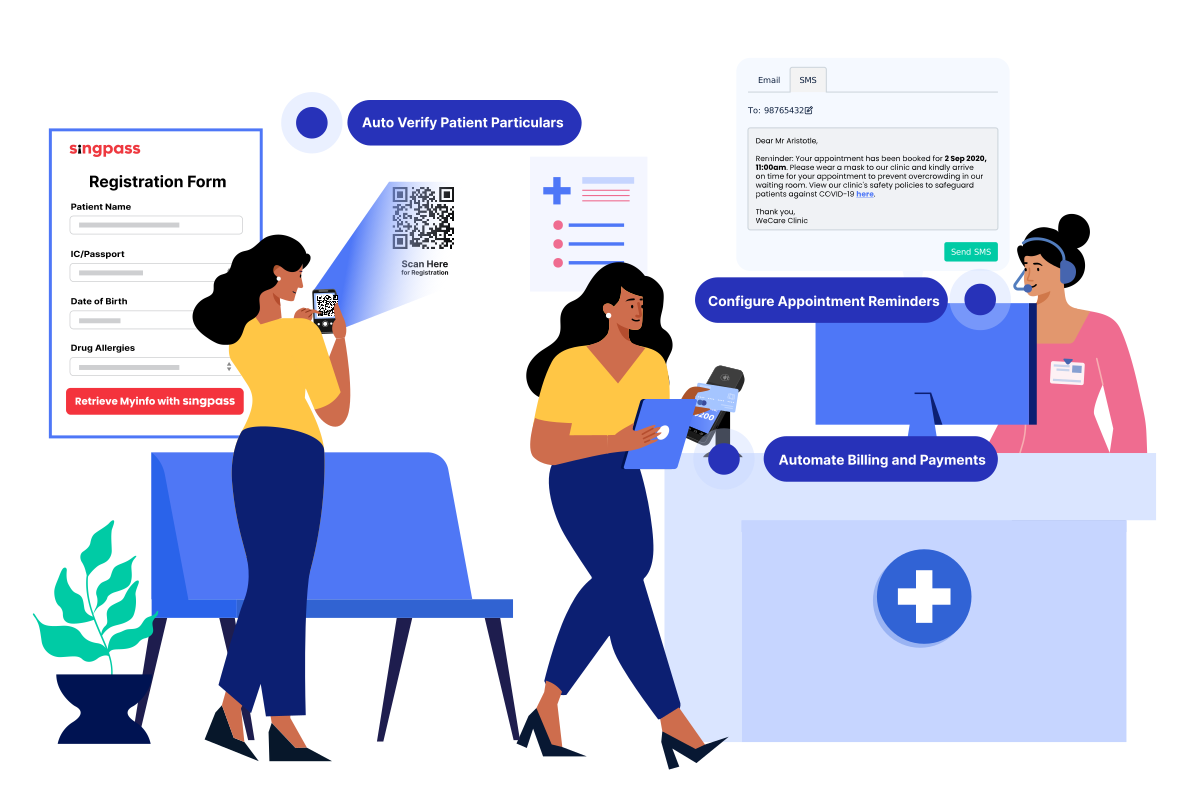
Your front desk has multiple common touchpoints that can go contactless using Plato, from self-registration to billing.
1) Configure Appointment Reminders
In light of COVID-19 and patients’ hesitation to come into the clinic, the Boston Consulting Group conducted a survey on Restoring Patients’ Confidence in Elective Health Care. The results indicate that providers have the power to influence up to about 50 percent of the conditions affecting a patient’s willingness to reschedule. If clinics share their safety policies and assure that the location is certified free of COVID-19, patients will be more willing to come in for care. In Plato, dental clinics can configure appointment reminder templates to include important details to reassure patients.
2) Use Pre-Registration and Self-Registration with Singpass
At some clinics, new patients register using a common tablet or set of registration papers. The tablet and/or papers are a vector for disease transmission. If a patient infected with COVID-19 uses the tablet, the virus could spread from the tablet to other patients. Further, staff must manually verify patient particulars before saving. Instead, set up pre-registration and self-registration with Singpass. Patients can either click a link or scan a QR code to receive an authorization message to send their registration information from Singpass to your Plato system. Patients enjoy less form-filling—Singpass does the heavy lifting for them by providing verified data upon patient authorisation. This service is available to Singapore residents - you can send non-residents a pre-registration form to similarly provide their information contactlessly.
3) Automate Billing and Payments
Since physical currency and payment terminals can be vectors for disease spread, the CDC advises using contactless payment whenever possible. Plato is the only CMS that offers integrated payment using the PlatoPay Terminal, so no manual data entry is needed. The PlatoPay Terminal’s automations ensure billing accuracy at two key points—the first is at each individual payment, and the second is during reconciliation when you generate your clinic’s day-end summary report. The PlatoPay Terminal also allows you to earn more while automating work. Transact exclusively through PlatoPay Terminal and lower your domestic Visa and Mastercard transaction fees to 2.1% + $0.20. The PlatoPay Terminal requires no deposit and no device rental fees. Find out more.
Appointment Reminders: Important Details to Include
Appointment date and time
Reminder to wear a mask and practice safe distancing in the clinic
Arrive on time to avoid overcrowding in the waiting room
Link to your clinic’s safety policies (e.g. on a website/blog) Some details that clinics can share in their safety policies online include:
- Before entering the clinic, all visitors must complete mandatory SafeEntry scan, hand-sanitising and temperature-taking
- All personnel must wear a mask and maintain one-metre safe distancing at all times while in the clinic
- New patients are strongly encouraged to register on their personal device via QR code
- All patients are encouraged to use contactless payments
- Due to government regulations and safe distancing protocols, there is limited capacity within the clinic. Patients are strongly encouraged to book their appointments before arriving at the clinic to avoid overcrowding in the premises.
Reminder to send the clinic any supporting digital documents (if needed)
Reminder to fast, including duration (if needed)
For any questions, contact (your clinic’s number)
Clinic address (optional)
CHAPTER 2/3
In-Consultation
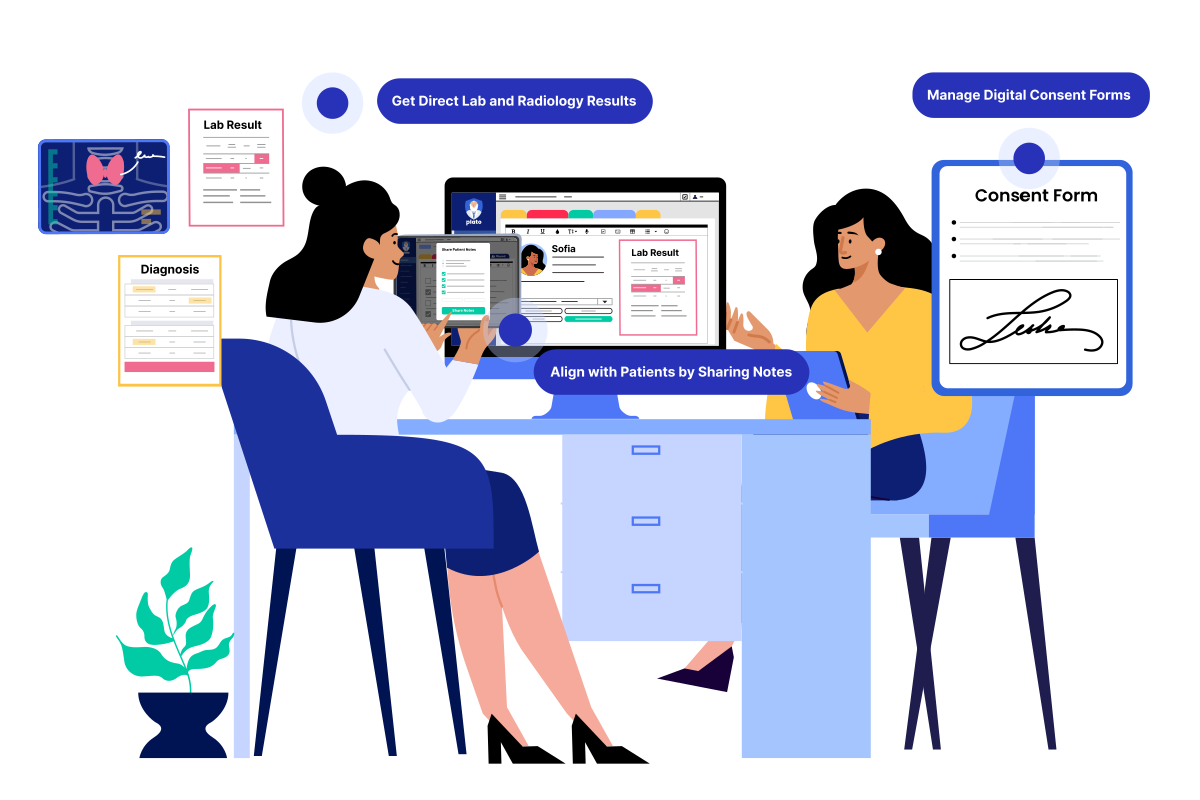
Doctors can do everything they need on the Plato platform, including managing digital consent forms and receiving direct lab and radiology results in Plato. Clinics enjoy higher accuracy and efficiency with zero data entry.
4) Get Direct Lab and Radiology Results
Manually scanning lab and radiology results into your CMS is an admin task that steals time from staff. Clinics that use Plato enjoy the convenience of receiving direct lab results from Innovative Diagnostics, ParkwayHealth Laboratory and Quest Laboratory, as well as direct radiology results from ParkwayHealth Radiology, Lifescan Imaging, OHM, and Radlink, inside their Plato. Staff don’t have to do any manual uploads. Doctors can easily share lab results with their notes attached directly with patients, and schedule follow-ups if necessary, all from within Plato.
5) Manage Digital Consent Forms
Besides minimising contact with contaminated paper surfaces, digital consent forms offer practices greater accuracy, clarity, and efficiency. A consent form is a contract; patients should review them carefully before giving their informed consent. At home, patients can peruse the details on a personal device (e.g. laptop/smartphone). After signing and submitting the form, this endorsed document—with date and time stamp for data integrity—is sent directly to your Plato and attached to the respective patient’s casenotes for easy reference. No manual data entry is needed.
6) Align with Patients by Sharing Notes
When receiving their diagnosis, a patient may be stressed and confused - and therefore unable to retain the full set of information and instructions given to them. Sharing simple notes like diagnosis, lab results, and care steps can give patients a clear reference point on their illness and next steps, after they leave your clinic.
Benefits of Digital Consent Forms
Consent forms are an integral part of informed consent in healthcare. To avoid unnecessary risks and costly litigations, it’s crucial that patients fully understand the risk-benefit relationship of any proposed treatment. Consent forms should be as clear as possible so patients can make an educated decision on whether or not they should proceed with any particular treatment plan.
In a study by St John et al. (2017) comparing handwritten surgical consent forms with digital procedure-specific forms, it was found that the handwritten consent forms suffered from “wide variation” and were “frequently suboptimal.” They contained incorrect and illegible details across three domains—patient details, procedure details, and patient sign-off. Nearly half of the paper forms were “missing essential complications.” The digital consent forms, on the other hand, had zero domain failures and “no variability in the documentation of potential complications.” The study concluded that “electronically-produced, procedure-specific consent forms can improve the quality and consistency of consent documentation.”
Aside from the legal and ethical obligations of healthcare providers in obtaining informed consent, studies have found that “patients prefer an active decision-making process wherein they interact with their physicians and research team.” (Bernat et al., 2006 and Ruiz-Moral et al., 2006 as cited in Knifed et al., 2008)
Informed consent is thus more than just a patient signing a form, but rather a collaborative decision-making process that builds trust in the relationship between the patient and their healthcare provider. Surgical consent, for example, “is not an event or a signature on a form but is an ongoing process of communication that continues throughout preoperative, perioperative, and postoperative care.” (Bernat et al., 2006)
CHAPTER 3/3
Post-Consult Care
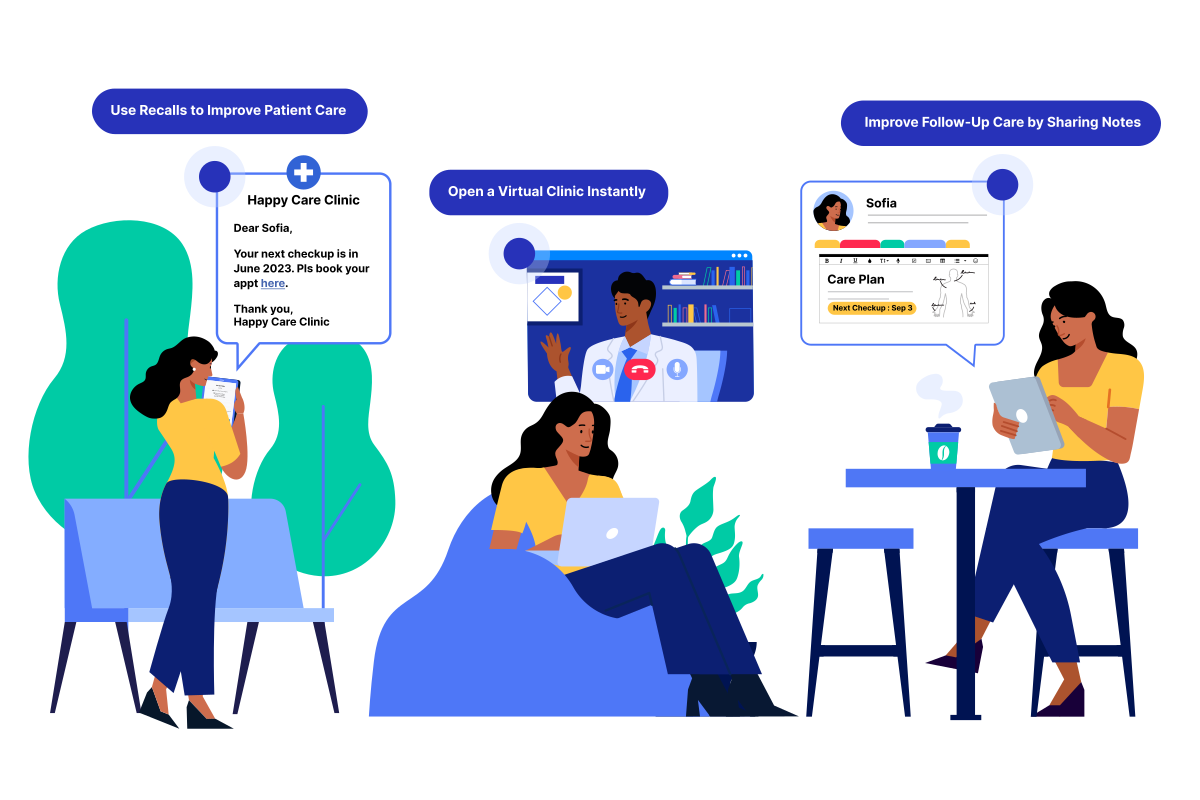
Contactless doesn’t mean no contact when your patient isn’t in the clinic. Even if your patient is unable to see you physically, Plato lets care teams teleconsult via PlatoConnect and reach patients using recalls.
7) Use Recalls to Improve Patient Care
Patients don’t always schedule their next appointment immediately after consult or refill their prescriptions diligently, especially if they lead busy lives. Recalls are reminder messages sent using email or text to patients who are past due for a visit or medicine refill. Recalls help promote medical adherence among patients and improve patient outcomes (Zhao et al., 2019). In Plato, clinics can schedule inventory-based and patient-based recalls for continuous care.
8) Open a Virtual Clinic Instantly
Clinics have safety protocols against COVID-19, but some patients remain anxious about coming in. Other practices prefer minimising physical consults for non-urgent cases. In such instances, teleconsults can ease nervous patients and help triage cases for urgent in-clinic care.
Instead of spending time sourcing for a third-party telemedicine provider, PlatoConnect lets practices consult virtually in a heartbeat. Each week, over 1,000 teleconsults occur over PlatoConnect. “Card not Present” PlatoPay lets clinics hold a patient’s card on file to secure the virtual visit and pay for the teleconsultation.
9) Improve Follow-Up Care by Sharing Notes
Enable patients and their caregivers to manage follow-up care effectively by sharing notes. Give patients clear and referenceable instructions and help them understand their diagnosis and follow-up steps. You don’t need to share every note - many doctors share a summary note and diagnosis, care plans, and lab results with patients. Care plans can be templated and created in advance. For example, for a pre-diabetic patient, you might have a care plan explaining general ways in which a patient would need to change their diet and exercise patterns to reduce the likelihood of disease progression.
Cautious about Telemedicine?
Telemedicine has grown in popularity to solve challenges due to COVID-19, but concerns remain about its suitability and accuracy for diagnosis and treatment. A scoping review by O’Cathail et al. (2020) concludes that the use of patient-facing teleconsults “appear to be safe and effective in the correct clinical situations” but “should only be offered as an option to support traditional care models rather than replace them outright.”
For instance, a study by Finazzi et al. (2020) on telemedicine in radiation oncology highlights aspects of cancer care that can’t be offered via teleconsult, such as “physical examination as a diagnostic tool, as well as in-person communication, including physical touch, as components of a complex doctor–patient relationship.” Professor Alan Simpson of King’s College London advises that “substantial technological, social and procedural barriers remain [for teleconsults], and that its use should remain selective, complementing rather than replacing face-to-face contact.”
Four common ways that clinics use PlatoConnect to deliver patient care include:
- Supporting local and overseas patients, so care continues no matter where the patient is based.
- Monitoring chronically ill patients, so they don’t have to physically commute to the clinic.
- Empowering care teams, such as nurses, so they can check in remotely with patients.
- Giving caregivers easy access to patients (e.g. an adult caregiver can join a patient’s appointment remotely through video call and clarify any key questions directly with the doctor.)
PlatoConnect breaks down geographic barriers and allows patients to remain committed to their treatment plans, even when physical visits to the clinic are not possible.
Aside from checking in on patients through a virtual visit, clinics can use recalls as an effective engagement tool in post-consult care.
The Effectiveness of Recalls
Recalls are reminder messages sent using email or text to patients who are past due for a visit. Despite research indicating the benefits of using recalls to help patients adhere to medication treatments and care plans, it’s surprising that recalls are still not as widely used by doctors.
In a 2019 systematic review and meta-analysis by Zhao et al. (2019), it was found that text recalls greatly promoted medical adherence among patients with coronary heart disease and “reduced systolic blood pressure, cholesterol level, and body mass index.” Recalls for routine health screenings can also help uncover health issues that could otherwise go unnoticed, such as diabetes, high blood pressure and high cholesterol. In the ‘State of Patient Relationship Management’ Survey involving 700 healthcare professionals across dental, medical, and vision offices, four out of five healthcare professionals surveyed indicated improved patient experience and patient outcome by using automated recalls.
However, it’s not just patients who benefit from automated recalls. The Allied Physicians Group, comprising over 150 physicians across 35 locations in New York, shared that after using automated text and email recalls, it saw a US$5.2 million return on investment in recall visits, with staff wasting less time on phone calls to patients.
Recall is “one of the most important systems that you can organise in your practice,” say Denise Ciardello and Janice Janssen, co-founders of practice management consulting firm Global Team Solutions. It’s easy for patients to neglect their care, especially when they have hectic lives. The key to a successful continuing care program is to ensure that scheduling recalls is a routine task for clinics, similar to submitting payments, or making a deposit. Majority of treatments are scheduled following a recall appointment, which is why it’s crucial to establish a rock solid recall system that’s easy to use for staff.
In Plato, practices have the flexibility to schedule inventory-based and patient-based recalls for continuous care. Clinics can use Plato’s automated recall in preventive care, for medical adherence and for follow-ups to procedures.
In a Nutshell
Patients have grown to expect that every business they work with is contactless. A contactless clinic is also an automated clinic if you’re using Plato. At the front desk, pre-registration and self-registration can be done with Singpass. Patients can book appointments using online appointment booking and recalls. You can even control your payment terminal directly from Plato, using the PlatoPay Terminal. At the provider’s consult room, send patients their lab results and consent forms digitally. Give patients written, referenceable instructions by sharing notes.
Running a contactless clinic isn’t hard, given the right software. Plato has everything healthcare providers need to run their contactless clinic. Why wait? Make your clinic contactless today.

Want to Take Your Clinic Contactless?
Plato is the Operating System of a Contactless Clinic
Singapore: +65 3129 4333
Australia: +61 440 132 718
Malaysia: +60 162992309
Hong Kong: +852 30016045
Philippines: +63 1800 1550 0020
References
Bernat JL, Peterson LM. Patient-centered informed consent in surgical practice. Arch Surg. 2006 Jan;141(1):86-92. doi: 10.1001/archsurg.141.1.86. PMID: 16415417.
Finazzi T, Papachristofilou A, Zimmermann F. "Connection Failed": A Word of Caution on Telemedicine in Radiation Oncology. Int J Radiat Oncol Biol Phys. 2020 Oct 1;108(2):435-437. doi: 10.1016/j.ijrobp.2020.06.061. PMID: 32890527; PMCID: PMC7462966.
Knifed E, Lipsman N, Mason W, Bernstein M. Patients' perception of the informed consent process for neurooncology clinical trials. Neuro Oncol. 2008 Jun;10(3):348-54. doi: 10.1215/15228517-2008-007. Epub 2008 Apr 3. PMID: 18388256; PMCID: PMC2563057.
O'Cathail M, Sivanandan MA, Diver C, Patel P, Christian J. The Use of Patient-Facing Teleconsultations in the National Health Service: Scoping Review. JMIR Med Inform 2020;8(3):e15380. URL: https://medinform.jmir.org/2020/3/e15380. DOI: 10.2196/15380. PMID: 32175911. PMCID: 7105931.
Ruiz-Moral R, Pérez Rodríguez E, Pérula de Torres LA, de la Torre J. Physician-patient communication: a study on the observed behaviours of specialty physicians and the ways their patients perceive them. Patient Educ Couns. 2006 Dec;64(1-3):242-8. doi: 10.1016/j.pec.2006.02.010. Epub 2006 Apr 4. PMID: 16597495.
St John ER, Scott AJ, Irvine TE, Pakzad F, Leff DR, Layer GT. Completion of hand-written surgical consent forms is frequently suboptimal and could be improved by using electronically generated, procedure-specific forms. Surgeon. 2017;15(4):190-195. doi: 10.1016/j.surge.2015.11.004
van Doremalen N, Bushmaker T, Morris DH, et al. Aerosol and Surface Stability of SARS-CoV-2 as Compared with SARS-CoV-1. N Engl J Med. 2020;382(16):1564-1567. doi: 10.1056/NEJMc2004973
Zhao, Ya-Yun MDa; Dang, Fang-Ping MDb; Zhai, Tian-Tian MDb; Li, Hui-Ju BDb,∗; Wang, Rui-Juan MDb; Ren, Jing-Jie MDb The effect of text message reminders on medication adherence among patients with coronary heart disease, Medicine: December 2019 - Volume 98 - Issue 52 - p e18353. doi: 10.1097/MD.0000000000018353