Grow Your Dental Clinic
with Data

About Plato
Plato is more than just a clinic software - it’s your Clinic’s Operating System, automating the work of one person at your practice. Over 2000 dental and medical providers across Singapore, Malaysia and Hong Kong trust Plato to run their clinic operations.
Plato started in 2015 with the goal of helping clinics go paperless. Plato started by building a great EMR for dentists and doctors - they could write, draw, type, and create records their way. To this day, Plato views Dental EMR as a cornerstone of a great practice management software.
Now, Plato has grown into your Clinic’s Operating System. Plato has everything you need to run a clinic, in a single integrated platform. Manage the entire patient journey paperlessly, automate billing work with integrated payments, and even build better relationships with patients.
Plato even links with leading Business Intelligence tools to let you analyze your data. Whether you’re a standalone clinic that wants to automate revenue share calculations, or a clinic chain that wants to analyze core growth metrics - Plato is your Clinic’s Operating System.
Table of Contents
Why use Data?

Global “Big Three” Management Consultancy, Bain & Company, opines that decisions are critical for the performance of any company. Bain explains:
“Decisions are the coin of the realm in business. No company can reach its full potential unless it makes good decisions quickly and consistently and then implements them effectively. Good companies can’t become great. Troubled companies can’t escape mediocrity. Our 10-year research program involving more than 1,000 companies shows a clear correlation (at a minimum 95% confidence level) between decision effectiveness and business performance.”
If decisions are this critical, the process of making them is just as important. It is not uncommon to hear that leaders rely on ‘intuition’ or ‘gut’ to make decisions. But according to an article on Harvard Business School Online, relying on data is better. Based on a survey of more than 1000 senior executives, organisations that are data-driven are three times more likely to report significant improvements in decision-making. As data is ‘logical and concrete’ compared to intuition, it reduces the subjectivity and helps leaders make decisions with more confidence.
Dental clinic leaders make decisions on matters that are common across industries, such as improving customer experience, enhancing profit margins or motivating employees. And across different industries, data analysis has helped leaders in three main ways: (i) gain a holistic view of their business by combining data from different sources; (ii) visualise complex analysis for grasping information intuitively; and (iii) make decisions fast using up-to-date analysis. Dental clinics can similarly benefit from data analytics:
- Dental clinics can combine data from various software - clinic management, marketing platforms (like HubSpot and Google Ads) and HR software to name a few - to get a clear and complete view of the practice.
- With custom dashboards, dental clinics can visualise answers to questions that are unique to the clinic or its leader.
- Dental clinics can, at one glance, ‘observe’ patterns periodically, decide quickly so that they can stay ahead of the curve.
What is "Data Analytics"?

Before continuing, it is appropriate to unpack “data analytics”. Data analytics can be simply defined as the science of analysing raw data to draw conclusions (Investopedia, 2020). “Data” can refer to any piece of information that is recorded digitally. A patient’s age is data. As are visit dates and medication types.
On its own, data provides limited meaning. But when it is collected over time or combined with other information, data traps significant insights, waiting to be unlocked. In fact, combining data to deliver personalised care by dentists is envisioned by Yale et al in their paper ‘Re-architecting Oral Healthcare for the 21st Century’. For instance, consider you have a patient with plaque. You also have information about the patient’s behaviour - that the patient often forgets to brush their teeth on weekends. With this data, dental clinics are equipped to provide targeted nudges to patients and improve oral care. This way of applying insights from data analytics will help dental clinics retain patients with better care and attract more patients by setting themselves apart from the competition.
As dental clinics in the private sector start using electronic records, more data gets accumulated. What was previously trapped in paper records is now accessible for analysis. Consider a dental clinic that wants to find out which treatment was most frequently provided to patients in the age group 25- 36 years over the past 2 years. A dental clinic using paper records would have to invest in massive manual effort to pore over half-a-decade’s worth of records, identify and record relevant data points and upload them to, say, excel, simply to get an answer to one question. A dental clinic with digital records on the other hand will be able to analyse that information speedily. More than that, dental clinic leaders will be able to monitor these metrics regularly to quickly identify any changes in patterns and stay ahead of the curve.
Beyond electronic records, as dental clinics start to digitalise other operations such as ads, online appointment and invoices, more data gets recorded and ready to be mined for meaning. Dental clinics have a treasure trove of data that illuminates performance and insights on different aspects of their practice. Ranging from retaining patients with good customer experience, aligning staff performance with growth or monitoring profitability, data analytics empowers dental clinic leaders broadly across three categories:

CHAPTER 1/3
Patients
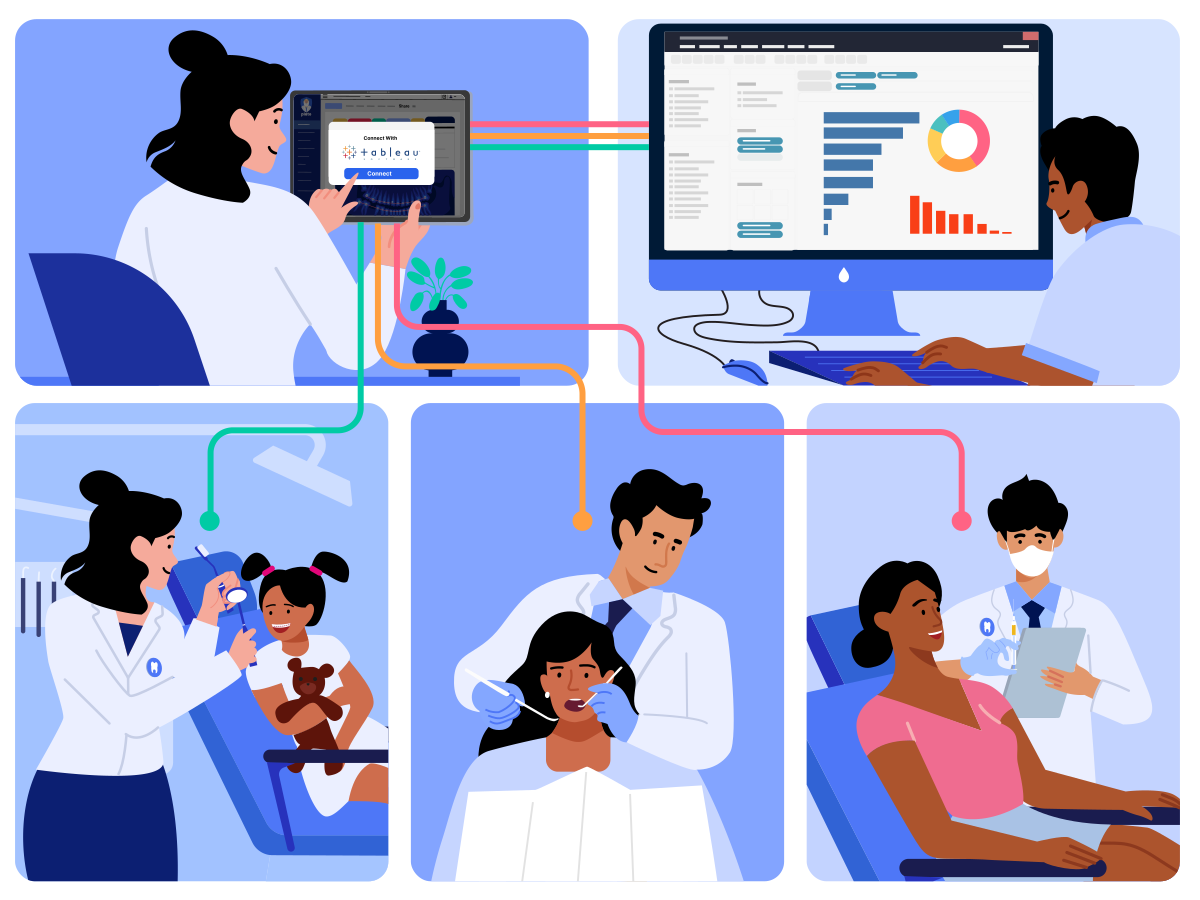
Patients entrust dental clinics with their treatment and care so they can improve their health and lead a richer, more meaningful life. Increasingly, patients are behaving like consumers by expecting quick and convenient service. Monitoring patient metrics empowers clinics to provide the type of care that patients seek and at the standard they have come to expect.
CONSUMERIZATION
“Consumerization of healthcare is the trend of individuals asserting more influence and control over their medical & wellness care.”
Improve patient experience
Consumerization is sweeping across industries and the healthcare sector is not spared (Oliver Wyman, 2019). This means that patients are becoming more like consumers: in their preferences, behaviours and demands. In fact, healthcare is playing “catch-up in an online, convenience-obsessed and increasingly consumer focused world”, according to Kaufmann Hall. Being left behind has consequences. In the US, providers’ inability to provide convenience, by having sub-par scheduling, appointment wait times and billing caused dissatisfaction and “drained provider revenue” by driving patients elsewhere (Business Insider, 2019). The spread of this trend from other industries to healthcare means that dental clinics can learn from practices employed in such industries. In fact, Kaufmann Hall’s recommended best practices include creating ‘patient-centred’ workflows, and akin to the hospitality industry, serve to delight instead of merely satisfy (Kaufman Hall, State of Consumerism in Healthcare Report, 2019).
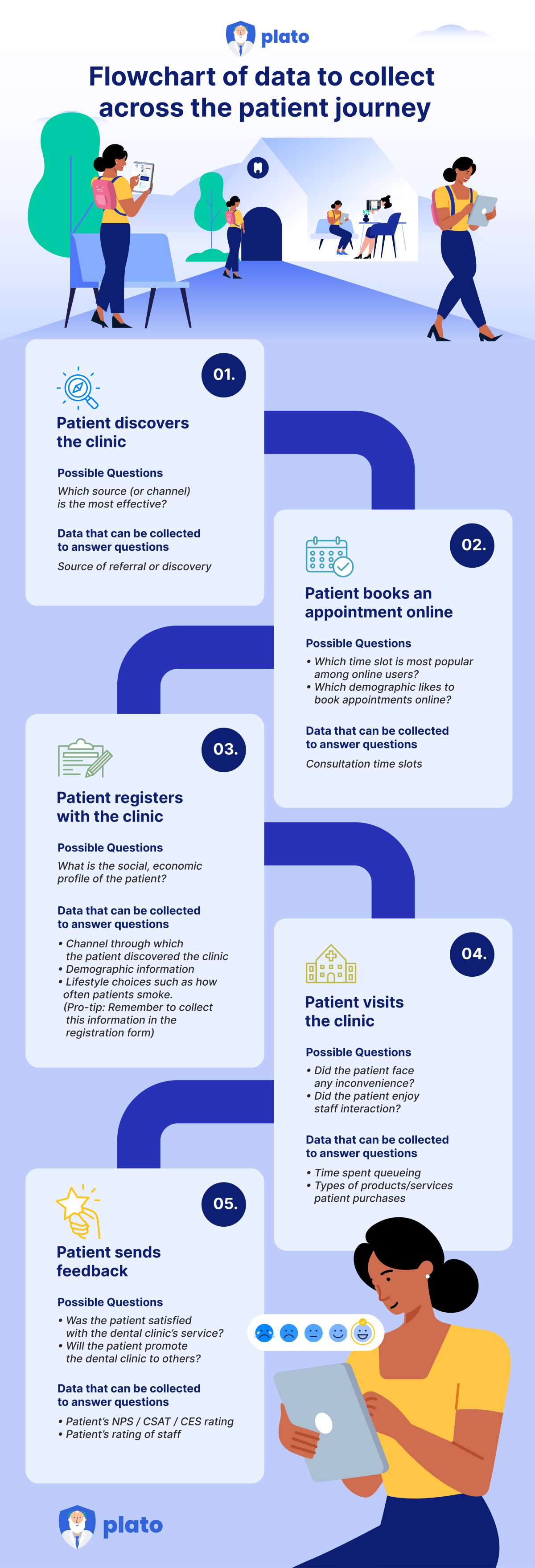
In order to create a patient-centred workflow, it is important to understand a patient’s journey. The journey begins even before a patient takes the first step towards the clinic. It starts with the dental clinic's digital presence, when patients are online and discover a dental clinic’s Google or Facebook ad. A patient books appointments online but visits the dentist and purchases procedures offline. After a consultation, dental clinics may send surveys to track Net Promoter Score®(NPS®), Customer Satisfaction Score (CSAT) or Customer Effort Score (CES) scores that capture patient loyalty, satisfaction and effort respectively.
Almost all of a patient’s journey, both online and offline, gets recorded digitally - on a clinic platform, survey app and other marketing software. Dental clinics have the data to piece together a patient’s journey and identify pain points or moments of delight. By analysing the data, dental clinics will be able to manage the nebulous concept of patient experience by measuring different aspects of it. For example, if dental clinics notice a pattern that more patients tend to book appointments between 1PM to 4PM on Thursdays, they can enlist more locum dentists to consult during these hours.
Effectiveness of marketing channels
Patients become aware of dental clinics from a variety of sources, ranging from google search, facebook, word-of-mouth and provider referrals. Especially as a dental clinic grows, the channels increase. But each of these channels may perform differently: some might bring more patients while others might bring fewer yet more loyal patients. Knowing which channel brings how many patients or why the return on investment of a promising channel is dismal will allow dental clinics to better spend their marketing budget.
To truly grasp the effectiveness of a marketing channel, the dental clinic must be able to oversee a marketing activity together with the conversion action. Data on the marketing activity is captured in software such as Google Analytics or Facebook Analytics. Whereas data on conversion is captured on a clinic management platform: this is where the data that a patient came in for a procedure, purchased a package or redeemed a discount is stored. When data from both softwares is combined, clinics would be able to answer questions like: how many purchases of procedure X can be attributed to Google search or how many patients who visited the clinic’s facebook page also visited the clinic.
Dental Economics, a digital practice management journal for dentists, explains that using data to analyse marketing channels is similar to using x-rays: if clinics do not interpret data and deduce insights, it is as good as throwing away an x-ray without using it for diagnosis and treatment planning. There is merit to this analogy. As a dental clinic focuses on growth, evaluating how channels perform will help clinics in making important decisions such as doubling down on one or reducing spend on another. Being able to marshall together data that sits on different platforms and receiving regular reports on performance will assist clinic leaders in making critical growth-related decisions with clarity and confidence.
CHAPTER 2/3
Practice
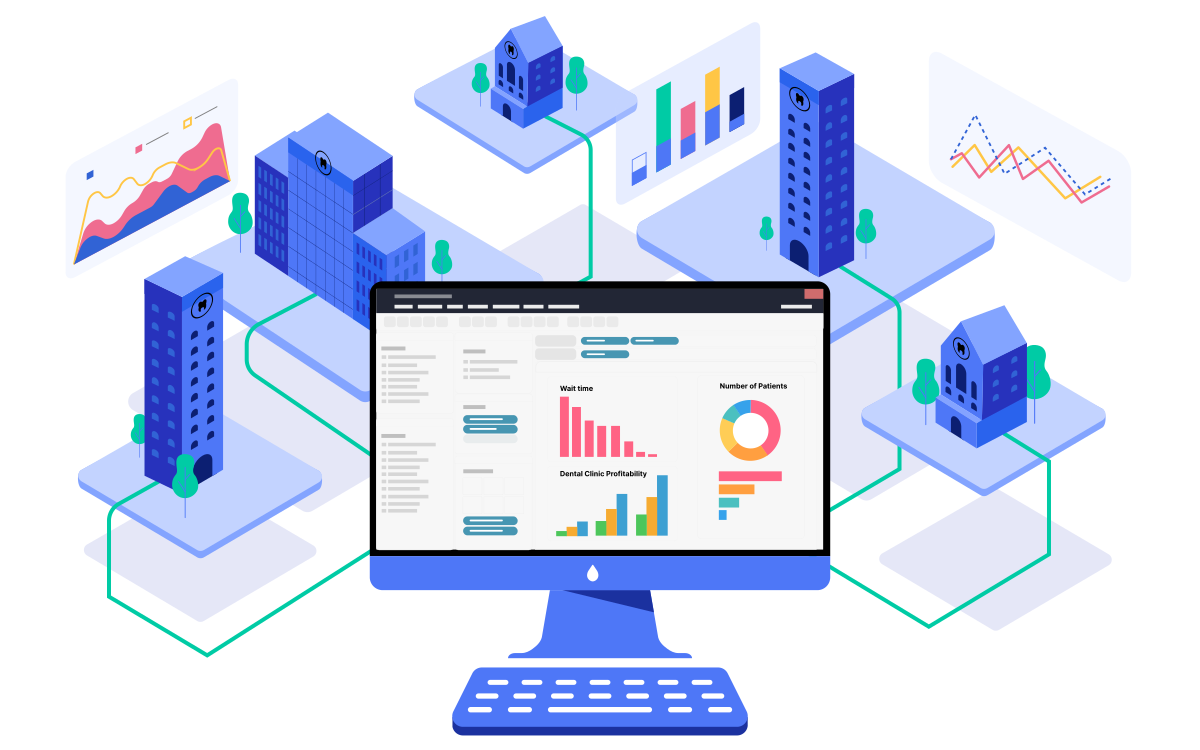
Practice refers to the way in which dentists provide dental service on their own, jointly as a group of dentists or even through a chain of dental clinics. Monitoring practice metrics empowers a dental clinic to double down on its competitive advantage and build a brand.
Build a brand - provide consistent standards across practice
As a dental clinic grows its practice by increasing locations and staff, it will have to maintain standards. Otherwise, the dental clinic will not be able to provide a unique, differentiating yet consistent service and will fail to sustain a brand. One way to ensure consistency is to track patient experience data and compare it across different locations. For example, clinics can monitor patient queueing times or CES rating.
Beyond these specific data points, dental clinics can develop a process of benchmarking as they add new staff and practices. Briefly, benchmarking in healthcare is a “process of comparative evaluation and identification of underlying causes leading to high levels of performance” (Ellis, 2006). It involves a sustained effort to measure outcomes, compare outcomes against those of other organisations to learn how those outcomes were achieved and apply the lessons learned in order to improve (Tardy et. al., 2012).
Comparing across locations is the first step. After that, dental clinics can also compare themselves with other practices. Comparison against external standards is a good indication of how competitive a dental clinic is in the market. Here are some ideas for benchmarking:
- Dental clinics can also compare how the outcomes of their treatment compares with national averages.
- Dental clinics can compare the costs of their treatments against benchmarks published by regulators or other similar organisations.
- The Agency for Healthcare Research and Quality suggests that local practices collect performance data to compare among themselves. As a first step, clinics can focus on particular conditions and compare outcomes.
- Non-clinical processes such as billing and inventory management can be compared against companies in other sectors.
Tips for benchmarking
(Tardy et al, 2012; Pitarelli et al, 2000)
Is the data being used for benchmarking RELIABLE?
Is the data being used for benchmarking USEFUL?
Is the data being used for benchmarking UP-TO-DATE?
Guidelines
Determine the service, processes, activities or outcomes that are important for the organisation.
Decide against whom to compare.
Consider how the data is being collected.
Steps
- Select the object of benchmarking: what service or activity needs to be improved?
- Identify benchmarking partners - the points of reference against which your activity is going to be compared
- Collect and organise data internally
- Identify the competitive gap by comparing against external data
- Set future performance targets
- Communicate the benchmarking results
- Develop action plans
- Take concrete action
- Monitor progress
CHAPTER 3/3
Profits
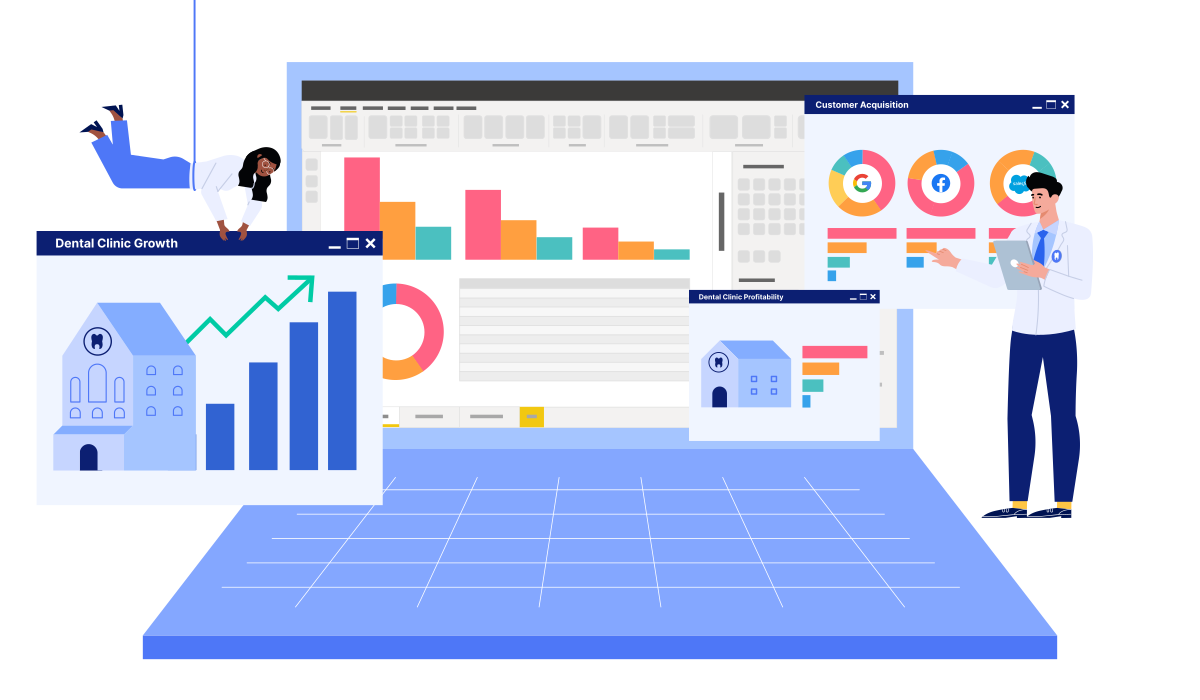
Profit - revenue less cost - is the most important metric for any business to track. For dental clinics, monitoring sources of profits - patient-channels or providers - can also reveal promising sources of growth. Equipped with this knowledge, leaders are empowered to decide where they can invest more resources and scale. Sustainably.
Customer acquisition costs & customer lifetime value
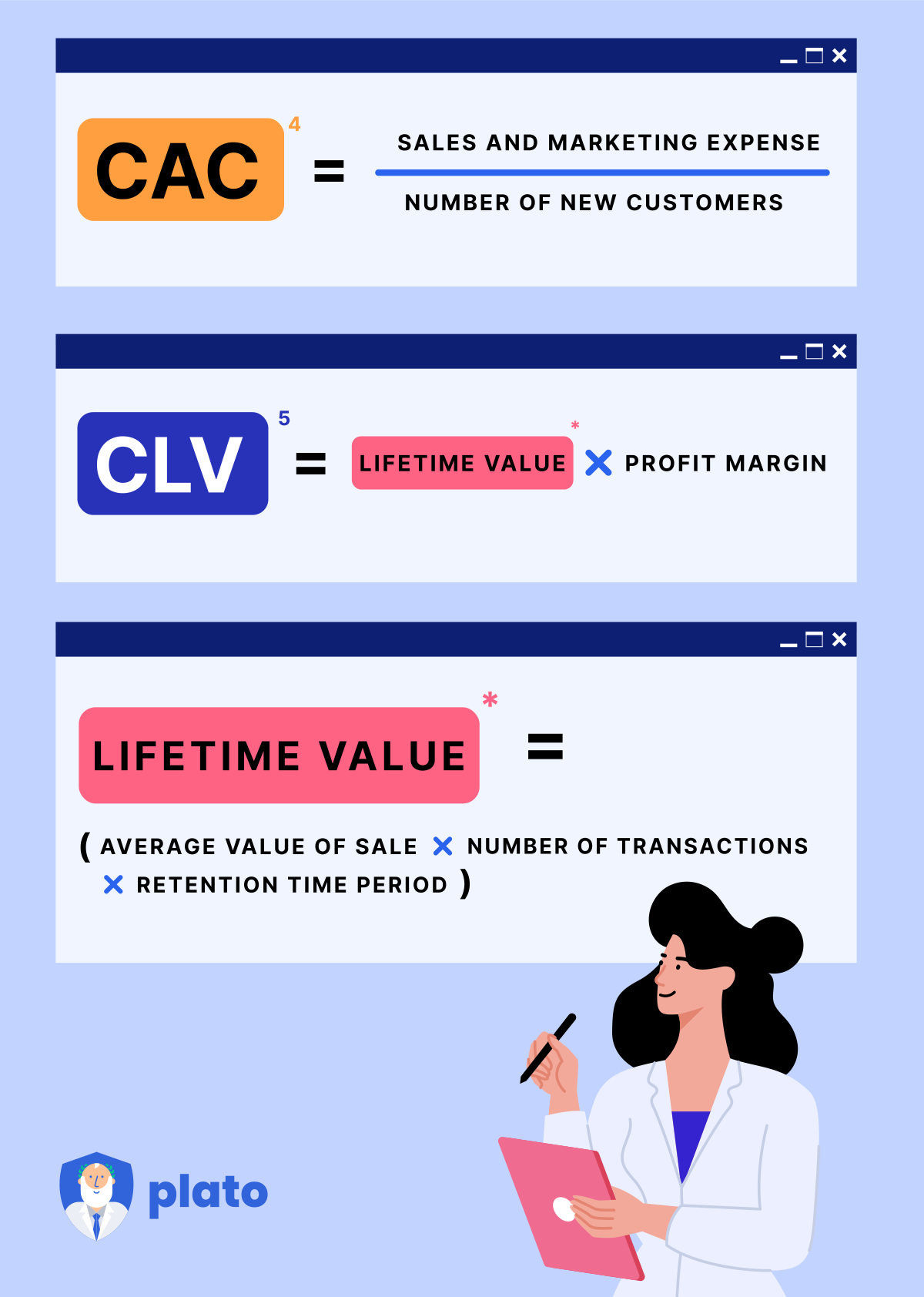
As the healthcare industry is not immune to consumerization, it might as well borrow tools from other industries to guide patient engagement for sustained growth.
A measure of profitability is a ratio of customer acquisition cost (CAC) over customer lifetime value (CLV). CAC refers to the cost of adding one new customer. For a clinic, it’s the cost of drawing a patient into the clinic for a consultation. CLV refers to the profitability attributed to a customer during the time that the customer will stay with a company (Hosseini et al, 2016). For a clinic, this is the revenue that a patient can bring in over a period of time multiplied by profit margin. To illustrate, say you’ve spent $1000 on marketing and sales in one month. From that campaign, you have managed to bring in 10 new patients. Your CAC is $100. Of the 10, let’s assume one patient comes in for scaling and polishing (S&P) (priced at $100) but also expresses interest in using braces (priced at $2000). You estimate that this patient will come to you for S&P once a year for 3 years and your overall margin is 30%. CLV of this one patient is (2000+3*100)*30% = $690, and not just $100 from the first visit.
A variety of things can be factored into the calculation of CAC and CLV. The more accurate view you want of CAC and CLV, the more factors you would have to consider. For instance, the cost of acquiring a customer includes the cost of marketing to the customer. If you want a more precise calculation, you can also include the cost of selling and the cost of employee man-hours in engaging customers. Similarly, CLV can be measured by recording and analysing all the revenue generated by a patient. This revenue could include consultation fees, price of packages or medicines purchased or even a product bought from a clinic’s online store.
By marshaling all this data together, clinics will have an accurate view of profitability. Consequently, dental clinics will be able to make clearer decisions on reducing CAC, increasing CLV or both for sustainable growth.
Providers and staff
Talented team members - providers and staff - are critical to the growth of any dental practice. Dental clinics want to attract and motivate talented team members while ensuring the clinic grows with a healthy profit margin. To achieve this, dental clinics often use mechanisms that align compensation with the value employees bring to the clinic. But according to a blog on the American Dental Association, compensation is an emotionally charged topic as it touches on team members’ “respect, self-worth, appreciation and validation”. If a member feels their value is not sufficiently acknowledged, they can feel demotivated leading to poor performance. As employees’ livelihood depends on the compensation mechanism, they would no doubt expect it to accurately and fairly represent the value they bring to the dental clinic. Similarly, as dental clinics’ sustained growth depends on employees’ output, clinics would expect the mechanism to represent how a team member has moved the needle on its profits. To balance the objectives, a fair and accurate calculation of value is therefore crucial.
Employees create value in a variety of ways - such as bringing new patients, consulting existing ones or performing procedures on both. But accounting for all of their activities and deducing profit from it with fairness and accuracy can be tedious and painstaking. Consider a dentist who brings in 12 new patients in a quarter. Of this, 5 patients purchase packages that are redeemed with different providers and by using payment methods that have different costs associated with them. In this instance, distilling the value brought by any one provider is complex: the clinic must consider to whom and to what extent revenue from the packages can be attributed and even subtract any costs associated with payment methods.
But nailing the formula is only the first step. Employees seek transparency to ensure their compensation is calculated correctly. For this reason, reports tracking value-generating activities and calculating compensation are routinely created by clinics and shared with the relevant employee. If an employee feels their value is being underrepresented, they can quickly resolve it with the clinic.
Powerfully though, having visibility over value-generating activities, and routinely evaluating it, will allow the clinic and employee to discuss performance. This will ensure the employee’s career course stays aligned with the growth of the clinic. If an employee is underperforming, the clinic can point to concrete and objective numbers in the reports to reduce the subjectivity in what is otherwise an “emotionally charged topic”. Employees will also be able to visualise their performance and get motivated when they can “see” their efforts yield better metrics.
Summary
Custom analytics is a necessity, not a good-to-have for dental clinics that aspire to grow into enterprises: it allows a clinic to monitor processes that affect patients, practice and profits. Clinic leaders will have the unique ability to get a holistic view of their clinic’s performance by combining data from various sources. More than that, leaders can get an up-to-date insight into the metrics that matter as frequently as they please. All in all, custom analytics lets leaders visualise answers to the right questions at the right time so that they are empowered to make decisions with clarity and confidence.

Want to leverage data to grow your clinic?
Plato has the solution for you.
Singapore: +65 3129 4333
Australia: +61 440 132 718
Malaysia: +60 162992309
Hong Kong: +852 30016045
Philippines: +63 1800 1550 0020
References
Marcia Blenko and Michael Mankins, “The Five Steps to Better Decisions”, 6 August 2013 (https://www.bain.com/insights/the-five-steps-to-better-decisions/)
Tim Stobierski, “The Advantages of Data-Driven Decision-Making”, 26 August 2019 (https://online.hbs.edu/blog/post/data-driven-decision-mak- ing?c1=GAW_SE_NW&source=SING_GEN_DSA&cr2=search__-__nw__-__sing__-__dsa__-__general&kw=dsa__-__general&cr5=459300391132&cr7=c&gclid=C j0KCQjwreT8BRDTARIsAJLI0KLmPW_Sh1H9GPyNKUueRmm1-5GY99cqaFrmX0qRppc2gLuuz64dMcEaAudmEALw_wcB)
Shetty V, Yamamoto J, Yale K. Re-architecting oral healthcare for the 21st century. J Dent. 2018 Jul;74 Suppl 1(Suppl 1):S10-S14. doi: 10.1016/j.jdent.2018.04.017. PMID: 29929582; PMCID: PMC6020157.
Dental Economics, “When it comes to digital, data is critical”, 1 October 2020 (https://www.dentaleconomics.com/practice/marketing/arti- cle/14185489/when-marketing-your-dental-practice-data-is-critical)
Oliver Wyman, “Asia Health Ecosystem Series, Part 1: Digital Partnerships for Health Insurance”, 26 June 2019 (https://health.oliverwyman.com/2019/06/a- sia-health-ecosystem-series--part-1--digital-partnerships-for-h.html)
Kaufman Hall, “2019 State of Consumerism in Healthcare: The Bar is Rising” (https://www.kaufmanhall.com/sites/default/files/docu- ments/2019-06/2019_state_of_consumerism_in_healthcare_kaufmanhall_0.pdf)
Ellis J. All inclusive benchmarking. J Nurs Manag. 2006 Jul;14(5):377-83. doi: 10.1111/j.1365-2934.2006.00596.x. PMID: 16787472.
Ettorchi-Tardy A, Levif M, Michel P. Benchmarking: a method for continuous quality improvement in health. Healthc Policy. 2012 May;7(4):e101-19. PMID: 23634166; PMCID: PMC3359088.
Pitarelli E., Monnier E. 2000. “Benchmarking: The Missing Link Between Evaluation and Management?” Geneva: University of Geneva and Centre for European Expertise and Evaluation; Retrieved February 26, 2012.
Zare Hosseini Z, Mohammadzadeh M. Knowledge discovery from patients' behavior via clustering-classification algorithms based on weighted eRFM and CLV model: An empirical study in public health care services. Iran J Pharm Res. 2016 Winter;15(1):355-67. PMID: 27610177; PMCID: PMC4986115.
American Dental Association Centre for Professional Success, “Compensation Models that Inspire Excellence” (https://success.ada.org/en/practice-manage- ment/dental-practice-success/dps-spring-2019/compensation-models-that-inspire-excellence)
Boston Consulting Group, “Advancing Digital and Analytics in Health Care”, January 2019 (https://image-src.bcg.com/Images/BCG-Advancing-Digi- tal-and-Analytics-in-Health-Care-Jan-2019_tcm9-210439.pdf)
Oliver Wyman and Sheares Healthcare, “Asia’s Health Ecosystems - New Models, Better Value”, 23 September 2020 (https://www.oliverwyman.com/media-cen- ter/2020/sep/asias-health-ecosystems-new-models-better-value.html)