Grow Your Medical Clinic
with Data

About Plato
Plato is more than just a clinic software - it’s your Clinic’s Operating System, automating the work of one person at your practice. Over 2000 healthcare providers across Singapore, Malaysia and Hong Kong trust Plato to run their clinic operations.
Plato started in 2015 with the goal of helping clinics go paperless. Plato started by building a great EMR for doctors - they could write, draw, type, and create records their way. To this day, Plato views EMR as a cornerstone of a great clinic management software.
Now, Plato has grown into your Clinic’s Operating System. Plato has everything you need to run a clinic, in a single integrated platform. Manage the entire patient journey paperlessly, automate billing work with integrated payments, and even build better relationships with patients.
Plato even links with leading Business Intelligence tools to let you analyze your data. Whether you’re a standalone clinic that wants to engage in value-based care, or a clinic chain that wants to analyze core growth metrics - Plato is your Clinic’s Operating System.
Table of Contents
Why use Data?

Global “Big Three” Management Consultancy, Bain & Company, opines that decisions are critical for the performance of any company. Bain explains:
“Decisions are the coin of the realm in business. No company can reach its full potential unless it makes good decisions quickly and consistently and then implements them effectively. Good companies can’t become great. Troubled companies can’t escape mediocrity. Our 10-year research program involving more than 1,000 companies shows a clear correlation (at a minimum 95% confidence level) between decision effectiveness and business performance.”
If decisions are this critical, the process of making them is just as important. It is not uncommon to hear that leaders rely on ‘intuition’ or ‘gut’ to make decisions. But according to an article on Harvard Business School Online, relying on data is better. Based on a survey of more than 1000 senior executives, organisations that are data-driven are three times more likely to report significant improvements in decision-making. As data is ‘logical and concrete’ compared to intuition, it reduces the subjectivity of decisions and helps leaders make decisions with more confidence.
Leaders in the healthcare industry appreciate the value of data as well. More than 90% of executives from top-performing healthcare organisations in the US have cited insight and intelligence as a key organisational focus in the next 3-5 years, according to IBM. Further, 83% of them consider business intelligence and analytics as their top priority to increase competitiveness.
The importance of data analytics is only set to increase with the drive towards value-based healthcare. In the US, members of the Health Care Transformation Task Force, a non-profit consortium that includes payers and providers, have committed to running 75% of their businesses using value-based payments. In Asia-Pacific, the healthcare industry is increasingly preferring value-based payments over volume-based payments, states Deloitte. Increase in healthcare costs and chronic diseases coupled with an ageing population have led several countries to embrace value-based healthcare, which focuses on outcomes over effort. Data analytics is a necessary component of value-based healthcare as it helps providers monitor patient outcomes and share results transparently with stakeholders such as regulators and payers.
“Leaders in the healthcare industry appreciate the value of data as well. More than 90% of executives from top-performing healthcare organisations in the US have cited insight and intelligence as a key organisational focus in the next 3-5 years. Further, 83% of them consider business intelligence and analytics as their top priority to increase competitiveness.”
- IBM
What is "Data Analytics"?

Before continuing, it is appropriate to unpack “data analytics”. Data analytics can be simply defined as the science of analysing raw data to draw conclusions (Investopedia, 2020). “Data” can refer to any piece of information that is recorded digitally. A patient’s age is data. As are visit dates and medication types.
On its own, data provides limited meaning. But when it is collected over time or combined with other information, data traps significant insights, waiting to be unlocked. To illustrate, routinely collected data such as age group, postal code, race, day, time, triage category, mode of arrival and fever status were analysed to predict patients’ need for hospital admission in Singapore (Parker et al, 2019). This insight could be applied to provide the right patients with the right care at the right time, without misdirecting resources. To give another example, Mayo Clinic in the US combined EMR data with genomic sequencing data for personalised medicine. This form of data analysis can predict a patient’s response to treatment. If such straight-forward data collected over time can reveal extraordinary insights, the possibilities for complex data are endless.
As clinics in the private sector start using electronic medical records, more data gets accumulated. What was previously trapped in paper records is now accessible for analysis. Consider a clinic that wanted to find out how many of its patients in the age group 40-60 were cured of a particular illness over the past 5 years. A clinic using paper records would have to invest in massive manual effort to pore over half-a-decade’s worth of medical records, identify and record relevant data points and upload them to, say, excel, simply to get an answer to one question. A clinic with digital records on the other hand will be able to analyse that information speedily. More than that, clinics will be able to monitor that metric continuously.
Beyond medical records, as clinics start to digitalise other operations such as ads, online appointment and invoices, more data gets recorded and ready to be mined for meaning. Clinics have a treasure trove of data that illuminates performance and insights on different aspects of their practice. Ranging from patient or population health, performance consistency across locations to managing profits, data analytics empowers clinic leaders broadly across three categories:

CHAPTER 1/3
Patients
Patients entrust clinics with their treatment and care so they can improve their health and lead a richer, more meaningful life. Increasingly, patients are behaving like consumers by expecting quick and convenient service. Monitoring patient metrics empowers clinics to provide the type of care that patients seek and at the standard they have come to expect.
Track patient health, behaviour, outcomes
Electronic Medical Records (EMR) are a treasure-trove of data. From patient demographics to medical history, each clinic’s EMR captures a wide range of patient information. EMR data can be analysed to track outcomes over a period of time. Every time a patient makes a visit to the clinic, standardised medical data is entered into the platform and digitised. The accretion of this data can hold valuable insights. Says Dr Hairil Abdullah from SingHealth, “EMR is a gold mine of data. Now is the time to reap the rewards, so that we can improve patient outcome and experience and reduce healthcare costs”.
Beyond EMR data, clinics can also collect information on patient behavior to track the effect and adherence of treatments. Surveys capture information in a structured manner, enabling simplified analysis over time. For example, consider a case where a clinic wants to understand whether a particular treatment is causing side effects on a particular profile of patients - ones that smoke. A clinic can ask patients to declare if they’re smokers in the registration form. After every consultation, patients can be sent a survey asking them to monitor and declare side-effects. To ensure high quality of data, clinics should prescribe options for patients to select from, instead of asking patients to fill in free-form text. At the end of the day, clinics will have a clear idea that a treatment may cause a particular type of adverse effects on smokers. Clinics can even go on to share that data with patients to discourage them from smoking and change behaviour. It bears emphasis that surveys and medical questionnaires are rich in information. Clinics that digitalise the process of questionnaires and surveys benefit from harnessing the insights captured.
By tracking data in EMR along with patient behaviour, clinics are able to monitor impact and not just effort. Clinics can measure the effectiveness of treatment plans and medication. With this, clinics will be able to set the groundwork for providing value-based care. Further, publishing a clinic’s impact (in the form of healthcare outcomes achieved) could be a meaningful way of differentiation: patients will be able to visualise the improvement that others have experienced after being treated by a clinic. It would also reinforce the idea that a clinic has been and remains committed to improving outcomes that matter to patients.
Improve patient experience
CONSUMERIZATION
“Consumerization of healthcare is the trend of individuals asserting more influence and control over their medical & wellness care.”
Consumerization is sweeping across industries and the healthcare sector is not spared (Oliver Wyman, 2019). Patients are becoming more like consumers: in their preferences, behaviours and demands. In fact, healthcare is playing “catch-up in an online, convenience-obsessed and increasingly consumer focused world”, according to Kaufmann Hall. Being left behind has consequences. In the US, providers’ inability to provide convenience, by having sub-par scheduling, appointment wait times and billing caused dissatisfaction and “drained provider revenue” by driving patients elsewhere (Business Insider, 2019). The spread of this trend from other industries to healthcare means that clinics can make use of practices from such industries. In fact, Kaufmann Hall’s recommended best practices include creating ‘patient-centred’ workflows, and akin to the hospitality industry, serve to delight instead of merely satisfy (Kaufman Hall, State of Consumerism in Healthcare Report, 2019).
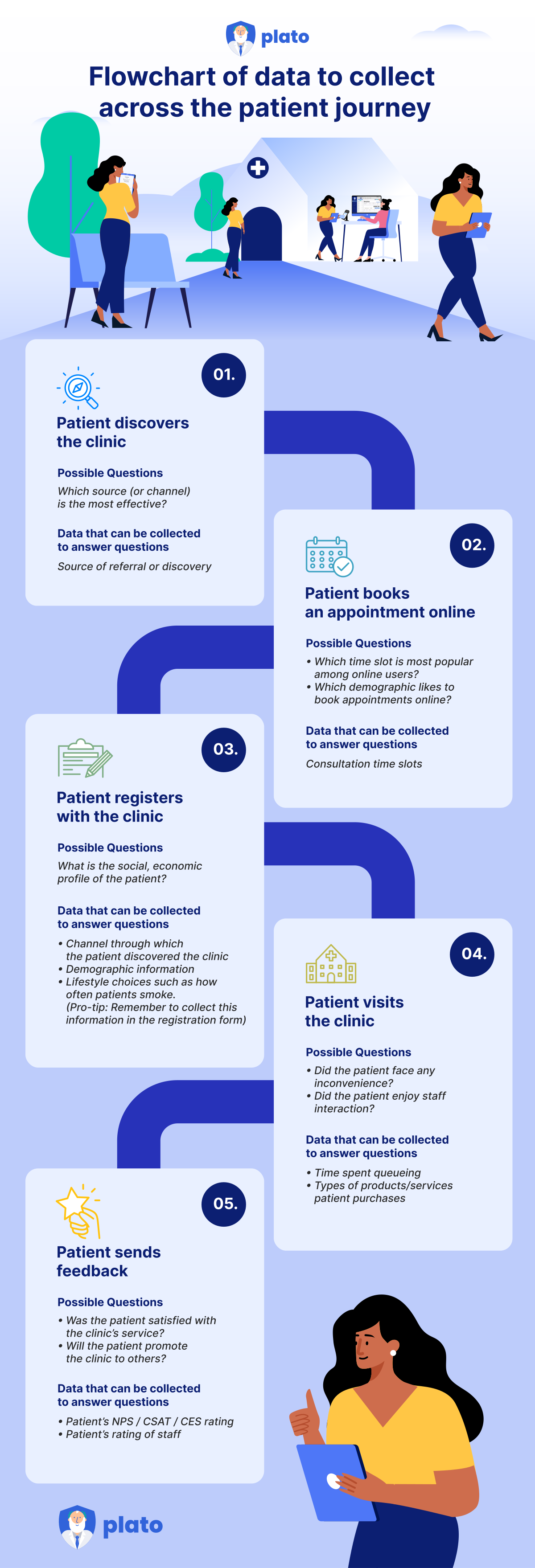
In order to create a patient-centred workflow, it is important to understand a patient’s journey.

The journey begins even before a patient takes the first step towards the clinic. It starts with the clinic's digital presence, when patients are online and discover a clinic’s Google or Facebook ad. A patient may book appointments online but visits the clinic and makes purchases offline. After a consultation, clinics may send surveys to track Net Promoter Score® (NPS®), Customer Satisfaction Score (CSAT) or Customer Effort Score (CES) scores that capture patient loyalty, satisfaction and effort respectively.
Almost all of a patient’s journey, both online and offline, gets recorded digitally - on a clinic platform, survey app and other marketing software. Clinics have the data to piece together a patient’s journey and identify pain points or moments of delight. By analysing the data, clinics will be able to manage the nebulous concept of patient experience by measuring different aspects of it. For example, if clinics notice a pattern that more patients tend to book appointments between 1PM to 4PM on Thursdays, they can enlist more locum doctors to consult during these hours.
CHAPTER 2/3
Practice
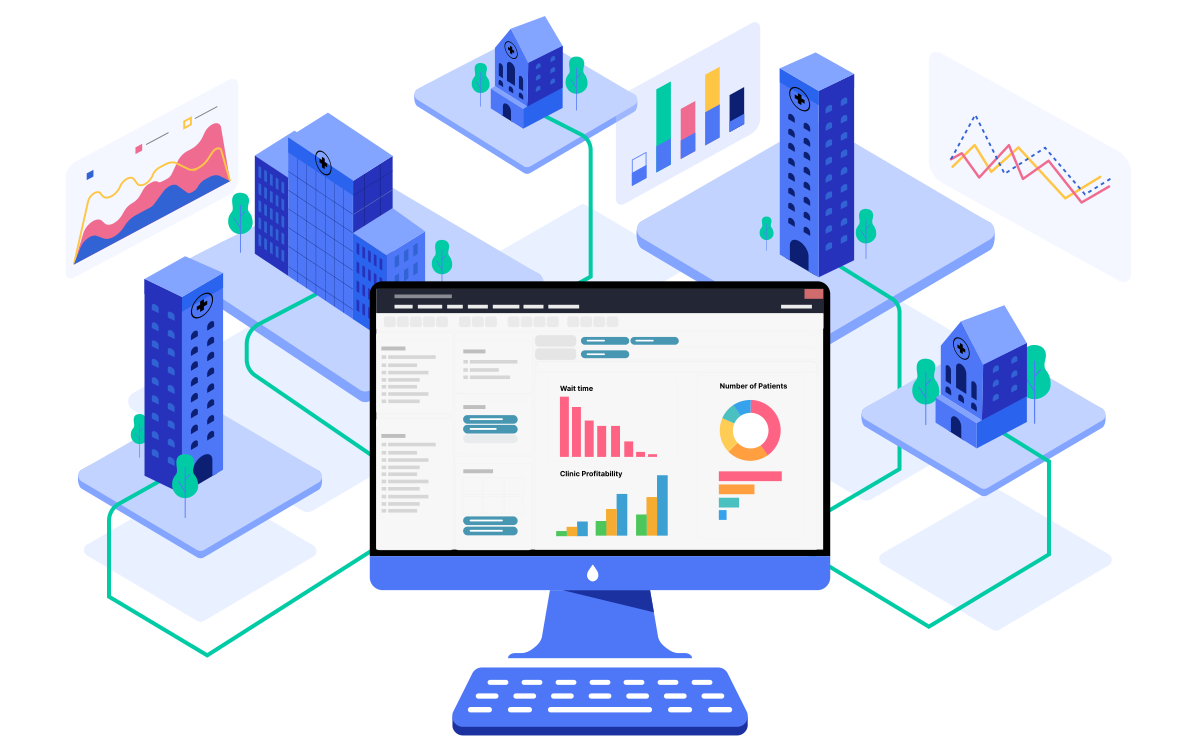
Practice refers to the way in which doctors provide medical service on their own, jointly as a group of doctors or even through a chain of clinics. Monitoring practice metrics empowers a clinic to double down on its competitive advantage and build a brand.
Build a brand - provide consistent standards across practice
As a clinic grows its practice by increasing locations and staff, it will have to maintain standards. Otherwise, the clinic will not be able to provide a unique, differentiating yet consistent service and will fail to sustain a brand. One way to ensure consistency is to track patient experience data and compare it across different locations. For example, clinics can monitor patient queueing times or CES rating.
Beyond these specific data points, clinics can develop a process of benchmarking as they add new staff and practices. Briefly, benchmarking in healthcare is a “process of comparative evaluation and identification of underlying causes leading to high levels of performance” (Ellis, 2006). It involves a sustained effort to measure outcomes, compare outcomes against those of other organisations to learn how those outcomes were achieved and apply the lessons learned in order to improve (Tardy et. al., 2012).
Comparing across locations is the first step. After that, clinics can also compare themselves with other practices. Comparison against external standards is a good indication of how competitive a clinic is in the market. Here are some ideas for benchmarking:
- Clinics can compare how the outcomes of their treatment compares with national averages.
- Clinics can compare the costs of their treatments against benchmarks published by regulators or other similar organisations.
- Non-clinical processes such as billing and inventory management can be compared against companies in other sectors.
- The Agency for Healthcare Research and Quality suggests that local practices collect performance data and compare among themselves. As a first step, clinics can focus on particular conditions and compare outcomes.
Health statistics in Singapore
In choosing benchmarking data, it is important to ensure that the data is sourced and updated reliably. In Singapore, MOH and the Health Promotion Board collect and publish data on specific metrics such as:
Singapore’s Ministry of Health (MOH) has also published a fee-benchmark for fees charged by private sector surgeons. Developed by the Fee Benchmarks Advisory Committee and accepted in full by the MOH, the benchmarks are meant to provide a “reference of reasonable ranges of professional fees for common surgical procedures”. Providers may use the benchmarks to set appropriate charge and make reference to the benchmark when advising their patients. The full list of the surgical procedures and corresponding fee benchmarks can be found here.
Health statistics in Malaysia
Relevant statistics for Malaysia can be found on WHO’s website and the Department of Statistics’ official portal. Examples include:
Health statistics in Hong Kong
Hong Kong’s Office of the Government Chief Information Officer maintains an online portal with datasets such as:
Tips for benchmarking
(Tardy et al, 2012; Pitarelli et al, 2000)
Is the data being used for benchmarking RELIABLE?
Is the data being used for benchmarking USEFUL?
Is the data being used for benchmarking UP-TO-DATE?
Guidelines
Determine the service, processes, activities or outcomes that are important for the organisation.
Decide against whom to compare.
Consider how the data is being collected.
Steps
- Select the object of benchmarking: what service or activity needs to be improved?
- Identify benchmarking partners - the points of reference against which your activity is going to be compared
- Collect and organise data internally
- Identify the competitive gap by comparing against external data
- Set future performance targets
- Communicate the benchmarking results
- Develop action plans
- Take concrete action
- Monitor progress
CHAPTER 3/3
Profits
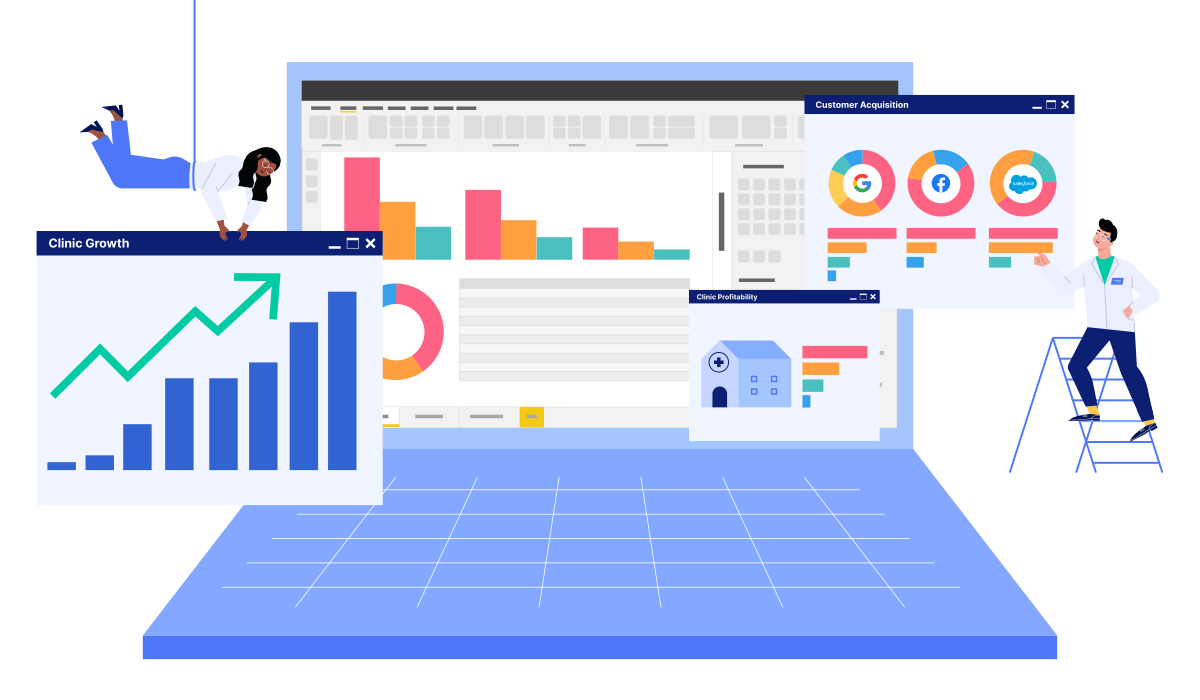
Profit - revenue less cost - is the most important metric for any business to track. For clinics, monitoring sources of profits can also reveal promising sources of growth. Equipped with this knowledge, leaders are empowered to decide where they can invest more resources and scale. Sustainably.
Customer acquisition costs & customer lifetime value
As the healthcare industry is not immune to consumerization, it might as well borrow tools from other industries to guide profitable patient engagement.
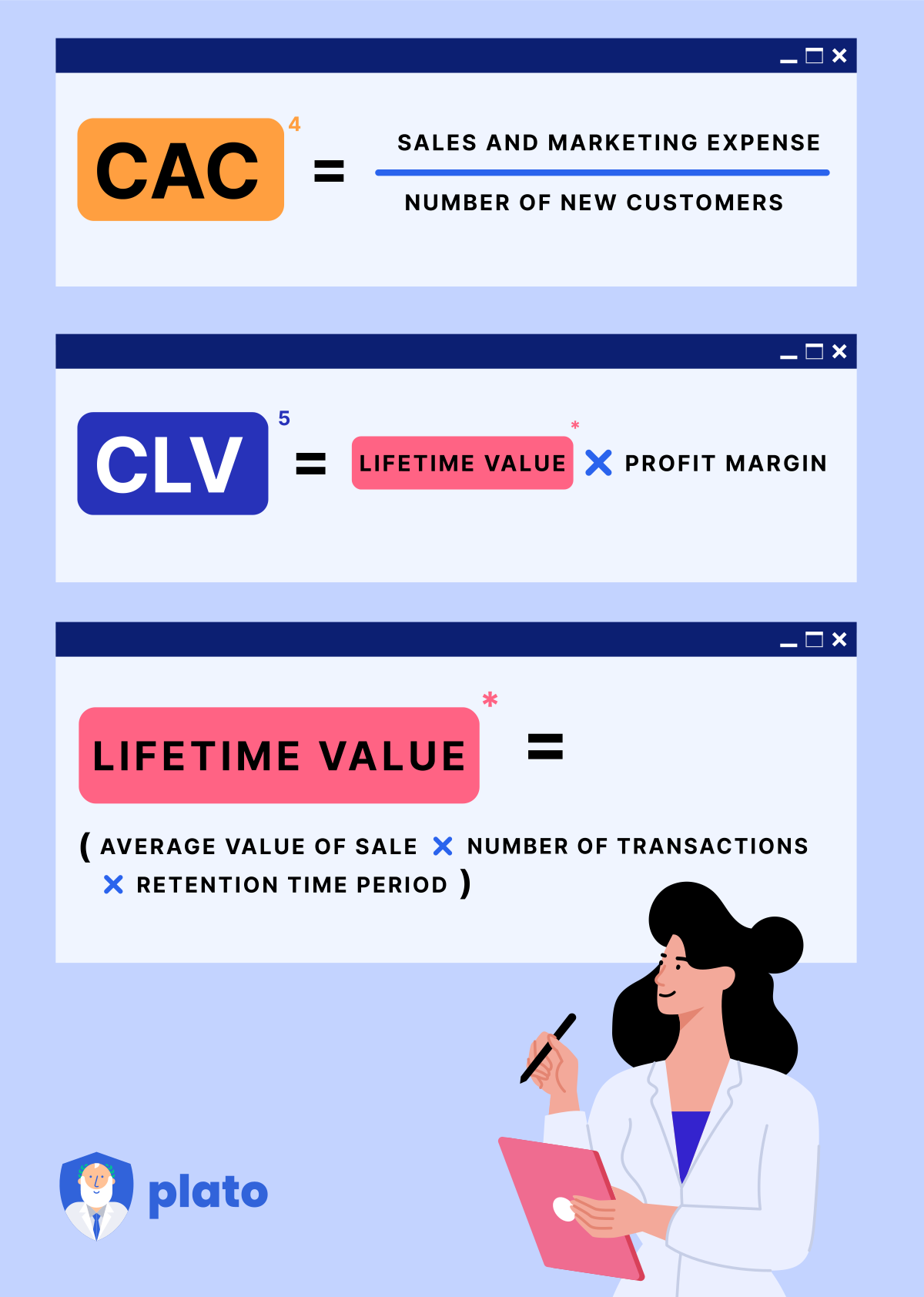
A measure of profitability is a ratio of customer acquisition cost (CAC) over customer lifetime value (CLV). CAC refers to the cost of adding one new customer. For a clinic, it’s the cost of drawing a patient into the clinic for a consultation. CLV refers to the profitability attributed to a customer during the time that the customer will stay with a company (Hosseini et al, 2016). For a clinic, this is the revenue that a patient can bring in over a period of time multiplied by profit margin.
A variety of things can be factored into the calculation of CAC and CLV. The more accurate view you want of CAC and CLV, the more factors you would have to consider. For instance, the cost of acquiring a customer includes the cost of marketing to the customer. If you want a more precise calculation, you can also include the cost of selling and the cost of employee man-hours in engaging customers. Similarly, CLV can be measured by recording and analysing all the revenue generated by a patient. This revenue could include consultation fees, price of packages or medicines purchased or even a product bought from a clinic’s online store.
By marshaling all this data together, clinics will have an accurate view of profitability and consequently, a firmer grasp on growth.
Negotiate with partners for better terms
Instead of asserting or projecting value, proving it is more convincing to get partners to work together and to do so on more favourable terms.
Corporates such as insurance providers, third-party administrators and companies are a channel for patients. Practices often contract directly with corporates to serve their patient base. Such corporates care about ensuring the overall health of their employees or insured groups. If a clinic is able to demonstrate that they are able to improve outcomes, the clinic is practically proving that they are helping the corporate achieve their goal. Aligning the clinic’s performance with a corporate’s ultimate goal will help clinics in differentiating themselves, negotiating better terms and earning new deals with them. Ultimately, this will help clinics grow with a better profit margin.
Tying payment with outcomes is also consistent with the emerging trend of providing value-based care in Asia (Oliver Wyman and Sheares Healthcare, 2020). By setting up the groundwork for the value-based paradigm now, clinics will be able to stay ahead of the curve when it inevitably becomes the norm later.
Summary
Custom analytics is a necessity, not a good-to-have for clinics that aspire to grow into enterprises: it allows a clinic to monitor processes that affect patients, practice and profits. Clinic leaders will have the unique ability to get a holistic view of their clinic’s performance, by combining data from various sources. More than that, leaders can get an up-to-date insight into the metrics that matter as frequently as they please. All in all, custom analytics provides an x-ray vision of the clinic’s operations so that leaders are empowered to make decisions with clarity and confidence.

Want to leverage data to grow your clinic?
Plato has the solution for you.
Singapore: +65 3129 4333
Australia: +61 440 132 718
Malaysia: +60 162992309
Hong Kong: +852 30016045
Philippines: +63 1800 1550 0020
References
Marcia Blenko and Michael Mankins, “The Five Steps to Better Decisions”, 6 August 2013 (https://www.bain.com/insights/the-five-steps-to-better-decisions/)
Tim Stobierski, “The Advantages of Data-Driven Decision-Making”, 26 August 2019 (https://online.hbs.edu/blog/post/data-driven-decision-mak- ing?c1=GAW_SE_NW&source=SING_GEN_DSA&cr2=search__-__nw__-__sing__-__dsa__-__general&kw=dsa__-__general&cr5=459300391132&cr7=c&gclid=Cj0KCQjwreT8BRDTARIsAJLI0KLmPW_ Sh1H9GPyNKUueRmm1-5GY99cqaFrmX0qRppc2gLuuz64dMcEaAudmEALw_wcB)
IBM Institute for Business Value, “The value of analytics in healthcare: From insights to outcomes” (https://www.ibm.com/downloads/cas/NJA9K0DV#:~:text=Us- ing%20analytics%20to%20gain%20better,can%20improve%20effectiveness%20and%20efficiency)
Deloitte, “The future of Life Sciences and Health Care in Asia Pacific: Embrace, Build and Grow” (https://www2.deloitte.com/content/dam/Deloitte/global/Docu- ments/Life-Sciences-Health-Care/gx-lshc-future-lshc-asia-pacific.pdf)
Oliver Wyman and Sheares Healthcare, “Asia Health Ecosystem Series, Volume II - Part 2” (https://www.oliverwyman.com/our-expertise/insights/2020/sep/next-generation-enablement.html)
Parker CA, Liu N, Wu SX, Shen Y, Lam SSW, Ong MEH. Predicting hospital admission at the emergency department triage: A novel prediction model. Am J Emerg Med. 2019 Aug;37(8):1498-1504. Doi: 10.1016/j.ajem.2018.10.060. Epub 2018 Oct 29. PMID: 30413365.
Horton I, Lin Y, Reed G, Wiepert M, Hart S. Empowering Mayo Clinic Individualized Medicine with Genomic Data Warehousing. Journal of Personalized Medicine. 2017 Aug;7(3). DOI: 10.3390/jpm7030007.
Singapore General Hospital, “Data is King”, 18 April 2019 (https://www.sgh.com.sg/news/tomorrows-medicine/data-is-king#)
Oliver Wyman “Asia Health Ecosystem Series, Part 1: Digital Partnerships for Health Insurance”, 26 June 2019 (https://health.oliverwyman.com/2019/06/asia-health-ecosys- tem-series--part-1--digital-partnerships-for-h.html)
Kaufman Hall, “2019 State of Consumerism in Healthcare: The Bar is Rising” (https://www.kaufmanhall.com/sites/default/files/docu- ments/2019-06/2019_state_of_consumerism_in_healthcare_kaufmanhall_0.pdf)
Ellis J. All inclusive benchmarking. J Nurs Manag. 2006 Jul;14(5):377-83. doi: 10.1111/j.1365-2934.2006.00596.x. PMID: 16787472.
Ettorchi-Tardy A, Levif M, Michel P. Benchmarking: a method for continuous quality improvement in health. Healthc Policy. 2012 May;7(4):e101-19. PMID: 23634166; PMCID: PMC3359088.
Ministry of Health (Singapore), “Fee Benchmarks for Private Sector Surgeon Fees”, 13 November 2018 (https://www.moh.gov.sg/docs/librariesprovider5/default-docu- ment-library/fee-benchmarks-for-private-sector-surgeon-fees-(for-download)_13nov2018.pdf)
Boston Consulting Group, “Advancing Digital and Analytics in Health Care”, January 2019 (https://image-src.bcg.com/Images/BCG-Advancing-Digi- tal-and-Analytics-in-Health-Care-Jan-2019_tcm9-210439.pdf)
Pitarelli E., Monnier E. 2000. “Benchmarking: The Missing Link Between Evaluation and Management?” Geneva: University of Geneva and Centre for European Expertise and Evaluation; Retrieved February 26, 2012.
Zare Hosseini Z, Mohammadzadeh M. Knowledge discovery from patients' behavior via clustering-classification algorithms based on weighted eRFM and CLV model: An empirical study in public health care services. Iran J Pharm Res. 2016 Winter;15(1):355-67. PMID: 27610177; PMCID: PMC4986115.
Oliver Wyman and Sheares Healthcare, “Asia’s Health Ecosystems - New Models, Better Value”, 23 September 2020 (https://www.oliverwyman.com/media-center/2020/sep/a- sias-health-ecosystems-new-models-better-value.html)