Start Your Practice in Singapore
From setup to start - everything you need to build and grow a successful practice.

Introduction
Starting a new clinic is like building a house. As the owner, you have a key decision to make at the start: invest in strong foundational materials that support a solid house, or choose cheaper but less durable materials that weaken its structure. A fragile foundation creates a ripple effect throughout your whole house, affecting everything from the floors to the walls and the ceiling. Despite being an attractive option initially, the latter choice was not an investment, but an expense—and a costly one to remedy.
Similarly, you must build a strong foundation for your new clinic. Otherwise, you risk incurring hefty remedial costs later on. This includes investing in the right clinic software and automations from day one, saving your team from doing extra work with every transaction. Since your clinic software touches every aspect of your practice, it is key to building a strong foundation not only for operations, but also staffing, patient experience, and business growth. Imagine using the right software from day one—you create a meaningful work experience for staff by automating admin tasks, deliver a consistent and convenient brand experience to patients, and build the business with greater peace of mind, knowing that your clinic software is able to grow with you.
Clinic softwares are not built equally, so it’s vital to do your due diligence and clearly understand how your software helps you start, build, and grow your practice. Upgrading software only when you want to grow your clinic is expensive. You must re-train staff, build new workflows, and migrate data. Eliminate the hassle by investing in the right clinic software from day one.
Plato is your clinic’s Operating System—the core platform around which all your clinic’s operations revolve. Over the years, Plato has helped hundreds of clinics start, build, and grow their practice. Today, over 2,000 practices in Singapore, Malaysia and Hong Kong use Plato as their clinic’s Operating System. Plato has everything you need on one platform. Plato automates work in every stage of the patient journey, enabling doctors and their teams to focus on meaningful work like patient care, instead of admin tasks.
Table of Contents
CHAPTER 1
Build the Foundation

Why Start Your Own Practice?
Doctors start their own practice for different reasons: some want to be their own boss; some value work-life balance; some cherish the personal patient-provider relationship that only private practice can afford. You might have a personal motivation to start your practice, but finding a good market and solving a perceived market problem is crucial to your clinic’s success.
“When your why is focused on meeting a need in the marketplace, the scope of your business will always be larger than a business that is designed to serve a personal need.”
Glenn Gutek, Founder of Awake Consulting & Coaching
Who Do You Serve and Why?
For your clinic startup to succeed, you need two key ingredients: (1) a good market and (2) knowing why you serve this market.
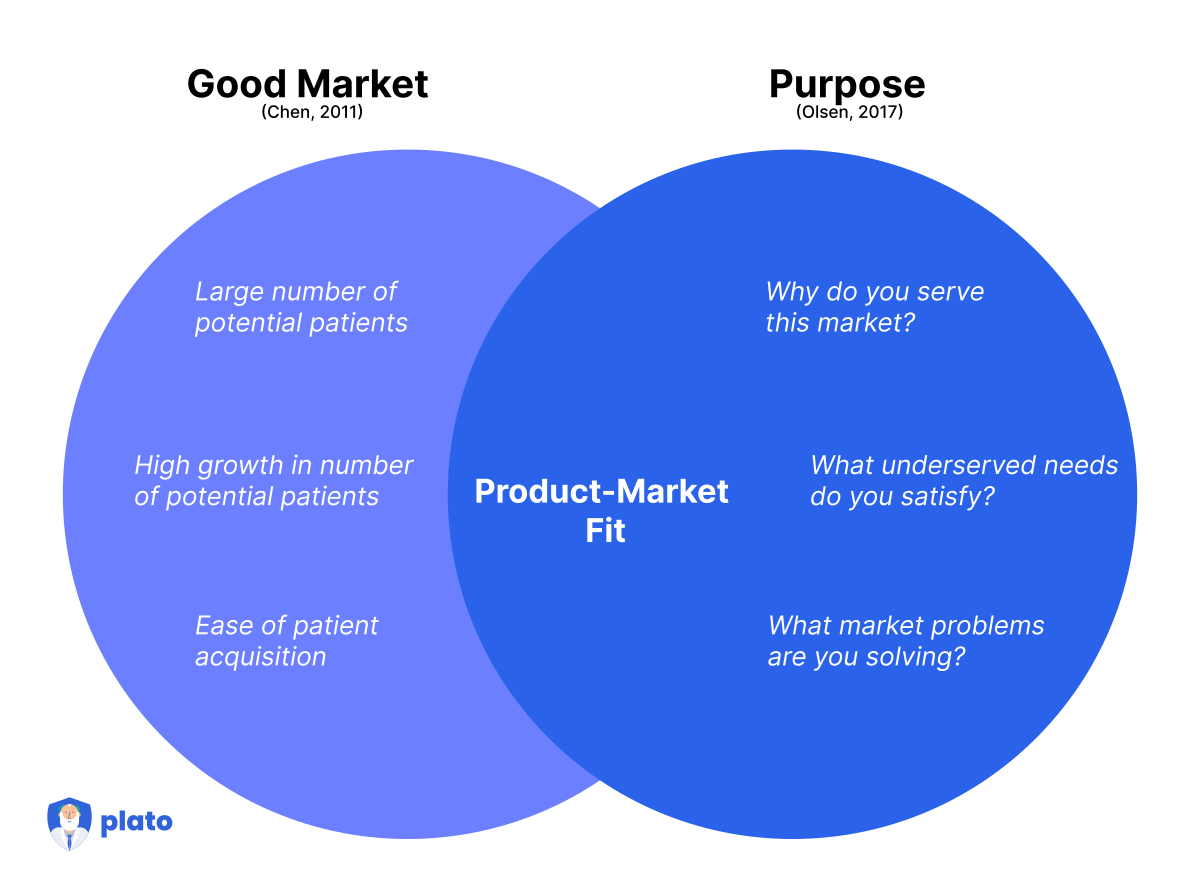
In an analysis of 101 businesses, CB Insights (2020) found that lack of market was one of the top reasons why new businesses face slow or limited growth. When your business clearly solves a perceived market problem and delivers a product or service that satisfies a strong market demand, you get product-market fit. Offering different services that cater to and building connections with your target market will help you sustain product-market fit for scaling your practice.
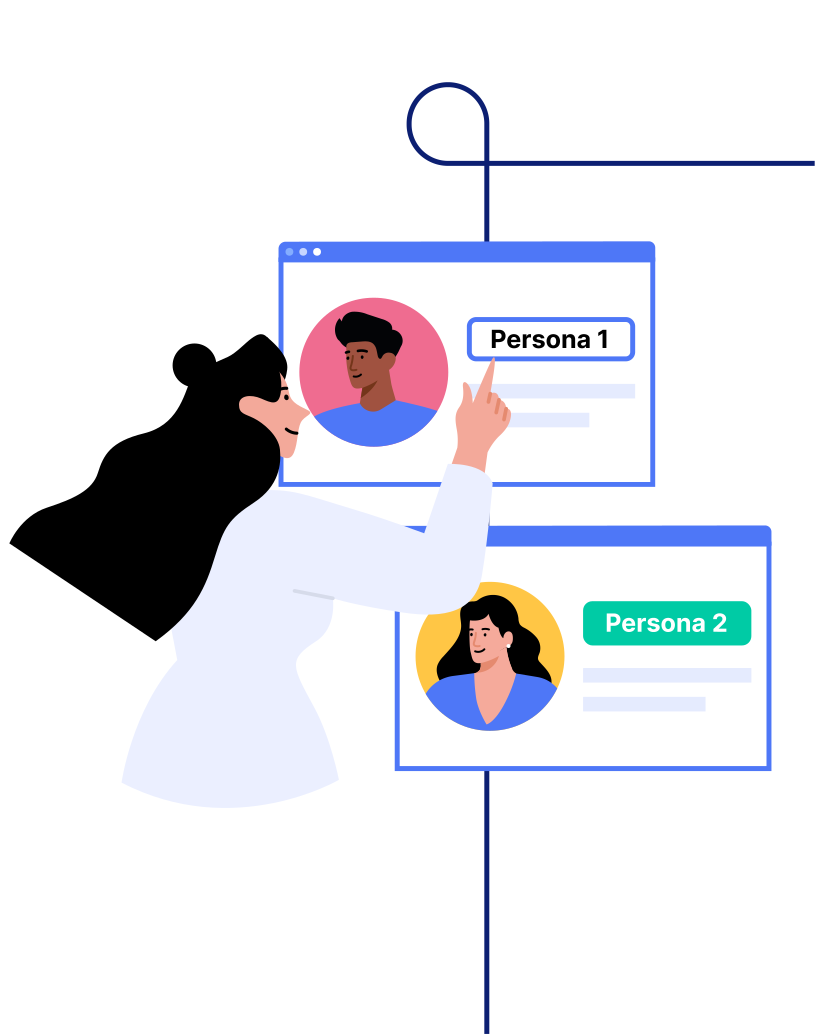
So how do you figure out who to serve and why? Patient personas are a great tool to help you answer this question. A persona allows you to distill your market into a “person”, making it easy to understand and analyse who they are, where they are, and how to reach them.
Patient personas
Since it’s impossible to know every prospect individually, it’s more efficient to build research-based patient personas that represent distinct target groups or audience segments. Personas help you empathise with each target segment. You think about their needs, then create the right solutions.
Benefits of using patient personas:
- Better understand your desired patient base
- Identify and solve overlooked pain points
- Drive improved patient outcomes
- Find opportunities for differentiation
- Network with suitable referrable partners
Key components to include in your patient persona are:
- Patient demographics (name, age, occupation, lifestyle, diet, habits and interests)
- Healthcare attitudes, values, goals and pain points
- Purchasing behaviour, spending power and patterns
Specialists
Specialists naturally define their market based on their niche. For instance, an endocrinologist will only treat patients with diseases and disorders related to hormonal glands, since this is their area of expertise. The ‘why’, however, may differ between specialists.
For example, an endocrinologist could choose to specifically serve patients with diabetes. Why? Despite Singapore’s 5-year war on the disease, the prevalence of diabetes continues to rise, creating a large market for the endocrinologist to serve (Chong, 2021). Treating diabetes has also become more challenging due to rising cases of chronic diseases that complicates diabetic care, and more Singaporeans living sedentary lifestyles with unhealthy diets (Chong, 2021). All this fuels a growing market problem of diabetes prevalence. The endocrinologist must find unique ways to drive improved outcomes for diabetic patients, creating room for differentiation.
Imagine you’re an endocrinologist creating a persona using the pseudonym Sophia to portray your desired segment for female patients with prediabetes:
Patient demographic

- Name
- Sophia
- Age
- 35 years old
- Occupation
- Office job
- Lifestyle
-
- Exercises one to two times per week
- Busy working mother with two children
- Diet
-
- Rarely controls sugar intake
- Doesn’t eat a well-balanced diet
- Habits & Interests
-
- Avid social media user (Instagram, FB, YouTube)
- Enjoys indoor rather than outdoor activities
- Values & attitudes
-
- Seeks efficient, safe and convenient healthcare
- Appreciates online appointment booking and good patient-centric care
- Goals
-
- Prevent her prediabetes from progressing
- Pain points
-
- Time is precious, dislikes waiting
- Dislikes inconvenient bookings, e.g. calling the clinic
- Needs help controlling her diet, exercising regularly (i.e. committing to her care plan)
- Purchasing behaviour
-
- Researches before making a purchase decision
- Trusts word-of-mouth reviews
- Purchasing decision highly influenced by convenience
- Spending power & patterns
-
- Moderate spending power, limited budget
- Decision maker
- Avid credit card user
- Values payment convenience
Healthcare attitudes, values, goals, and pain points
Purchasing behaviour, spending power and patterns
Based on Sophia’s persona, you identify improvements that value-add to Sophia’s patient journey. Since Sophia represents your desired base for female patients with prediabetes, these enhancements will apply to this specific patient segment, giving them more reason to choose your clinic over others. For instance:
- Make your clinic accessible: Let Sophia easily schedule a visit to your clinic with online appointment booking. Eliminate the friction she faces with phone bookings and reduce her wait time in your clinic.
- Improve commitments to care: Help Sophia commit to her booked visits amidst her busy schedule with appointment reminders.
- Enable efficient checkouts: The PlatoPay Terminal is integrated with Plato to eliminate billing errors. Let Sophia pay efficiently with a tap of her card. Make every payment fast, accurate and contactless.
- Hit the right note on patient care: Share Sophia’s care plan to improve her care adherence and outcomes. At any time, she can reference her notes to recall foods to avoid eating. Curious about shared notes? Download “The Collaborative Specialist Clinic” or book a demo.
- Improve adherence to continuous care: Remind Sophia to book her follow-ups by pairing recalls with online appointment booking. Make continued care convenient by letting Sophia book her visit instantly.
Primary care doctors and dentists
Non-specialists cater to a wider audience and have more options when choosing which market to cater to. For instance, a GP may focus on aesthetics, work with certain insurance providers, or open in a specific neighbourhood. Let’s say you open a GP clinic in a middle-class suburb with many young, dual-income single-child households. You want to offer holistic care for the whole family spanning chronic disease, pediatric, and acute care. You build multiple patient personas—one for the “dad”, “mum”, and “child”.
In this example, we’ll look at a patient persona for a “dad” with hypertension under the pseudonym Alex.
Patient demographic

- Name
- Alex
- Age
- 38-years-old
- Occupation
- Hectic office job
- Lifestyle
-
- Exercises zero to one time per week
- Busy working father with one young child
- Diet
-
- Rarely controls sugar intake
- Doesn’t eat a well-balanced diet
- Habits & Interests
-
- Avid social media user (Instagram, FB, YouTube)
- Enjoys indoor rather than outdoor activities
- Values & attitudes
-
- Dislikes wasting time
- Wants solutions to problems, fast
- Thinks good patient-centric care is a plus
- Goals
-
- Wants to keep his hypertension under control to avoid spending more money on healthcare (saving money for his child’s education)
- Pain points
-
- Time is precious, dislikes waiting in-clinic
- Needs help managing his diet and exercising regularly (i.e. committing to his care plan)
- Purchasing behaviour
-
- Looks for reasonable price points
- Purchasing decision highly influenced by convenience
- Spending power & patterns
-
- Moderate spending power, limited budget
- Decision maker
- Avid credit card user
- Values payment convenience
Healthcare attitudes, values, goals, and pain points
Purchasing behaviour, spending power and patterns
Based on Alex’s persona, you identify improvements to the patient journey that add value to Alex’s brand experience. Since Alex represents the average “dad” with hypertension living in your clinic’s neighbourhood, these improvements will apply to this specific patient group, giving them more reason to choose your clinic over others. For instance:
- Build strong patient relationships: Link related patient profiles inside your clinic software, so staff get the context they need to establish more personal, heartfelt patient-provider relationships.
- Make your clinic accessible, reduce wait times: Let Alex easily schedule a visit with online appointment booking. Patients often queue to see their GP. Minimise in-clinic wait times with online booking.
- Improve commitments to care: Ensure Alex commits to his booked visits and minimise no-shows with appointment reminders.
- Speed up checkouts: Let Alex pay quickly, easily and accurately with the PlatoPay Terminal. The PlatoPay Terminal is integrated with Plato to eliminate billing errors and provide contactless payment convenience.
- Improve care adherence: Share notes with Alex about his diagnosis and care plan. Help Alex understand that continuous management is key to preventing his hypertension from progressing. Curious about shared notes? Download “The Collaborative GP Clinic” or book a demo.
- Improve adherence to continuous care: Remind Alex about booking his follow-ups with recalls. Let him book his next visit instantly by including your clinic’s online appointment booking link inside the recall.
Create Your Clinic Brand
After establishing who you serve and why, start bringing your clinic brand to life. Branding is more than just visual aesthetics like your name and logo.
Branding is a continuous process that involves your clinic identifying, creating, and managing the combined assets and actions that form your brand’s perception in the minds of stakeholders, such as your patients, employees, and business partners
(Dandu, 2015).
Why is branding crucial?
Good branding elevates brand reputation and value, improving competitive advantage and attracting business opportunities (Practice Builders, 2017).
A good brand effectively communicates your unique selling point(s) and resonates with patients, motivating them to continuously choose your clinic over others.
Your brand acts as a “shortcut” in the purchasing decision (Wright, 2016). E.g. The Mayo Clinic brand communicates quality, reliability, expertise (Nisen, 2013).
Prevents your business from becoming a commodity. It increases your clinic’s value in terms of mindshare, reputation, influence, and price premium (Dandu, 2015).
A good brand is well-perceived by stakeholders. Patients are more likely to engage providers they trust. It’s also easier to promote a reputable brand via word of mouth.
Branding is the key between intention vs purchase. When you consistently deliver on your brand promise, patients will trust your brand, driving loyalty (Liu et al., 2021).
Employees are proud to work for good, reputable brands. When staff enjoy working at your clinic, it will naturally motivate them to act as reliable brand ambassadors.

Choose a Location
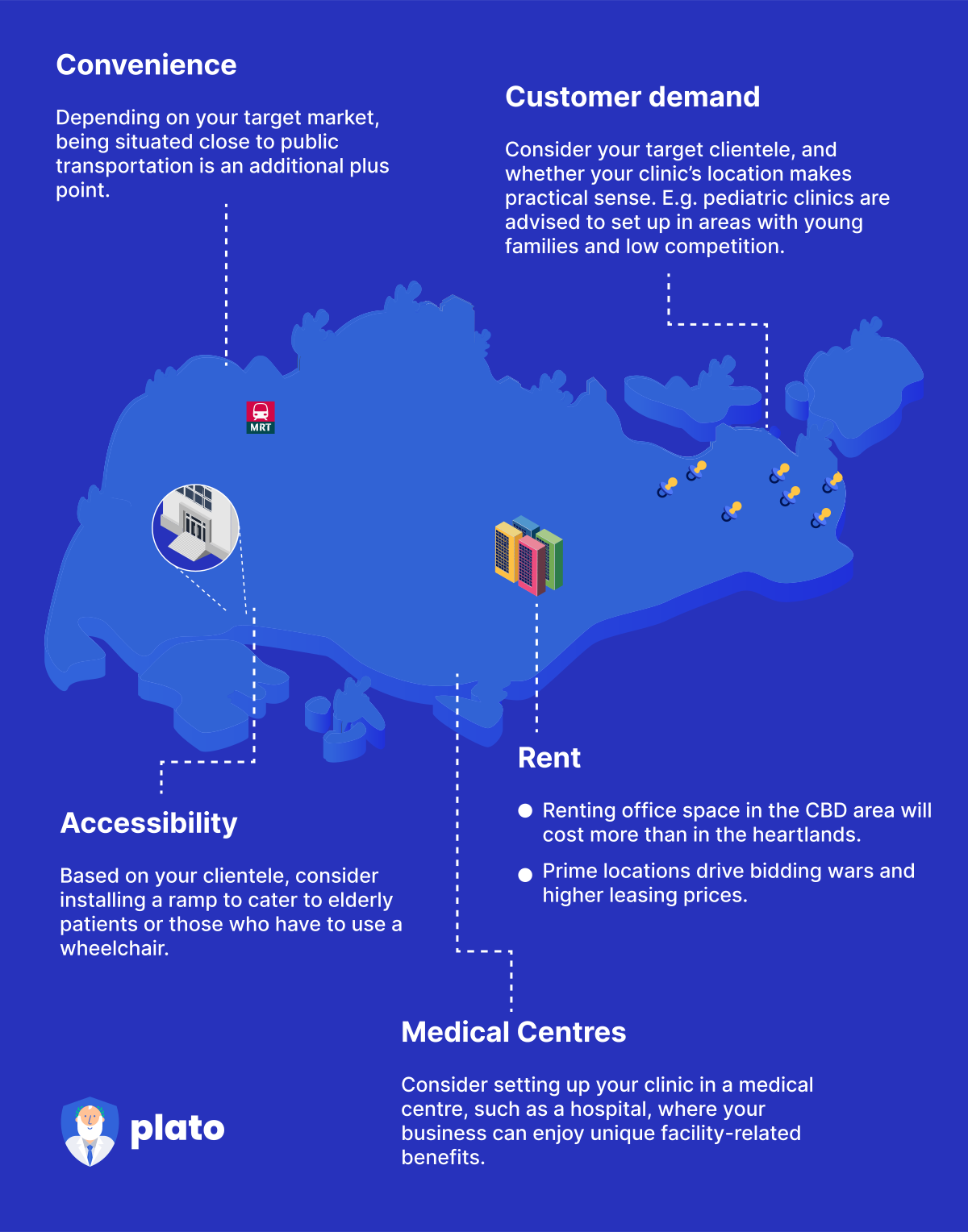
In land-scarce Singapore, competition is stiff for prime retail locations. For GP clinics, being in a high-traffic area may help you bring in patients in the initial months. However, to sustain the business in the long run, focus on strengthening WOM and expanding your loyal base by making care convenient for patients. Other specialisations, like allied health, will likely perform better near their target markets in the central business district or in hospitals.
Regulations on Selecting a Premise
Specific regulations govern where your clinic can be established. If you have an interior designer, they can help you get the necessary certificates for your premise, but it’s good to be aware of these regulations and check they are met. Your clinic must be/have:
- Zoned for commercial use
- Up-to-date with building codes and fire safety protocols
- A Fire Safety Certification (FSC), which you can get from the Singapore Civil Defence Force (SCDF) through a registered architect or engineer before occupying the building.
- Approved for healthcare or medical operations by the Urban Redevelopment Authority (URA). If you need to change the use of a commercial space to that of a medical clinic, URA has a helpful guide on the process.
- Approved for design and layout by MOH’s Central Licensing Branch (CLB). An on-site inspectionwill follow as part of the licensing process.
- Certified by the Building and Construction Authority (BCA) for any building works.
- Advertisement licence from BCA if your clinic has an outdoor advertising sign or signboard.
Develop a Profitable Business Plan

A business plan is your strategic tool to turn your clinic dream into reality. A good plan will define your business objectives, how your clinic provides distinct services in a good market, your startup costs, projected profit or loss, and break-even point. As an entrepreneur, your main concern is profitability. Prioritise breaking even before focusing on growth.
Sample business plans:
Here’s an example how key sections of your clinic’s business plan can help you formulate your strategy for success:
Market analysis
Understanding who you serve and why contributes to your market analysis, helping you find a competitive positioning for your clinic. For instance, you’ll consider the volume and value of your desired target market to determine if it’s a good market for you to build and grow your practice. Create patient personas to better understand your target patient base, identify opportunities, and create solutions that solve a perceived market problem.
Marketing and Sales
After identifying your target patient base and understanding why you’re serving them, think about how you are going to reach this target market. Traditionally, patients rely on word of mouth, location, convenience, and referrals to find their healthcare provider. While these still hold true, today 3 out of 4 patients will also go online to find their healthcare provider (PatientPop, 2021). Make your clinic accessible by using both online and offline channels to reach and expand your target patient base.
Digital marketing: To market online effectively, first determine your target segment’s online behaviour and preferences. Are they avid social media users? Where do they normally get their healthcare data from? Based on the patient personas you’ve created in your market analysis, you’ll be able to identify digital platforms that are widely used amongst your target base. From there, consider marketing on these platforms to reach prospective patients, but remember—reaching prospects is one thing, getting them to commit to their first appointment is another. Win over patients online by simplifying their user journey. For example, make it easy for new patients to book their first visit online and automatically register at your clinic, even before they step through your doors. Send them visit reminders to minimise no-shows and improve care adherence. Optimise your digital marketing by tracking ad performance and only advertise per MOH’s advertising guidelines.
Referral partnerships: Patients commonly receive recommendations to other providers through referral partnerships for shared care. Maintaining good referral relationships is not only important for long-term partnerships to succeed, but also improves quality of care, patient satisfaction, trust, loyalty, and work satisfaction. According to a study by Press Ganey (2019), good provider teamwork is the greatest predictor of patient loyalty. Patients are more likely to recommend your practice when care is safe and well-coordinated. Notes sharing simplifies provider-provider collaboration, saves time by automating work, and builds relationships around your clinic.
Location-based marketing: Based on who your clinic serves and why, consider whether your location makes strategic sense to your sales and marketing. For instance, if your target base are affluent office workers, setting shop in a suburb would be impractical. In addition to your location’s suitability and level of convenience, consider who your neighbours are. For example, imagine running a chiropractic clinic targeting affluent office workers in the central business district. Your target market comprises two main segments: office workers who lead sedentary lifestyles and office workers who lead active lifestyles. Based on your patient personas, consider partnering with nearby businesses to bring in their employees from these offices, or market to customers that patronise nearby health food stores and gyms.
Operations
Now that you’re attracting patients to your practice, consider how you are going to build their brand experience. Your patient’s brand experience loop starts from the moment they first interact with your clinic, up till they book their follow-up visit. Consider the journey each patient persona takes and what impression you’d like to create. What technology can you use to improve the patient journey and expand your loyal base? For instance, give new patients a tech-savvy first impression by letting them easily book their first visit online and register automatically using Singpass. Eliminate form-filling for patients, data entry for staff, and build accurate patient profiles for your practice. Ensure your clinic’s operations align with its branding. Learn how to ‘Set Up Clinic Operations’ here.
Finances
Once patients are regularly coming through your door, calculate how quickly it will take your clinic to break even. Breaking even is your clinic’s first major milestone, after which your practice will begin turning a profit (yay!). Projecting your cash flow predicts when you’ll break even and have surplus cash to begin growing your business.
Cash flow is the net balance of money moving in and out of your business over a specific period of time. For instance, revenue is cash flowing into your business and expense is cash flowing out of your business. Positive cash flow strengthens your business liquidity, flexibility and financial health. Negative cash flow affects your ability to fulfill financial obligations, such as paying suppliers, which harms your business relationships.
Advantages of projecting cash flow:
- Improve business decisions
- Better manage your business progression
- Identify areas for improvement and cost-reduction
Projecting your cash flow for 3 years with a break-even time frame is common practice, but some clinic startups may opt for a 1-, 2-, or 5-year projection, depending on business goals. Plato has specific tools to help clinics manage their cash flow by minimising bad debt and monitoring financial health. For instance, Plato simplifies medical billing, makes it easy for patients to settle rejected claims remotely using “Card not Present” PlatoPay, and keeps track of your clinic’s financial health using its comprehensive inbuilt “Intelligence” reports.
Break-even point is when your clinic’s total revenue equals total cost, i.e. there is no profit and no loss. After hitting your break-even point, your clinic will start turning a profit. Calculating your break-even point is important, since it influences your decisions on price points, operations, hiring and finances. There are two main ways you can calculate your break-even point. The first is by the number of units sold. The second is by sales dollars.
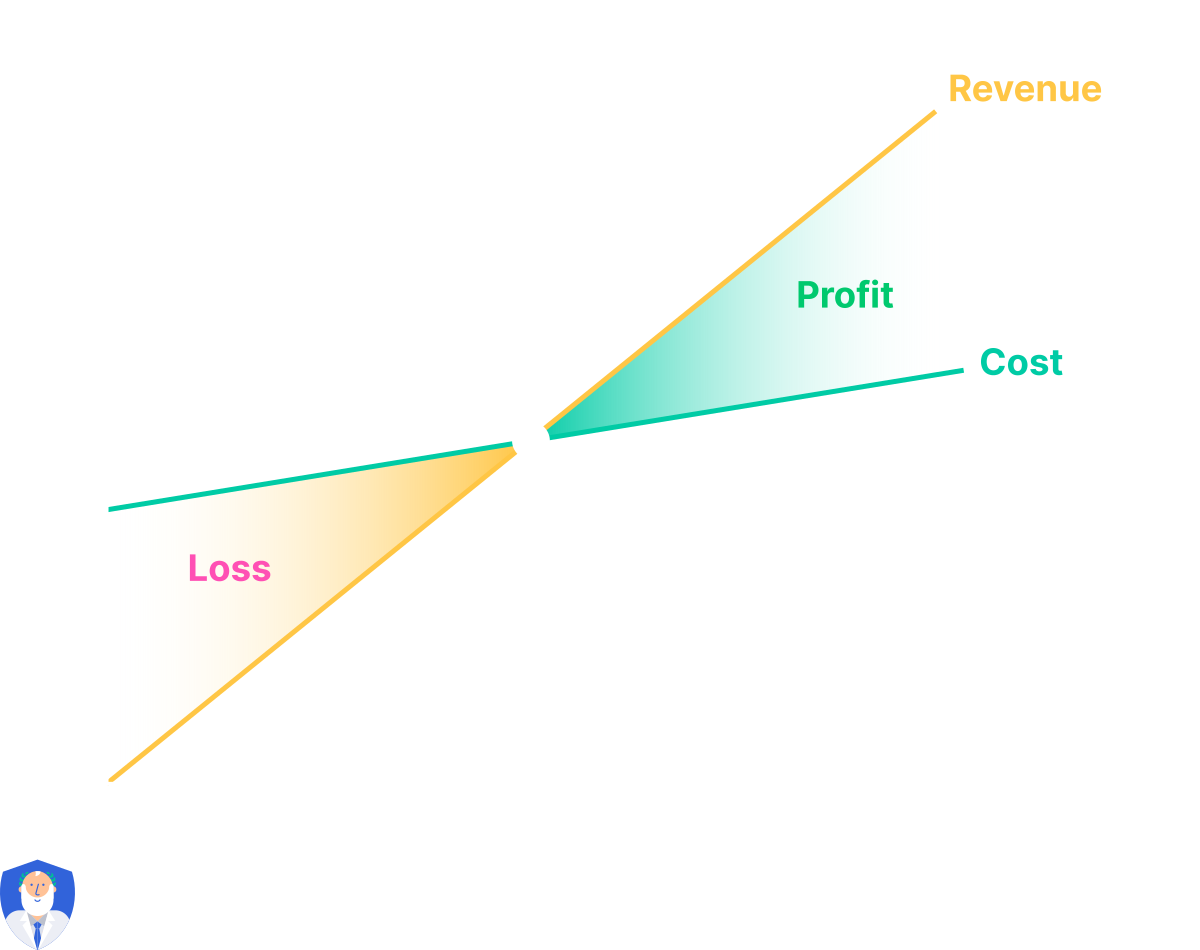
Formula for calculating your break-even point based on:
1. Units Sold
Break-even point by no. of patient visits = Fixed costs / (Revenue per visit - Variable costs)
Fixed costs = costs that remain the same, regardless of number of goods and services sold, e.g. rent, salaries
Variable costs = costs that change in proportion to number of goods and services sold, e.g. medical supplies purchased in bulk
Example: Your clinic has a fixed monthly cost of $2,000/month, a variable cost of $25/visit and charges $50/visit. To hit your break-even point, you must see 80 patients/month.
2. Sales dollars
Break-even point by sales dollars = Fixed costs ÷ Contribution margin ratio
Contribution margin ratio = (Selling price – Variable costs) ÷ selling price per unit
Example: Your clinic has a fixed monthly cost of $2,000/month, a variable cost of $25/visit and charges $50/visit. Your contribution margin is 50%. To hit your break-even point, you must generate $4,000 in sales dollars/month.
Your break-even analysis gives you and your team a target to work towards, but this alone doesn’t guarantee sales. Use your break-even analysis to manage the risk involved with starting and managing your business—is the anticipated profits worth the startup costs? Do you need to adjust your prices or negotiate for better costs with suppliers?
Plato’s “Intelligence” reports automatically generate the data you need to help you manage elements contributing to your break-even point, such as number of patient visits, inventory costs, and more.
If you need financial advice, consult your accountant or a medical consultancy like Medinex, which helps clinics start and grow their business. Medinex offers a wide range of services, from business and financial planning to license applications and staff hires.
Helpful Resources:
Manage and Grow Your Practice using Plato
Finance Your Clinic
Some clinics may require startup capital to help them cover initial business costs until they break even and turn a profit. Clinic owners may take a bank loan or raise funds (aka equity financing), where company ownership is sold for capital. It’s good to plan ahead; borrowing only when you need capital may result in funds not being dispersed in time.
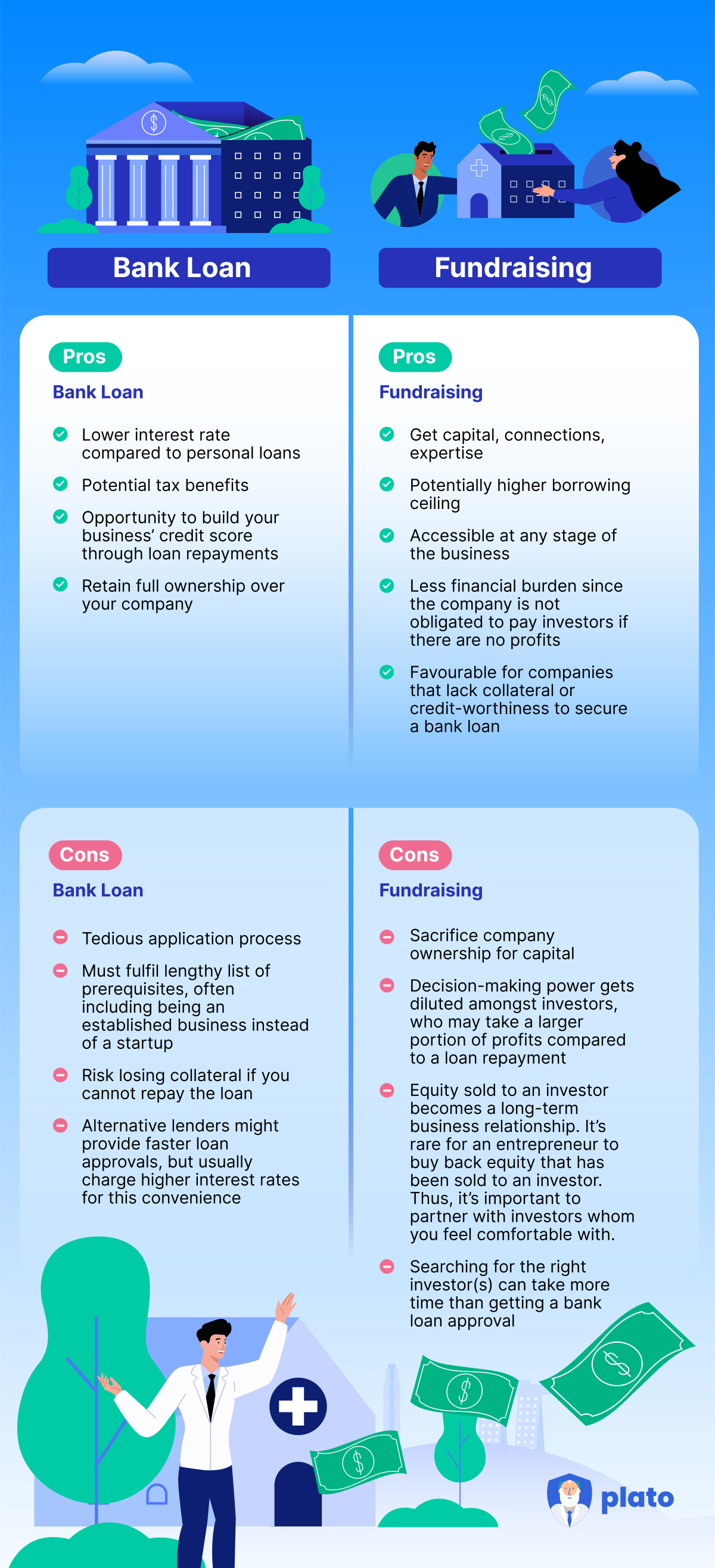
Sources of Capital
Bank loans* are one of the most preferred sources of financing amongst Singapore SMEs, but approvals are subject to the respective bank. Alternatives include fundraising and non-traditional lenders, like peer-to-peer lending company Funding Societies.
1) Friends and Family: Even though loan terms may be flexible, it’s good to have a written agreement containing the loan’s T&Cs to minimise conflict. If repayment takes longer than expected or if there’s a misunderstanding, costs will be both emotional and financial.
2) Bank Loans: Many banks offer financial support to SMEs. DBS, OCBC and UOB are popular options due to competitive loan terms and high safety ratings. Important factors such as loan amount, period, eligibility, interest rate and repayment time frame differ between banks and loan types.
3) Angel Investors and Venture Capitalists: Angels/VCs typically back high-growth startups. Since they take on higher risk, they expect bigger rewards, like company ownership. VCs may be suitable if you want capital and expertise to scale your practice. You can find Angels on platforms like Angel Investment Network, Bansea or AngelVest.
4) Non-Traditional Lenders and Other Financial Institutions: Non-traditional lenders offer speedier loan approvals with fewer required documents. For example, Funding Societies’ FS Bolt finances Singapore-incorporated companies without any required collateral, subject to certain T&Cs. Other financial institutions, such as Hong Leong Finance has Property and Equipment loans for medical and dental practices.
*Plato does not endorse any particular loan or bank.Choose a Business Structure
Your business structure will affect your clinic’s activities, growth, benefits, and liabilities. ACRA’s guide on choosing a business structure includes a comparison of business entities in Singapore, such as sole proprietorship, partnership and Private Limited Company (PLC).
Sole Proprietorship VS PLC
Sole proprietorship might seem like the go-to choice for solely-owned businesses, but the financial risk is high and does not work in favour of entrepreneurs. PLC, on the other hand, protects the owner’s personal assets from business liabilities, offers flexibility for growth and attractive corporate tax benefits. A PLC could also be suitable if you open the business with a group of doctors. “It provides clear ownership and supports scalability. Investors are also more willing to deposit funds into a PLC,” explains Matthew Kumar, account executive at online corporate service company Sleek.
Partnerships
Partnerships can also make shared ownership more enjoyable. Some partnerships may seem ideal, but no alliance is immune to a split. Stay practical and have a departure agreement ready from the start.
Good qualities to look for in a business partner include:

Trustworthiness and reliability
When it comes to business partnerships, trust is essential. Get to know your prospective partner well—is he/she someone you can depend on?

Shared vision and values
This is the foundation of long-lasting partnerships. Shared objectives and principles will help you overcome hard times and grow sustainably.

Excellent communication skills
Wilfully avoiding problems is no solution. Both parties must be ready to hold tough conversations to manage conflict and be open to compromise.

Complementary skill sets
A partner with varied skills can strengthen the alliance. E.g. an analytical partner manages finances while their creative partner handles marketing.
CHAPTER 2
Get Your Clinic Off the Ground

Now that you’ve laid the groundwork, it’s time to set your plans to motion. Learn what’s needed to incorporate your business, how to apply for your clinic licence, pass your MOH inspection and if your clinic should register for GST.
Incorporate Your Business
You’ll need certain information ready before registering your business with Singapore’s Accounting and Corporate Regulatory Authority (ACRA). You can either engage a corporate secretarial firm to help you manage this process or do it yourself. Learn what’s required before incorporation through ACRA’s video guide. To help you navigate the incorporation process, refer to the brief roadmap below. For more details, visit ACRA’s website.

Step 1: Register Business Name
- Read MOH’s guidelines on the names of healthcare institutions before registering your business name for a fee of S$15.
- You must incorporate your business within 120 days from the name application approval date. Foreigners are required by law to engage the services of a registered filing agent to submit this application.



Step 2: Choose a Business Structure
- Choose a business structure most suited for your clinic. Different business structures offer various advantages and disadvantages, such as tax benefits.

Step 3: Pre-Registration Requirements
Check that you have:
- At least one director who is locally resident in Singapore
- Appointed a corporate secretary within 6 months of incorporation
- Appointed an auditor within 3 months of incorporation (unless exempted under Small Company Concept).
- At least 1 shareholder and minimum issued capital of S$1.
- A locally registered company address and company constitution (see ACRA’s model constitutions).
- Decided on your Financial Year End (FYE).
- For more details, visit ACRA's website.

Step 4: Prepare Documents for Incorporation
- Registered business name and address.
- Brief description of the business activities.
- Particulars of the director(s), corporate secretary, and shareholder(s).
- Locals must provide a copy of their Singapore identity card. Foreigners must provide a copy of their passport and proof of their overseas residential address.

Step 5: Incorporate your Business
- Read ACRA's instructions on how to incorporate your business
- Fee for registering your company is S$300
- Foreigners must engage a registered filing agent to submit this application

Open a corporate bank account
With your clinic’s certificate of incorporation, you can set up a corporate bank account to manage finances efficiently. At this point, you may also be considering getting a payment terminal for your clinic.
Payment terminals are convenient for patients, especially since Singaporeans are enthusiastic credit card users. 73% of Singaporeans own at least one credit card, with healthcare being one of the top 12 most popular credit card purchases (Ho, 2019).
While banks offer payment terminals, their rates and terms aren’t always favourable for healthcare providers. Standard bank terminals have high transaction rates and monthly rental fees, which eat into your profits. This is a key factor you want to avoid as a new clinic, since breaking even is one of your clinic’s first major milestones. Standard bank terminals also create work. Transacting twice results in double entry and reconciliation errors.
Use PlatoPay Terminal - enjoy lower credit card transaction fees starting at 2.1% + $0.20, with no device rental fees. Unlike standard bank terminals, the PlatoPay Terminal is fully integrated with Plato, eliminating errors and automating work. Pay less and work less with PlatoPay Terminal.
Use PlatoPay Terminal
Hire a corporate secretary
Consider hiring a professional corporate secretary to help you manage the incorporation process, fulfil your company’s admin duties and ensure business compliance with statutory regulations. Failure to do so can result in fines, penalties, or both, per Singapore law. You can either employ the services of a corporate secretarial firm like Osome or Sleek, or appoint your own corporate secretary—however, this incurs opportunity costs:

“The company secretary has an important job to do. Do you want to invest the time and effort to perform tasks that you can outsource and earn less money as a result, or pay the minimum fee of S$300/year to hire a professional? Outsourcing this is as good as losing one to two hours of income, versus spending hours learning how to do this, only to end up hiring a professional to undo what you did wrong.”
Quote “PLATO8” to enjoy an 8% discount all Osome services for your first invoice.

“Whilst it may appear as a cost-saving move to appoint someone you know as your company secretary, businesses may end up paying more for remediation work to be carried out to clean up their corporate records. Common issues include mis-managed statutory timelines; undocumented corporate decisions, resulting in complex remediation work; penalties incurred due to late lodgements of corporate decisions.”
Quote “PLATO100” to enjoy S$100 discount on Sleek’s services, valid until 31 Dec 2022.

“The corporate secretary must have the relevant qualifications and good technical knowledge to understand, and apply the regulatory and commercial requirements of what the role involves. Experience is necessary to competently undertake the duties and responsibilities required. The secretary’s advice will ensure that the company is constantly in line with legal and compliance frameworks in Singapore.”
Design Your Clinic

All renovation work must be completed before your MOH inspection. Joseph Lee, Designer Director of Jazz-Lifestyle, shares that most doctors are concerned about the handover date and MOH inspection. Consider hiring an interior designer experienced in healthcare-related projects. They can aid in areas ranging from design advice to align with your brand and workflows, to drafting the floor plan for licence application and ensuring all safety elements are in place, ultimately helping you pass your MOH inspection.
Deliver a consistent brand experience
Your brand should provide a distinct and consistent experience for patients, including what they feel upon entering your clinic. Your brand experience is shaped by your clinic’s interior design and the processes patients experience within the clinic itself.
For example, imagine you’re a patient visiting an aesthetic practice that’s branded as innovative. You expect a tech-savvy practice with a stylish interior. You enter the clinic to find a modern setting that matches the clinic’s branding to a T. The interior is spacious, giving patients ample room to move from waiting area to consultation room. Suddenly, the front desk staff hands you a paper and pen to register. What’s going on? You’d anticipated a tech-forward process, such as automatic online registration using QR code. The gap between expectation and reality confuses you, weakening your impression of the clinic brand.
Avoid disparities between your clinic’s brand and your patient’s in-clinic experience by keeping in mind who your clinic serves and why.
Consider your clinic’s workflows
An experienced interior designer not only helps align your clinic’s interiors to its branding, but also caters to its operations. Jordan Toh, Director of Zenith Arc, elaborates using aesthetic clinics as an example, “We consider electrical voltage, machinery size, and workflow—depending on the individual practitioner and how they use the machinery.” Your workflows will impact how certain rooms or machinery are set up. Include a list of equipment you’ll be using during planning (e.g. dental chair, x-ray machine), so your designer can take these into consideration. Safety elements like emergency routes and protection against radiation machines are also taken into account. Use code “ZENITHARC1” for 10% off your first contract with Zenith Arc, subject to terms and conditions.
All in all, your clinic’s interior design goes beyond mere aesthetics. It should align with your clinic’s branding, support your clinic’s workflows, and provide a consistent brand experience for your patients.
Floor plan
When applying for your clinic licence, MOH will require you to submit your clinic’s floor plan. If you have an interior designer, they can help you draft the plan for submission. A comfortable and well-designed clinic not only makes your patients feel relaxed, but also supports your day-to-day operations. Since first impressions count, consider what you’d like your patients to feel upon entering your clinic for the first time. Some pointers to keep in mind:
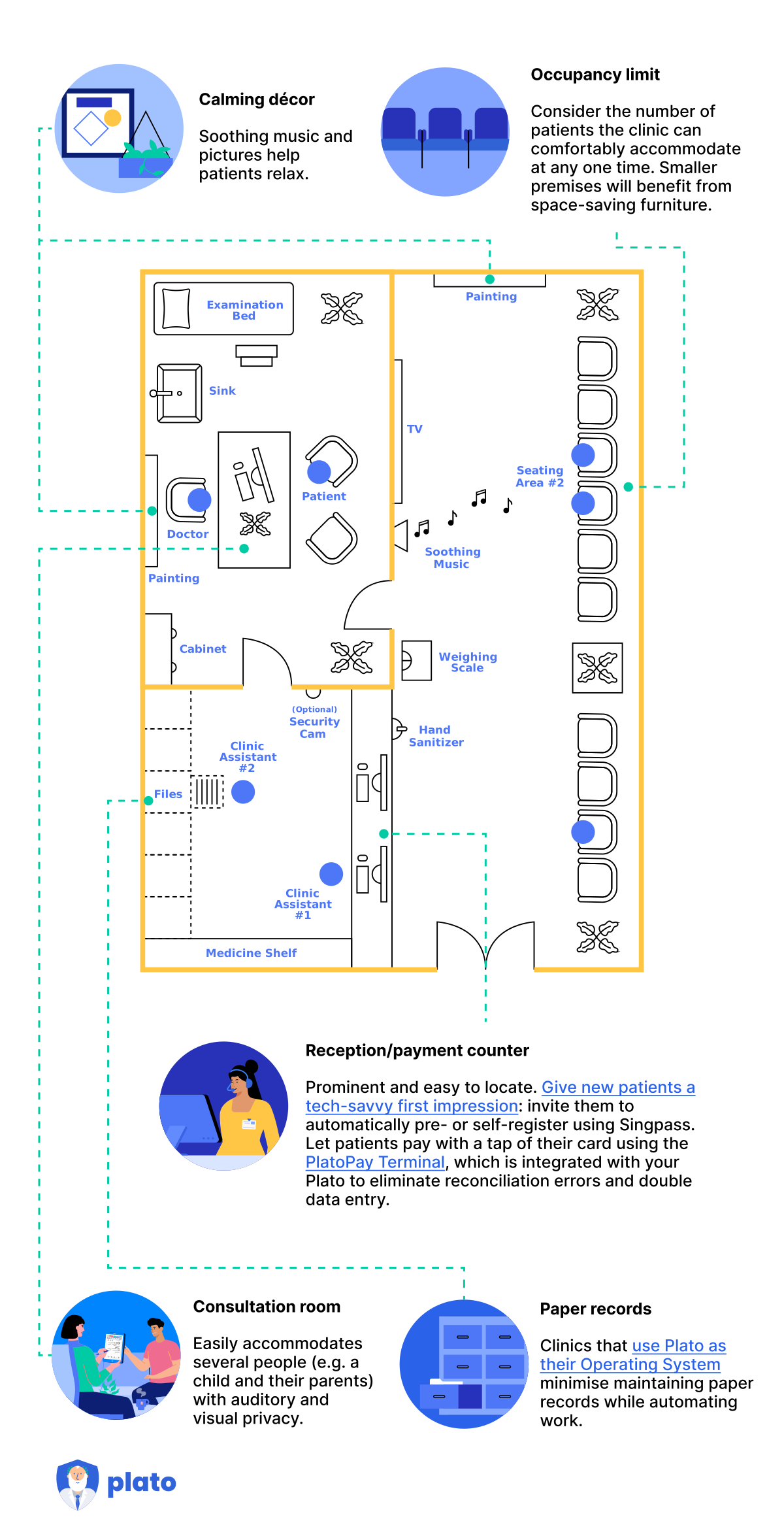
Run a Tech-Savvy Clinic with Plato
Apply for Clinic Licence, Prepare for the MOH Inspection
Passing your MOH inspection is important. This determines when your new clinic can start seeing patients. Since licence approvals take time, plan ahead and make the necessary preparations beforehand to avoid delays.
This road map helps you understand the steps to securing your clinic licence and ensuring your clinic is ready on inspection day.
-

Step 1
Read MOH’s guides on:
Important Information Before Applying for A Licence—This includes guidelines on clinic names, national programmes/schemes for GP clinics, billing of medical claims for the government, and when you can expect your new clinic licence to be issued before registering your business name for a fee of S$15.
Applying for a New Clinic Licence—This document clearly summarises the registration process, which includes a site inspection by MOH. Different licence categories require different fees, refer to page 5 of MOH’s FAQ on the Private Hospitals and Medical Clinics Act (PHMCA).
-

Step 2
Complete clinic renovation
All renovation work must conclude before the MOH inspection. Any incomplete renovation (e.g. exposed floors/walls/cables) will affect your licence approval. Avoid placing carpets in consultation rooms. Install proper flooring for easy cleaning and to maintain stringent hygiene standards. Ensure you also have licences for any radiation-emitting equipment (e.g. laser, ultrasound, x-ray machines).
-

Step 3
Schedule MOH inspection
All new clinics must apply for their licence with MOH before opening to the public. Applications must be made no later than 2 months prior to the clinic’s commencement date of operations. Check that your clinic’s name submitted to MOH is identical to that featured on your clinic’s signage and other documents. Your clinic’s service fees, such as rates for consultation and other medical services, as well as operational hours, must be displayed clearly to patients.
-
During inspection, the MOH officer will ask about the software being used. Your chosen software should suit your clinic’s needs and be ready for use. See ‘Chapter 4: Set Up Operations’ on choosing the right clinic software for your practice.
-

Step 5
Is your clinic MOH inspection-ready?
Use the MOH checklist for the pre-licensing inspection to confirm that your clinic is ready for the examination.
-

Step 6
MOH inspection
MOH will make arrangements to inspect your clinic’s premises as part of the licence application. Your clinic manager or a staff member who can explain your clinic’s operations must be present. The inspection may take up to 1 hour. The MOH inspector might arrive earlier or later than scheduled. Clinics should prepare for such an event and owners should clear their schedules to avoid rushing to or from another appointment.
-

Results of MOH inspection
MOH will notify you on the results, along with any shortcomings, within 5 to 7 working days of the inspection. You must address any reported inadequacies and update MOH in writing on the appropriate amendments within the stipulated period. After the revisions are made, allow 3 working days for the licence application to be processed following the submission of all relevant documents.

Should You Register For Goods and Services Tax (GST)?
Registering for GST lets you claim GST incurred on your purchases, subject to conditions for claiming input tax. GST registration is only compulsory for companies with annual revenue exceeding S$1 million, it is otherwise voluntary for companies that don’t fall into this category.
Some clinic startups choose to voluntarily register for GST early on because their suppliers are GST-registered. This allows them to claim the GST that they pay when buying from these GST-registered suppliers. That said, it’s entirely your choice on whether you should register for GST now or later.
Voluntary GST Registration
Before you voluntarily register for GST, check whether:
- Your business qualifies for voluntary registration;
- Your clinic is able to meet registration requirements;
- Evaluate the pros and cons of registering since voluntarily-GST registered businesses must remain registered for 2 years.
IRAS has highlighted 4 major areas to consider before registering for GST, of which 3 most relevant to private practices include:
1) Ability to fulfill the responsibilities of being a GST-registered business:
Once registered, your business will be answerable for charging and accounting for GST, e-filing GST returns promptly, maintaining proper accounting records and displaying prices inclusive of GST. Failure to comply can lead to penalties.
Clinics should maintain proper accounting records from day one to support all compliance requirements and accurate business decisions, regardless whether you’re GST-registered. Don’t wait until you want to register for GST or expand before getting your accounts in order. You’ll waste significant time and effort cleaning up and reconciling past records, which is frustrating and stressful.
Use Plato to Manage Your Accounting
2) Suppliers’ profiles:
You’ll benefit from GST-registration if your suppliers are GST-registered or if you import goods, since you’ll be able to claim the GST paid. See IRAS’ example on the difference in gross profit if your supplier is GST-registered vs non GST-registered.
3) Customers’ profiles:
If your sale prices are fixed and your customers are not GST-registered, registering for GST will reduce your gross profit, as seen in this example by IRAS. It’s easier to raise your prices if your customers are GST-registered, since they can claim the GST that you charge.
Why you should get GST
Why you shouldn’t get GST
If the majority of your products are locally sourced and charged with GST, registering will let you claim the GST incurred on these purchases.
Example: You buy medical supplies from your supplier for $1,000. Your supplier charges you $70 for GST. If you are GST-registered, you can claim this $70 from the government.
Want to maintain consistent pricing as you grow your practice. Some clinics incur a loss of revenue when they eventually get GST—they want to avoid charging patients more, so they set GST-inclusive prices instead.
Insufficient cost-savings to justify registration, since your clinic does not enjoy a high enough turnover.
Majority of your products are not locally sourced or charged with GST.
Prefer to avoid the additional filing responsibility that comes with being GST-registered.
Have concerns about charging your patients GST—instead of setting GST-inclusive prices, which results in your clinic incurring a loss of revenue upon GST-registration, you pass on these GST charges to patients.
Why you should get GST
If the majority of your products are locally sourced and charged with GST, registering will let you claim the GST incurred on these purchases.
Example: You buy medical supplies from your supplier for $1,000. Your supplier charges you $70 for GST. If you are GST-registered, you can claim this $70 from the government.
Want to maintain consistent pricing as you grow your practice. Some clinics incur a loss of revenue when they eventually get GST—they want to avoid charging patients more, so they set GST-inclusive prices instead.
Why you shouldn’t get GST
Insufficient cost-savings to justify registration, since your clinic does not enjoy a high enough turnover.
Majority of your products are not locally sourced or charged with GST.
Prefer to avoid the additional filing responsibility that comes with being GST-registered.
Have concerns about charging your patients GST—instead of setting GST-inclusive prices, which results in your clinic incurring a loss of revenue upon GST-registration, you pass on these GST charges to patients.
CHAPTER 3
Staff Your Practice

Delivering healthcare is a team sport. You can’t do everything—from running your front desk to diagnosing patients—all on your own. You need a team of capable employees to ensure your practice runs smoothly and safely.
Building and maintaining a strong clinic team, however, is challenging amidst Singapore’s ongoing manpower shortage in healthcare (Begum, 2021). For years, Singapore’s healthcare has faced a manpower deficit, but the situation has exacerbated due to the COVID-19 pandemic.
In the first half of 2021, roughly 1,500 healthcare workers resigned, compared to 2,000 annually pre-pandemic (C. Tan, 2021). Feelings of burnout and being undervalued have been cited as key drivers pushing healthcare staff to leave. According to research by Randstad Singapore (2021), attracting and retaining staff can be improved by creating a supportive, engaging work environment and using technology to improve staff’s workload management.
Build Your Team
A strong clinic team starts with attracting skilled prospects who resonate with your clinic’s brand, hiring these talents, then retaining them long-term. Some top factors that attract employees to their jobs may change over time in response to external factors. For example, in the COVID-19 climate, some key aspects healthcare staff prioritise include safe, flexible, and supportive work environments, work-life balance, and job security (Randstad Singapore, 2021).
That said, there is one evergreen factor that consistently drives job satisfaction and retention more than any other financial and non-financial incentive: meaningful work (O’Connell, 2019; Schwartz et al., 2020).
Meaningful work consists of 3 core components (Steger, n.d.):
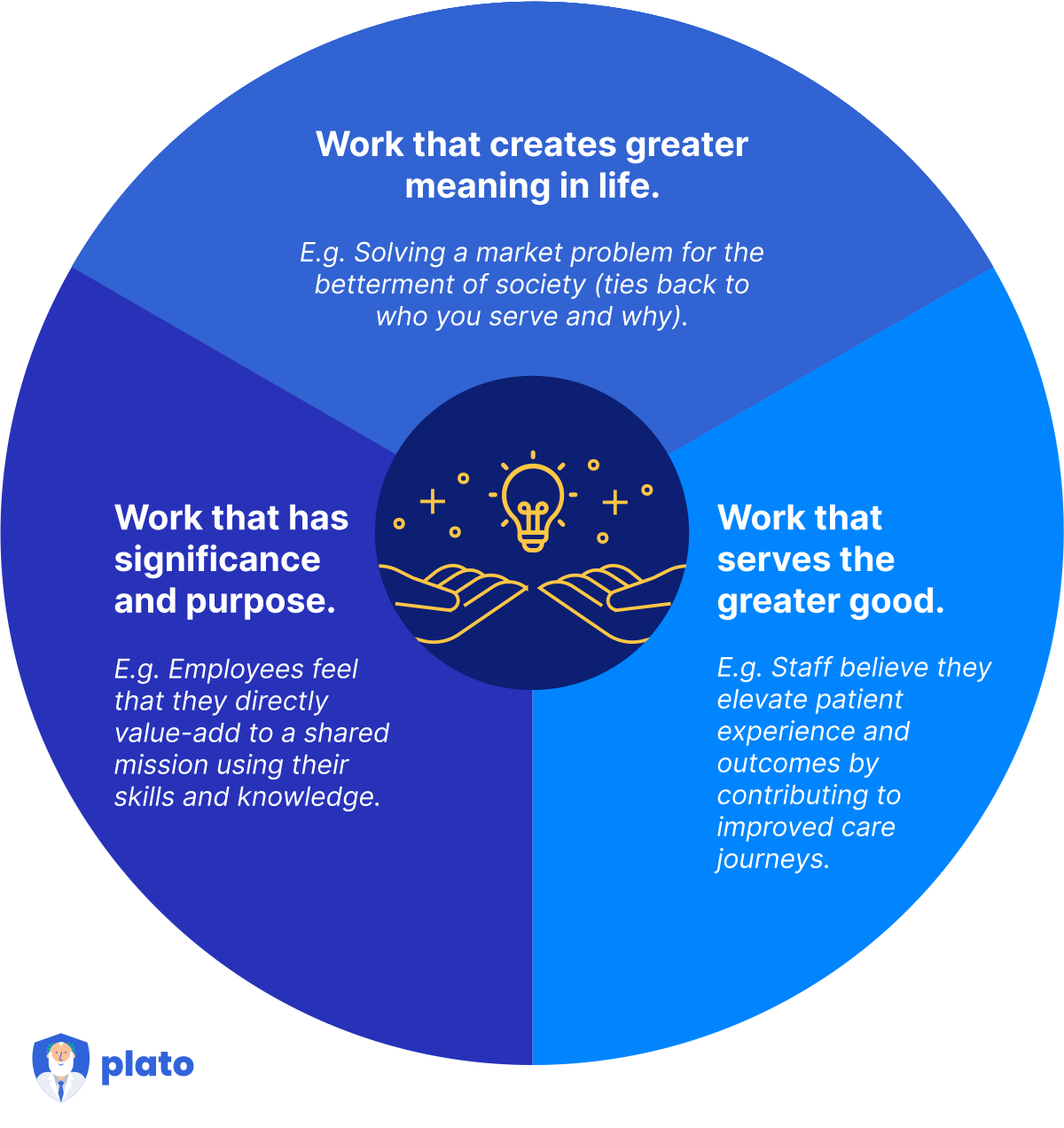
Make work meaningful by automating admin tasks
Create an engaging and purposeful job experience from day one by automating work at your practice. Automation takes care of mundane and repetitive tasks, such as manual data entry, so staff can focus on solving more complex and challenging tasks that require their competencies (Achor et al., 2018; Randstad Singapore, 2021). Admin work is not only boring and a poor use of employees’ skills, but also hinders staff from doing their main job, and lowers their overall productivity (Automation Anywhere, 2020).
In a survey by Smartsheet (2017) involving 1,000 US workers:

80%
said they believe automation helps them become more efficient at their jobs.

78%
said automation lets them focus on the more engaging and meaningful aspects of their work.

72%
felt the time saved from automating work enables them to perform higher-value work.
With automation, staff make more productive and meaningful use of their time. For example, imagine you’re a nurse working in a GP clinic. Before automating work, you would spend hours each day entering and processing patient data, which is tedious and unnecessary. Automation frees your time to interact and build rapport with patients, teach them how to use their shared notes to improve care adherence and outcomes, and ultimately enhance the patients’ care journey, as well as the patient-provider relationship. Automation allows staff to focus on more engaging, higher-level tasks and directly value-add to the business using their skills and know-how.
“Employees who believe their employers make effective use of their talent and abilities appear to be overwhelmingly committed to staying on the job, while respondents who said their job does not make good use of their skills are looking to leave.”
in Deloitte’s ‘Talent 2020’ report.
Aside from creating meaningful work, here are some other financial and non-financial ways to attract and retain good hires at your clinic:
Additional ways to attract and retain good employees

Offer competitive remuneration packages
Your clinic manager, assistant or nurse may be poached by other healthcare providers. Stay updated on contending remunerations by talking to peers and forming good working relationships with your staff.

Create a positive work environment
When employees feel empowered, respected, and recognised, they are more likely to enjoy their work. Toxic work cultures that lack respect, trust, communication, and recognition can push even the best employees to quit (Hyacinth, 2019).

Organise clinic-sponsored volunteer work
Purpose-driven companies tend to resonate well with employees. Staff participation in medical volunteer programmes (e.g. with charities) that relate to your clinic’s mission or values can boost employee engagement and double as a team bonding activity.

Provide upskill training
2 in 5 employees in Singapore leave their jobs due to the lack of learning opportunities (Lim, 2019). Upskilling keeps staff engaged and boosts their confidence to meet future job requirements.

Build strong and trustworthy leadership
Employees are more loyal to a company when they trust its leadership, get clear communication about strategy and believe its leaders can execute the strategy well (Schwartz et al., 2020).

Draft fair and attractive employment contracts
When you hire your own staff, it’s crucial to familiarise yourself with Singapore’s Employment Act and Termination of Employment to avoid any legal repercussions. MOM’s sample employment contract helps new employers draft up versions that suit their business’ needs. It’s advisable to hire a lawyer or HR consultant to review the details of the contract before it is put to use.
A Day in the Life of your Clinic Manager, Clinic Assistant, and Nurse

In an “ideal” clinic, the clinic manager and clinic assistant handle daily admin tasks, while healthcare-trained team members manage and triage patients.
However ideals don’t always match reality. For new clinics, manpower may be limited as the clinic starts up—and one team member could wear many hats. The clinic has a choice: either overwhelm their staff with admin work or empower them to grow the business. If you don’t choose the right clinic software, you resign your team to being burdened by admin work, weakening their job engagement and slowing your business growth.
Instead, optimise resources and make work meaningful for your team by choosing a clinic software that automates work. Empower your team to focus on more engaging, challenging tasks that grow the business. Employees who feel like they add value using their skills and knowledge are happier and perform better, improving care quality and financial returns (Harter & Mann, n.d.; Sherwood, 2013; Ward et al., 2019).
Finally, doctors should avoid taking on too much admin work, such that they end up losing focus on their patients. Understand how to delegate work to your clinic manager, clinic assistant and nurse so you build a strong clinic team and keep your focus on what truly matters: your patients.
Clinic Manager (CM)
Your CM ensures that your practice’s day-to-day operations run smoothly. In the morning, your CM checks that your clinic is prepped for the upcoming day’s operations, before attending to any ongoing communications with suppliers, facility providers, patients and team members. By noon, your CM may start attending to higher-level tasks, such as budgeting, medical billing, and inventory, to name a few. All these require comprehensive data for optimal managing, planning, and decision making.
By using Plato to automate work, your CM saves time from tedious data processing. Plato’s simple yet comprehensive “Intelligence” reports give your CM all the information they need at their fingertips. Time saved from manual data entry can now be used to negotiate for better rates with suppliers, ensure claims are paid, and interact with patients to identify workflow improvements.
If your clinic needs specific insights to its workflows, marketing, or care outcomes, your CM can use Plato’s custom analytics to measure key metrics unique to your clinic business and power smart business decisions. When you use Plato to automate work, your CM is free to focus on the core aspects of their job, instead of admin work.
Responsibilities:
- Oversees day-to-day operations (e.g. orders/manages medical supplies), sets processes
- Hires/trains/manages clinic staff
- Plans budgets
- Business development
- Some admin duties (e.g. update licences, oversee financial records, manage corporate and hospital billings/collections)
- Coordinates with stakeholders (e.g. facility providers and distributors) to negotiate deals on behalf of clinic
Clinic Assistant (CA)
Each morning, your CA reviews the upcoming day’s appointments in your clinic software. Thanks to Plato’s automations, your CA eliminates repetitive tasks to focus on patient care. For instance, Plato’s online appointment booking lets patients book their visits from anywhere and automatically saves them into your clinic’s calendar. Plato sends patients appointment reminders, reducing no-shows and improving care adherence.
Traditionally, your CA would have to register new patients using paper forms, which are tedious and error-prone. With Plato, patients can automatically register online with Singpass. Their government-verified biodata is saved directly into your Plato, creating accurate patient profiles for your clinic and eliminating data processing by your CA.
Throughout the day, your CA would process numerous payments and submit multiple claims. Billing errors are common if your clinic uses a regular payment terminal. The PlatoPay Terminal, on the other hand, is integrated with Plato, automating billing and eliminating reconciliation errors. While CAs in other clinics are forced to log in to multiple portals to submit claims, your CA easily gets everything done on one platform: Plato.
Responsibilities:
- Handles clinic’s admin tasks (e.g. processing insurance claims, managing billing/credit card payments, recording financial data)
- Manages appointment schedule and patient registration, automatable with Plato
- Prepares examination rooms for consults
- Assists doctor in consultation room
Nurse
Each day your nurse handles different patient-centric tasks such as triaging, managing care, and assisting doctors in clinical procedures. Since your nurse works across the clinic throughout the day, using Plato’s web-based platform gives them secure access to data they need from anywhere, on any device. When new patients arrive, your nurse records their medical details in Plato. Thanks to forms and templates in Plato’s flexible EMR, your nurse triages patients efficiently, reducing wait times. By noon, your nurse would have seen several returning patients.
Improving care outcomes can be challenging when patients don’t adhere to their care. Empower your nurse as the primary patient advocate by using Plato’s shared notes. Adherence and outcomes improve when patients fully understand their diagnosis and care plan. Sometimes, your nurse may work with other providers to deliver shared care. Notes sharing simplifies collaboration, giving care teams a full picture of their patients’ condition and care plan. This improves care efficiency, minimises clinical errors and reduces unneeded tests. Before day end, your nurse will remind patients due for a follow-up to book their visit. Bring back patients efficiently with Plato’s automated recalls. Add your clinic’s appointment booking link into each recall, so patients may instantly book their next visit online. Empower your nurse to focus on patient care with Plato.
Responsibilities:
- Triages patients when they arrive at the clinic
- Records patients’ vitals/medical details
- Assists the doctor during medical examinations/clinical procedures
- Answers questions about and explains medical treatments/procedures to patients
- Trains caregivers on how to provide basic care for relevant patients
- Provide comfort/counselling to patients and their families
- Handles basic admin tasks (e.g. help doctor draft shared notes for patients/caregivers, guides patients/caregivers on how to use their shared notes to improve care management and outcomes)
- Orders and maintains medical supplies
- Liaises with labs or other medical facilities for patients’ tests/follow-up consultations
CHAPTER 4
Set Up Clinic Operations
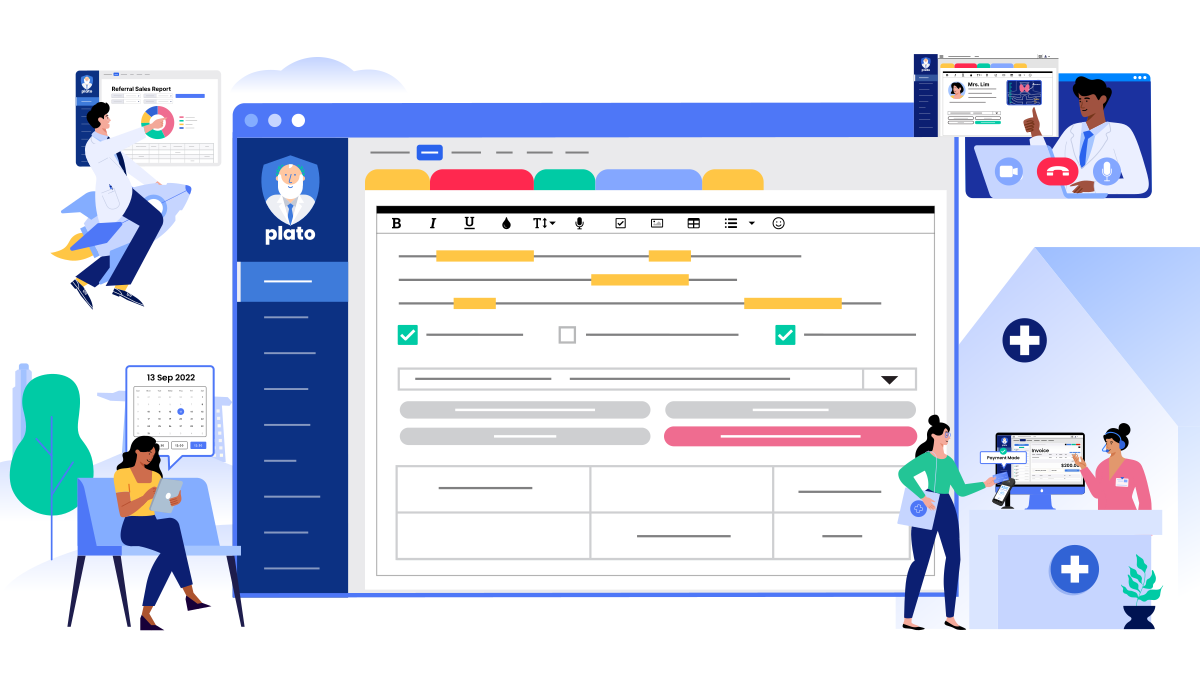
Choosing the right clinic software is important. A great clinic software touches nearly every aspect of its operations. Imagine automating work at every stage of your patient journey from pre- to post-visit.
Why Automate Work?
1) Prioritise meaningful work by automating admin tasks
Imagine you’re a nurse working in a specialist clinic. Due to Singapore’s manpower shortage in healthcare, it’s been hard for your clinic to hire new talent, leaving your clinic thinly staffed. Sadly, your clinic software doesn’t automate work, so instead of easing your workload, it’s burdened you with admin tasks. Not only is this a poor use of your skills, but also fuels your frustration. As the nurse, you are your clinic’s main patient advocate, but you have no time to interact with patients. Increasingly, you feel disengaged and dissatisfied at work. Staffing has become a key operational issue for many providers in Singapore. Poor workload management and dwindling manpower is fueling widespread burnout amongst staff (Begum, 2021). In the first half of 2021, 1,500 healthcare workers resigned from their jobs, compared to 2,000 annually before the COVID-19 pandemic (C. Tan, 2021). A shrinking talent pool means clinics must prioritise meaningful work to attract and retain their employees. Studies have found that meaningful work drives job retention more than any other workplace incentive (O’Connell, 2019; Schwartz et al., 2020). By leveraging on automations, clinics can empower their staff to focus on purposeful tasks like building patient relationships and growing the business (Randstad Singapore, 2021).
For example, imagine running an automated front desk using Plato. Plato lets patients book their visits online and instantly saves them into your clinic’s calendar, eliminating manual scheduling by staff. Since new patients can automatically register using Singpass, your staff don’t need to manually transfer any patient data from paper forms into your clinic software, which is slow and error-prone. At billing, your clinic eliminates reconciliation errors by using the PlatoPay Terminal, which is integrated with Plato. The PlatoPay Terminal automates work and minimises data entry. Regular terminals are error-prone: staff enter a sum in your clinic software, then again on your terminal. A typo today becomes an accounting headache tomorrow. Instead, control the PlatoPay Terminal directly from your Plato. Time saved from manual front desk tasks are used to build patient relationships, creating a more meaningful work experience for your team.
2) Staff expect the convenience of consumer tech
Every day, your staff enjoy the convenience of consumer technology—from online food delivery apps to digital ride hailing services. They have grown accustomed to its ease of use, and expect no different from your clinic’s software. According to research by EHL Insights (2020), “[T]he experience of employees online directly impacts their satisfaction with their work environment.” Keep your employees happy in the workplace—use a clinic software that gives them the same convenience as the consumer tech they use every day.
Plato’s integrated EMR, for instance, gives you everything you need in one place. Plato automates repetitive tasks, so you can work efficiently and focus on what matters: your patients. For example, imagine you’re a GP seeing your patient. After receiving your patient’s lab and radiology results directly in your EMR, you realise your patient needs to be referred to your specialist colleague for further evaluation. You draft a referral letter using a saved template in Plato, avoiding repetitive data entry. Instead of copy-pasting your notes into the letter for context, you share a select folder containing key patient data with your colleague, directly from your EMR. Sharing notes simplifies collaboration and speeds up the referral process. Before the consult ends, your patient asks for an MC. Instead of printing a paper MC that may be damaged or lost, you issue a verifiable digital MC using Plato’s linkage with GovTech. Throughout the entire visit, you get all your work conveniently done in one place: Plato’s integrated EMR.
3) Give patients a tech-savvy first impression
Many clinics overlook the fact that patients deserve convenience too. Healthcare visits are often stressful for patients. Manual and poorly thought-out clinic operations add to patient stress. Automation improves the patient experience, making it easier for patients to engage your services and even improve their care adherence. Thanks to the benefits of automation, patients are increasingly likely to choose healthcare providers that offer digital capabilities (Accenture, 2019). Stand out to patients by giving them the convenience that is going unfulfilled by other providers. Build a brand by prioritizing the patient experience.
Imagine you’re a patient using Plato to book your first visit online. In an instant, you secure your appointment without having to wait over any phone line. Before you step into the clinic, you have already registered automatically online using Singpass, eliminating form-filling and reducing your wait time. During your visit, your doctor issues you a DigiMC—a verifiable digital medical certificate that can be easily authenticated by your employer and reprinted on your end if required, saving you a return visit to the clinic for a copy. Post-visit, you read your shared care plan on Plato’s user-friendly web interface, improving your care adherence. You feel empowered to take greater control of your care, enhancing your trust in and loyalty to your provider. From pre- to post-visit, Plato’s automations give your patients a consistent, tech-savvy first impression.
Regardless whether your clinic is starting or scaling, it should have highly automated processes in place from day one.
Meet Plato, Your Clinic’s Operating System
Plato is more than a clinic management software. Plato is your clinic’s Operating System—the core platform around which all its operations revolve. Plato automates as much work as possible, bringing efficiency to your clinic.
Setting automated workflows from day one is important. For solo clinics, investing in Plato sets your foundation for building a meaningful work environment by automating admin tasks, and ensures your clinic always delivers a consistent, tech-savvy patient experience. Even if your business expands, you never have to worry about your clinic software, because Plato grows with your practice.
For clinics that scale, automation is a key part of operations that enables your business to expand rapidly. Once you set automation best practices at one pilot clinic location, you can efficiently duplicate these automated processes across your organisation. Plato simplifies scaling for your practice—automate work easily in each location, establish clear processes, and manage your clinic centrally at HQ.
No matter your stage of clinic growth, Plato has what you need to run a fully automated practice.
Use Plato as Your Clinic’s OS
Run a Fully Automated Clinic with Plato
From front desk to EMR, Plato automates work for your entire clinic team.
Automate Your Front Desk
Processing each patient requires a fair amount of paperwork. Instead of spending time on data entry, automate your front desk using Plato, so staff can focus on patients and growing your business. In this infographic, learn how Plato automates work at your front desk.
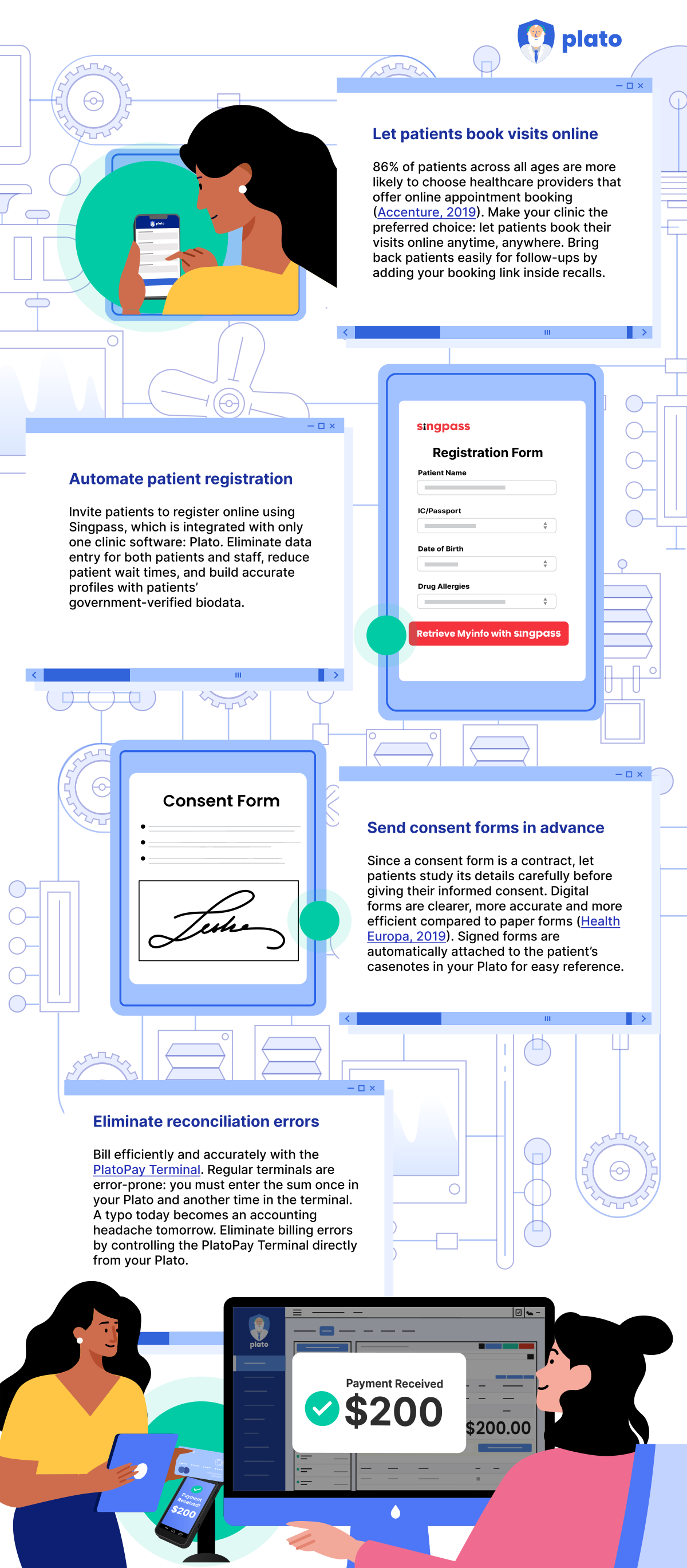
Automate Your Front Desk with Plato
Integrated EMR
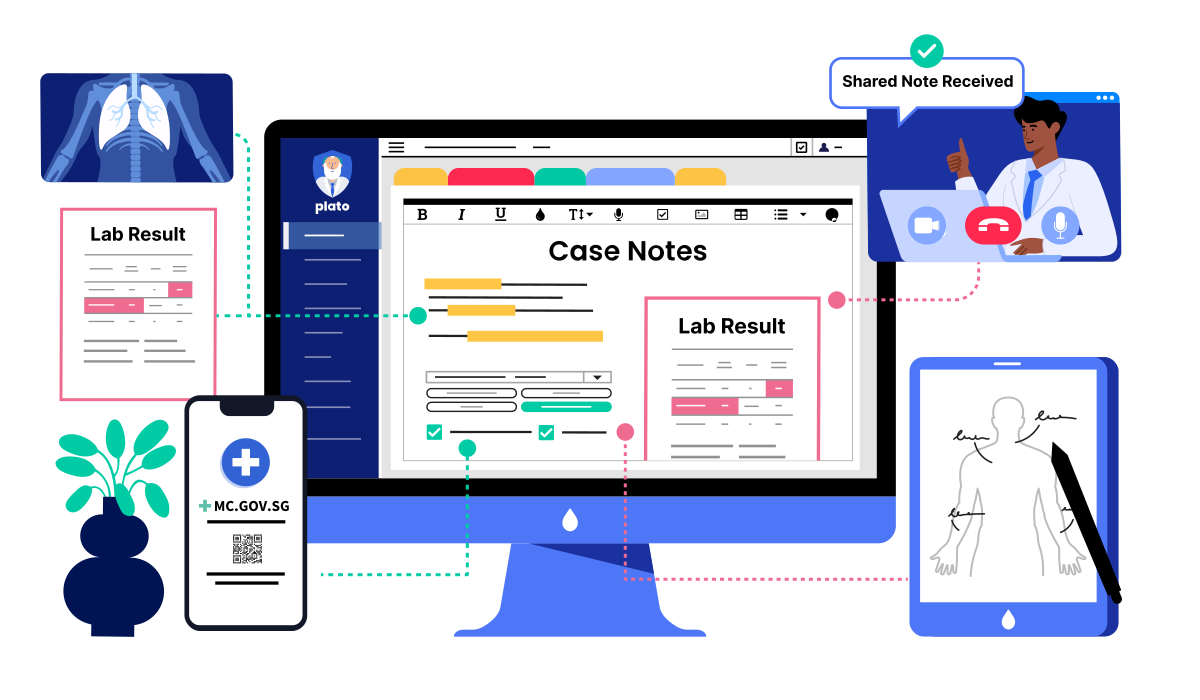
Plato’s integrated EMR automates all your routine tasks in one place, giving you time to focus on what matters most: your patients. Here are three keys ways Plato’s integrated EMR value adds to your day-to-day operations:
Simplify collaboration. Doctors often work together to deliver shared care. Automate the referral process by sharing select folders with colleagues, directly from your Plato EMR. Give your colleagues the key data they need to improve decision making, so they can deliver safe and efficient care to your patients. Well-coordinated care not only improves patient outcomes, satisfaction, trust and loyalty, but also strengthens work relationships, reduces inefficiencies and medical errors (Press Ganey, 2019; Smith et al., 2018; TigerConnect, 2020).
Improve patient outcomes. Empower your patients to take greater control of their health by sharing notes, such as care plans, directly from your EMR. Generally, patients struggle to recall verbal instructions, especially if they are elderly, anxious, or dealing with overwhelming data. Doctors can help patients accurately recall what was discussed by sharing notes (Kessels, 2003). Studies have found that shared notes help patients better understand their health condition, improve their care adherence and drive better patient outcomes (Delbanco et al., 2012; Tapuria et al., 2021; Vahdat et al., 2014).
Minimise admin work. Plato automates as much work as possible, so you can focus on patients. For instance, get direct lab and radiology results from major facility providers, issue verifiable digital MCs or receive verified patient particulars using Plato’s linkages with GovTech, and engage patients using a suite of patient care tools, all without leaving your Plato EMR.
Choose an EMR to Love
Take your notes, your way
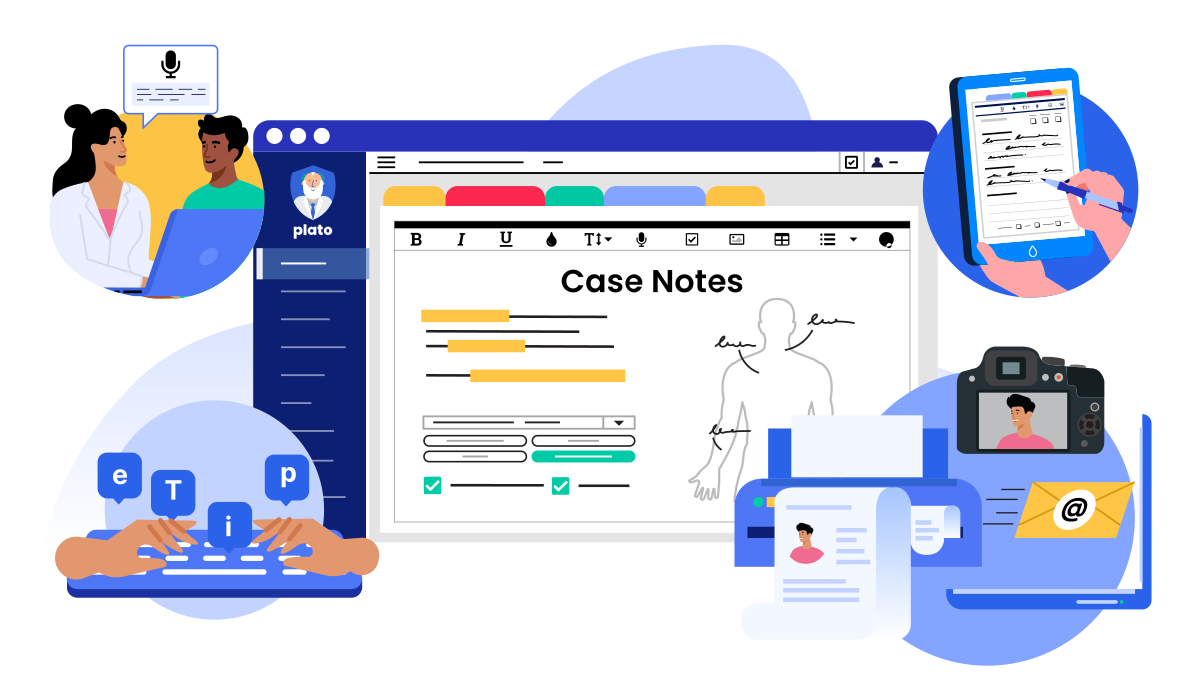
Plato’s EMR is not only integrated, but also flexible—type, draw or use speech-to-text—and manage notes for optimal efficiency.
Short, concise notes: If you’re running a fast-paced, high-volume practice, save time and improve efficiency by using templates in Plato. Pull up a saved template that already has all the necessary input fields ready. Plato automatically fills up repetitive data, such as patient particulars and medicines dispensed. With templates, you minimise data entry and speed up everyday processes like referrals, health screenings, and prescriptions.
Extensive, unstructured notes: Some specialists and allied health practitioners take more extensive and detailed notes. Plato’s formatting options allow you to organise lengthier content for clarity. For example, bold, italicise or highlight key sections for emphasis, and build tables, checkboxes or bulleted lists for structure. Pin important notes to the top of patient profiles for easy reference, so you don’t have to search through every note to find what you need.
Structured notes: Certain processes require structured notes that double as a checklist for clinic teams. For instance, health screening, patient triaging, or even sharing care plans with patients. Use templates to avoid repetitive data entry and speed up documentation. Plato automatically prefills patient data like name, IC and date of birth. Power up your template with forms—add drop-downs, checkboxes, or even ICD-10-AM codes, which auto appear through a search bar.
Visual or handwritten notes: Do you need to annotate or insert images into your notes? Some practices require visual documentation, such as images of wounds, before-after photos, or screenshots of x-rays. Plato lets you save files of any type and size into your notes, so you can add images or videos you need. If you have to draw on any image to mark treatment or map conditions, simply use Plato’s annotations—it’s just like drawing on paper. Use Plato’s annotations to handwrite your notes too if you wish—whatever your preferred method, Plato has you covered.
Create Your Notes, Your Way
Start, Build, and Grow Your Practice
Whether you want to sustain your solo clinic or scale into a chain, you’ll need to meet certain milestones along the way. For clinic startups, the first major milestone is breaking even. After which, you can focus on either growing or sustaining your solo clinic, depending on your business ambitions.

Start Your Practice
- Set up your clinic
- Take a loan (optional)
- Use Plato as your clinic’s Operating System
- Pass your MOH inspection
- See your first patient! :)

Build Your Patient Base
- Create best practice workflows by automating work
- Attract new patients, bring back existing patients
- GP/Dental clinics: Grow a community around your practice by sharing notes. Bring back patients by pairing online appointment booking with recalls.
- Specialist clinics: Build strong relationships with referral partners and help patients commit to care by sharing notes. Improve patients’ care adherence by pairing online appointment booking with recalls.

Break even
- Congratulations! You’ve reached a major goal in your startup clinic journey!
- Now, your clinic can start turning a profit and focus on sustainability/growth.



Sustainability
- Market your clinic online to attract new patients
- Build a strong referral partner network by sharing notes
- Bring back patients by pairing recalls with online appointment booking
- Manage medical billing to minimise bad debt

Scalability
- Identify your competitive edge to scale your practice
- Prioritise automations as a key part of operations
- Start and manage scaling with Plato’s “Scale Your Practice” white paper

Grow Your Clinic with Plato
Integrate Billing using the PlatoPay Terminal
Imagine using a traditional payment terminal in your new clinic. During billing, your staff must do double data entry. First, they enter the sum into their clinic software, then again on the terminal. This process is manual and prone to errors. Staff at new clinics need time to familiarise themselves with prices and processes. Chances of billing errors occuring are high if traditional payment terminals are used. A typo today becomes an accounting headache tomorrow. It doesn’t have to be this way.
Reduce double data entry
The PlatoPay Terminal is integrated with Plato to eliminate double data entry. Control the PlatoPay Terminal directly from Plato. Create a bill in Plato, let the payment get pushed from Plato to the PlatoPay Terminal, then invite your patient to pay with a tap of their card. Integrate payments from day one and bill accurately, every time. It’s not just your clinic staff who will thank you for it, but your accountant too!
Eliminate reconciliation errors
Accountants love the PlatoPay Terminal because it eliminates reconciliation errors, saving them from unnecessary work. When reconciliation errors occur, either your accountant or your team will have to spend hours combing through billing records to identify the discrepancy. Rectifying records is tedious, frustrating, and inefficient. Save time, money, and effort by integrating billing using the PlatoPay Terminal.
Let patients pay safely, the way they prefer
The COVID-19 pandemic has put consumers in favour of contactless payment options, since these are safer and cleaner. 75% of consumers in the Asia Pacific region intend to continue using contactless payments even after the COVID-19 pandemic is over (Partel, 2020). Let patients pay the way they prefer—with a tap of their card on the PlatoPay Terminal.
Enjoy competitive, transparent rates
The PlatoPay Terminal offers clinics straightforward and attractive rates, with no device rental, deposit, or subscription fees. Rates for standard bank terminals are not always clear-cut. For example, banks may require a deposit for terminal setup, cutting into a new clinic’s cashflow. They may also require a monthly subscription fee on top of per-transaction charges, making it hard for clinics to accurately calculate their total payment rates. The PlatoPay Terminal is an upfront purchase, with no deposits, setup charges, subscription payments, and device rental fees. Rates are clear and simple (starting at 2.1% + $0.20).
Use PlatoPay Terminal
“Card Not Present” PlatoPay
Separate from the PlatoPay Terminal is “Card not Present” PlatoPay, which allows patients to settle their medical bills conveniently, from wherever they are. When payment is convenient, collections improve, reducing bad debt at your clinic. For example, a patient could use “Card not Present” PlatoPay to pay for their teleconsultation, automatically settle recurring instalments for a large treatment bill, or settle their rejected claim without returning to the clinic. Using PlatoPay Terminal with “Card not Present” PlatoPay also reduces your credit card transaction fees.
Use PlatoPay
Managing Your Clinic’s Accounts
The importance of hiring a good accountant
A good accountant provides accurate reports of your company’s financial health. This is important since clinics often struggle with debt and are largely cash-based businesses. In addition to helping you manage financial statements, tax requirements, and payrolls, a good accountant doubles as your business advisor, supporting you through startup, regular operations, and growth.
Some clinics want to manage their own books to save money, but this means spending more time on bookkeeping and compliance. Mismanaged accounts can harm your business and are tedious to correct. Inaccurate reporting results in:
- Poor business decisions
- Cash flow problems
- Fines/penalties
- Complications when dealing with 3rd-parties like banks/investors
Hiring a professional certified accountant allows you to focus your resources on key aspects of your business. Startups commonly hire a Certified Public Accountant since their transaction volume doesn’t warrant hiring an in-house accountant. Realistically, smaller clinics that operate with a 2- or 3-person team may adopt more flexible accounting protocols, compared to larger industry peers, where diligent compliance with accounting rules are favoured due to their higher headcount.
Implement accounting best practices from day one
Enforcing accounting best practices from the get-go ensures your clinic produces accurate financial statements to meet compliance requirements and support business decisions. Reliable accounting keeps your business transactions well-organised, so it’s easy to pull up accurate documents for decisions on compliance, loans, tax relief, management, and growth. Waiting until your clinic is ready to expand before you get your accounts in order is too late. You’ll waste significant time and effort cleaning up and reconciling past records, which is frustrating and stressful.
Plato supports accounting best practices by automating work for your accountant, eliminating reconciliation errors and tedious workflows. For instance, Plato’s “Intelligence” automatically generates key reports that your accountant can easily export to excel, eliminating a significant amount of data entry. Plato’s user restrictions ensure your accountant only gets access to the reports they need in your Plato—nothing else. Plato is also integrated with cloud-based accounting software Xero, so your accountant can automatically sync your clinic’s financial data directly from Plato to Xero in a click.
Manage the Financial Pulse of Your Clinic
6 Reasons to Take Your Accounting to the Cloud
Presented by
Accounting is the backbone of all businesses, big and small. It allows business owners to keep track of their finances and business performance, as well as conduct analysis and financial forecasting. In a small business, accounting can easily take a backseat in favour of seemingly more urgent tasks like sales and product development. Accounting requires patience and time, but with digitalisation, this process can be made more efficient. Medical entrepreneurs will be able to minimise their accounting burden while maintaining financial discipline. When businesses digitise the accounting process, they streamline processes, increase business visibility, and improve their relationship with their accountant, who progresses from doing admin to analytical work.
Better cash flow management with real-time account visibility
Cash flow management is vital for any successful business; up to 82% of business failures are attributed to poor management. By reflecting updates in real-time and being accessible on various devices, cloud accounting software gives businesses comprehensive and accurate visibility into their performance. Moreover, the software can integrate with bank accounts, invoices, and books, to offer a sole portal through which you can monitor the health of your business.
Shorten the payment cycle
Xero’s research reveals businesses spend 25 days a year chasing overdue invoices. Digitisation reduces billing errors and offers customers easier payment channels, shortening the payment cycle. Xero’s research on small business users in Singapore shows that digitalisation of accounts/operations shortens the number of days between invoicing and getting paid from 43 to 30 days.
Enjoy greater data security
SaaS providers use complex security controls to safeguard clients’ data. With financial information on the cloud instead of physical books or USB drives—both of which can be easily tampered with—businesses can manage user access and ensure their data is encrypted and secure.
Insights from data analytics
Digital data can be extracted and analysed to deliver comprehensive performance reports/dashboards, cash flow forecasting, and scenario modelling. This helps businesses make data-driven decisions, identify markets, predict financial trends, and manage compliance risks. Analytics tools can even spot anomalies in data, shed light on financial reporting errors, performance issues, and fraud.
Increase access to working capital
A digital accounting software gives lenders real-time access to your business’ financial performance. This improves trust and could help secure the loans needed for your clinic to grow.
Reduce manual and routine work
With digitisation and automation, businesses can reduce time spent on data entry, chasing late payments, reconciling accounts, preparing invoices and more. Business owners can then dedicate their resources to activities that directly add value to their business.
Think digital to accelerate business growth
Cloud technology is flexible and scalable, allowing businesses to choose subscription packages based on features needed and user numbers. Moreover, digitising the accounting process allows small businesses to punch above their weight and compete on the same playing field as large players.
Build a Community Around Your Practice

“If a company can transition from simply delivering a product to building a community, they can unlock extraordinary competitive advantages and create a superior business model.”
in Harvard Business Review
Companies build communities around their brand for extra competitive advantage. Community members are seen and heard by the brand in a special way, increasing the brand’s “stickiness” factor and raising customer retention rates (Bawden-Davis, 2019). Prospects are inclined to join the community to enjoy this shared brand experience and connection. Similarly, building a community around your clinic offers patients a unique brand experience that sets your practice apart from rivals. By investing in community building, you strengthen your clinic’s brand appeal and value, tightening the bond you share with both your patients and referral partners.
Community creates competitive advantage (Bussgang and Bacon, 2020):
- Increases patient retention and lifetime value. Patients trust in and grow loyal to your practice, making it more likely that they will stay under your care for the long-term.
- Reduces patient acquisition costs. Loyal patients double as brand ambassadors, helping you acquire new patients through positive word of mouth.
- Attracts and retains suitable referral partners. Forming a community around your clinic boosts its brand reputation and value, making it attractive to like-minded referral partners who share similar values.
For example, let’s take a look at two primary care dentists, one who invests in building a community around his practice and one who does not.
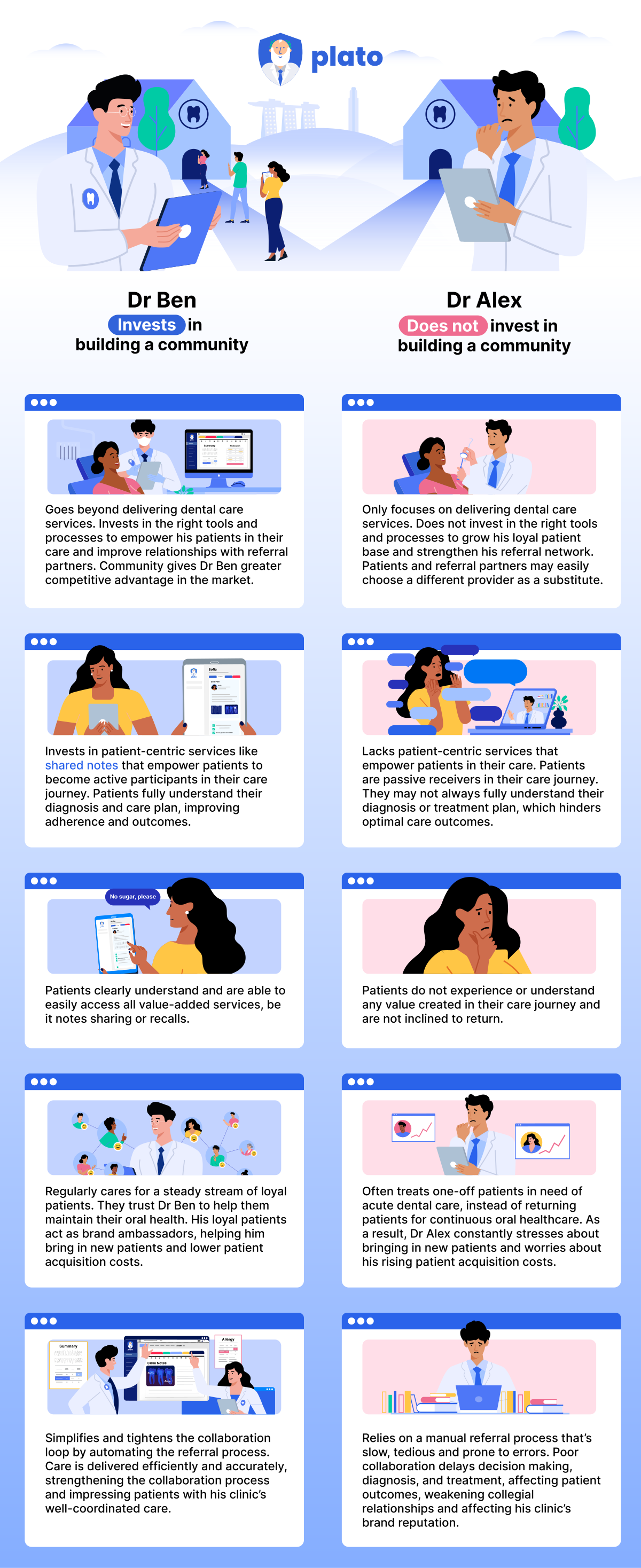
Since brand communities serve its members, clinics must fully understand who they serve and why (Bawden-Davis, 2019). Learn and fulfil your patients’ needs based on the personas you build for your target market. For instance, you might learn that a specific segment seeks help adhering to their care. Satisfy this need by sharing notes and sending recalls with your clinic’s appointment booking link, so it’s easy for patients to instantly book their follow-up visits. Here are 3 key ways your clinic can build a community around your practice:
How to build a community around your practice?
1) Improve patient relationships by sharing notes:
Note sharing is a form of patient-centric care that strengthens community ties. Note sharing improves communication, trust, and convenience—key ingredients of patient-centric care. Generally, it’s hard for patients to retain verbal medical information, especially if they are young, elderly, anxious or dealing with overwhelming information. Written instructions in shared notes give patients and caregivers a concrete reference to what was discussed in visits (Kessels, 2003). For instance, if your patient forgets their care plan, they can refer to their shared notes—at any time and place—to accurately recall your care instructions and adhere precisely to their treatment plan.
After reading her shared notes, a patient became more knowledgeable going into her visits and felt more confident asking her provider precise questions (Delbanco et al., 2012). As a result, her time spent in visits became more productive. Note sharing became so valuable to her care that her loyalty to healthcare providers depended on whether they had shared notes available at their practice (Anselmo & Chimowitz, 2016). Strengthen the patient-provider relationship by sharing notes with your patients and their caregivers, embedding your clinic more deeply in the community.
Share Notes with Patients
2) Enhance patients’ care commitment with recalls and online appointment booking:
It’s easy for patients to forget about their follow-ups and medicine refills once outside your clinic, especially if they lead busy lives. Help your patients improve their commitment to care by sending recalls. Recalls are reminder messages to book an appointment that’s emailed or texted to patients due for a visit or medicine refill. Make it easy for patients to instantly schedule their next visit by adding your clinic’s appointment booking link inside the recall.
Studies have shown that recalls are effective across different patient types in both appointment and medication adherence (Schwebel et al., 2018). Chronic disease patients, for example, may find it hard to stay committed to long-term care plans. In such cases, SMS reminders nearly double the odds of medicine adherence (Thakkar et al., 2015). A study on type 2 diabetes patients found that SMS recalls improved medical adherence and were well received among patients (Vervloet et al., 2012). Similarly, recalls help coronary heart disease patients commit significantly better to their care regimes (Zhao et al., 2019). Even in preventive care, text recalls improve the uptake of pediatric and adolescent immunisations in urban populations (Stockwell et al., 2012). Helping patients commit to their care strengthens the patient-provider relationship and converts regular patients into loyal patients, expanding the community around your practice.
Build a Community Around Your Clinic
3) Tighten the collaboration loop by sharing notes with colleagues:
Doctors often collaborate with colleagues to deliver shared care. Normally, you might manually find, collate and draft information for your referral letters. To add context, you might copy-paste your notes inside. Overall, this process is slow and tedious. Understandably, certain details may be accidentally omitted. Poor care coordination delays clinical decision making, adds friction to referral relationships and affects patient satisfaction as well as outcomes.
Improve your relationship with referral partners, enhance communication and improve care coordination by automating the referral process using shared notes. In a few clicks, share select folders containing key patient data directly from your Plato EMR with colleagues, regardless whether they use Plato. Give your colleagues the key data they need to continue care promptly, safely and accurately. According to a study by Press Ganey (2019), good provider teamwork is the greatest predictor of patient loyalty. Patients are more likely to recommend your practice when care is safe and well-coordinated. Build good rapport with the community and expand your network by sharing notes.
Collaborative care teams that share key data to improve communication and teamwork are more likely to experience the following benefits (D’Amore et al., 2021; Janssen et al., 2020; Kane et al., 2013; Liu et al., 2021; Morley & Cashell, 2017; O’Hanlon, 2021; Rosen et al., 2018):
Boost patient loyalty: When clinicians in the same care team contradict one another, it confuses patients over which doctor to trust. On the other hand, patients trust clinicians who work well together. Since patient trust is a key factor in determining patient loyalty, doctors who share notes are more likely to build a loyal patient base and good rapport with their community.
Higher quality of care: Care team members that effectively share key data make better clinical decisions. They are empowered to deliver accurate and timely diagnosis and treatments, which improves patient safety and care quality. When patients’ health improves under your care, their trust in and loyalty to your practice grows.
Improved job satisfaction: Good communication in collaboration strengthens referrer relationships and improves work morale. When doctors feel satisfied by their work, they become motivated to continue establishing good collegial and community relationships around their practice.
Minimise healthcare costs: When providers share key data about their patient’s medical condition and history, it minimises unnecessary tests, procedures and clinical admissions, which quickly balloons healthcare expenses. Patients trust providers who prioritise safe, efficient, effective care.

Starting a new clinic?
Choose Plato.
Your clinic software will be the foundation of your clinic operations. More than 2,000 providers across Southeast Asia say that Plato is their Clinic's Operating System. Find out how Plato helps you build and grow your practice.
References
Accenture. (2019). Digital Health Consumer Survey. https://www.accenture.com/_acnmedia/pdf-102/accenture-digital-health-consumer-survey-singapore.pdf
Achor, S., Reece, A., Kellerman, G. R., & Robichaux, A. (2018). 9 Out of 10 People Are Willing to Earn Less Money to Do More-Meaningful Work. Harvard Business Review. https://hbr.org/2018/11/9-out-of-10-people-are-willing-to-earn-less-money-to-do-more-meaningful-work
ACRA. (2020). Bizfile+ Homepage. Bizfile. https://www.bizfile.gov.sg/ngbbizfileinternet/faces/oracle/webcenter/portalapp/pages/BizfileHomepage.jspx?_afrWindowId=null&_adf.ctrl-state=r36dkdspz_30
ACRA. (2021). Reserving a Business Name. https://www.acra.gov.sg/how-to-guides/before-you-start/reserving-a-business-name
Anselmo, M., & Chimowitz, H. (2016). Patient Access to Medical Notes in Primary Care: Improving Engagement and Safety. AHRQ. https://www.ahrq.gov/sites/default/files/wysiwyg/professionals/quality-patient-safety/patient-family-engagement/pfeprimarycare/opennotes-1.pdf
Automation Anywhere. (2020). Global Research Reveals World’s “Most Hated” Office Tasks. PR Newswire. https://www.prnewswire.com/news-releases/global-research-reveals-worlds-most-hated-office-tasks-300989956.html
Bawden-Davis, J. (2019). 6 Tips for Building Community Around Your Brand. Business Class: Trends and Insights | American Express. https://www.americanexpress.com/en-us/business/trends-and-insights/articles/6-tips-for-building-community-around-your-brand/
Begum, S. (2021). S’pore healthcare workers feel the strain of manpower crunch amid rise in Covid-19 cases. The Straits Times. https://www.straitstimes.com/singapore/health/spore-healthcare-workers-feel-the-strain-of-manpower-crunch-amid-rise-in-covid-19
Bussgang, J., & Bacon, J. (2020). When Community Becomes Your Competitive Advantage. Harvard Business Review. https://hbr.org/2020/01/when-community-becomes-your-competitive-advantage
CB Insights. (2020). The Top 20 Reasons Startups Fail. CB Insights Research. https://www.cbinsights.com/research/startup-failure-reasons-top/
Chen, A. (2011). When has a consumer startup hit product/market fit? Andrewchen.Com. https://andrewchen.com/when-has-a-consumer-startup-hit-productmarket-fit/
Chong, C. (2021). Slight increase in diabetes prevalence despite 5-year war against disease. The Straits Times. https://www.straitstimes.com/singapore/slight-increase-in-diabetes-prevalence-despite-5-year-war-against-disease
D’Amore, J. D., McCrary, L. K., Denson, J., Li, C., Vitale, C. J., Tokachichu, P., Sittig, D. F., McCoy, A. B., & Wright, A. (2021). Clinical data sharing improves quality measurement and patient safety. Journal of the American Medical Informatics Association, 28(7), 1534–1542. https://academic.oup.com/jamia/article/28/7/1534/6169467
Dandu, R. (2015). What Is Branding and Why Is It Important for Your Business? Brandingmag. https://www.brandingmag.com/2015/10/14/what-is-branding-and-why-is-it-important-for-your-business/
Delbanco, T., Walker, J., Bell, S. K., Darer, J. D., Elmore, J. G., Farag, N., Feldman, H. J., Mejilla, R., Ngo, L., Ralston, J. D., Ross, S. E., Trivedi, N., Vodicka, E., & Leveille, S. G. (2012). Inviting Patients to Read Their Doctors’ Notes: A Quasi-experimental Study and a Look Ahead. Annals of Internal Medicine, 157(7), 461. https://doi.org/10.7326/0003-4819-157-7-201210020-00002
EHL Insights. (2020). How has the COVID-19 pandemic changed digital transformation? https://hospitalityinsights.ehl.edu/what-next-digital-transformation
Harter, J., & Mann, A. (n.d.). The Right Culture: Not Just About Employee Satisfaction. Gallup. Retrieved 2021, from https://www.gallup.com/workplace/231602/right-culture-not-employee-satisfaction.aspx
Health Europa. (2019). Surgical consent: why organisations MUST have a digital consent process. https://www.healtheuropa.eu/surgical-consent-why-organisations-must-have-a-digital-consent-process/94243/
Ho, K. (2019). Most Singaporeans own credit cards but few are in debt. YouGov: What the World Thinks. https://sg.yougov.com/en-sg/news/2019/03/26/most-singaporeans-own-credit-cards-few-are-debt/
Hyacinth, B. (2019). Toxic work cultures make Best People Quit! LinkedIn. https://www.linkedin.com/pulse/toxic-work-environments-make-best-employees-quit-brigette-hyacinth
Janssen, M., Fluit, C. R. M. G., Sagasser, M. H., Kusters, L. H. J., Scherpbier-de Haan, N. D., & de Graaf, J. (2020). Competencies for collaboration between general practitioners and medical specialists: a qualitative study of the patient perspective. BMJ Open, 10(7), e037043. https://doi.org/10.1136/bmjopen-2020-037043
Kane, B. T., Toussaint, P. J., & Luz, S. (2013). Shared decision making needs a communication record. Proceedings of the 2013 Conference on Computer Supported Cooperative Work - CSCW ’13. Published. https://www.researchgate.net/publication/226691111_Information_Sharing_at_Multidisciplinary_Medical_Team_Meetings
Kessels, R. P. C. (2003). Patients’ memory for medical information. JRSM, 96(5), 219–222. https://www.ncbi.nlm.nih.gov/pmc/articles/PMC539473/
Lim, J. (2019). More than 40% of Singapore workers quit job due to lack of skills training: Survey. TODAYonline. https://www.todayonline.com/singapore/more-40-singapore-workers-quit-job-due-lack-skills-training-survey
Liu, S., Li, G., Liu, N., & Hongwei, W. (2021). The Impact of Patient Satisfaction on Patient Loyalty with the Mediating Effect of Patient Trust. INQUIRY: The Journal of Health Care Organization, Provision, and Financing, 58, 004695802110072. https://www.ncbi.nlm.nih.gov/pmc/articles/PMC8040618/
Miller, J. (2017). What Brand Colors Say About Your Business – Marketo. Marketo Marketing Blog. https://blog.marketo.com/2012/06/true-colors-what-your-brand-colors-say-about-your-business.html?fullsize=https://blog.marketo.com/wp-content/uploads/2012/06/true-colors1.png
Ministry of Health. (2021). eLis - E-Licensing For Healthcare. MOH. https://elis.moh.gov.sg/elis/info.do?task=guidelines§ion=GuideGeneralInfo
Morley, L., & Cashell, A. (2017). Collaboration in Health Care. Journal of Medical Imaging and Radiation Sciences, 48(2), 207–216. https://doi.org/10.1016/j.jmir.2017.02.071
Nisen, M. (2013). Mayo Clinic CEO: Here’s Why We’ve Been The Leading Brand In Medicine For 100 Years. Business Insider. https://www.businessinsider.com/how-mayo-clinic-became-the-best-brand-in-medicine-2013-2
O’Connell, B. (2019). The Search for Meaning. SHRM. https://www.shrm.org/hr-today/news/all-things-work/pages/the-search-for-meaning.aspx
O’Hanlon, S. (2021). Why data sharing matters for excellent care. NHS Confederation. https://www.nhsconfed.org/articles/why-data-sharing-matters-excellent-care
Olsen, D. (2017). The Playbook for Achieving Product-Market Fit. Mind the Product. https://www.mindtheproduct.com/the-playbook-for-achieving-product-market-fit/
Partel, B. (2020). Mastercard study shows consumers moving to contactless payments for everyday purchases. Mastercard. https://mastercardcontentexchange.com/news/ap/en/newsroom/press-releases/en/2020/april/mastercard-study-shows-consumers-moving-to-contactless-payments-for-everyday-purchases/
PatientPop. (2021). Patient survey: Tracking patient behavior, preferences, and habits in healthcare in 2021. https://www.patientpop.com/blog/patient-perspective-survey/
Practice Builders. (2017). Create A Powerful Brand for Your Medical Practice. https://www.practicebuilders.com/blog/create-a-powerful-brand-for-your-medical-practice/
Press Ganey. (2019). A Unified Approach to Driving Patient and Physician Loyalty. https://healthcare.pressganey.com/2019-Loyalty
Randstad Singapore. (2021). Employer brand research 2021: how to retain healthcare workers? https://www.randstad.com.sg/hr-trends/employer-brand/how-to-retain-healthcare-workers/
Rosen, M. A., DiazGranados, D., Dietz, A. S., Benishek, L. E., Thompson, D., Pronovost, P. J., & Weaver, S. J. (2018). Teamwork in healthcare: Key discoveries enabling safer, high-quality care. American Psychologist, 73(4), 433–450. https://www.ncbi.nlm.nih.gov/pmc/articles/PMC6361117/
Schwartz, J., Pelster, B., Kwan, A., Neveras, N., Erickson, R., & Szpaichler, S. (2020). Talent 2020: Surveying the Talent Paradox from the Employee Perspective. Deloitte Insights. https://www2.deloitte.com/us/en/insights/topics/talent/talent-2020-surveying-the-talent-paradox-from-the-employee-perspective.html
Schwebel, F. J., & Larimer, M. E. (2018). Using text message reminders in health care services: A narrative literature review. Internet Interventions, 13, 82–104. https://doi.org/10.1016/j.invent.2018.06.002
Sherwood, R. (2013). Employee Engagement Drives Health Care Quality and Financial Returns. Harvard Business Review. https://hbr.org/2013/10/employee-engagement-drives-health-care-quality-and-financial-returns
Smith, C. D., Balatbat, C., Corbridge, S., Dopp, A. L., Fried, J., Harter, R., Landefeld, S., Martin, C. Y., Opelka, F., Sandy, L., Sato, L., & Sinsky, C. (2018). Implementing Optimal Team-Based Care to Reduce Clinician Burnout. NAM Perspectives, 8(9). https://doi.org/10.31478/201809c
Steger, M. F. (n.d.). Meaningful Work | Michael F. Steger. Michael F. Steger. Retrieved 2021, from https://www.michaelfsteger.com/?page_id=105
Smartsheet. (2017). Automation in the Workplace 2017. https://www.smartsheet.com/sites/default/files/smartsheet-automation-workplace.pdf
Stockwell, M. S., Kharbanda, E. O., Martinez, R. A., Lara, M., Vawdrey, D., Natarajan, K., & Rickert, V. I. (2012). Text4Health: Impact of Text Message Reminder–Recalls for Pediatric and Adolescent Immunizations. American Journal of Public Health, 102(2), e15–e21. https://www.ncbi.nlm.nih.gov/pmc/articles/PMC3483980/
Stowers, J. (2021). How to Start a Business: A Step-by-Step Guide. Business News Daily. https://www.businessnewsdaily.com/4686-how-to-start-a-business.html
Tan, C. (2021). More healthcare workers in S’pore quit amid growing fatigue as Covid-19 drags on. The Straits Times. https://www.straitstimes.com/singapore/politics/more-healthcare-workers-in-spore-resigning-amid-growing-fatigue-as-covid-19-drags
Tapuria, A., Porat, T., Kalra, D., Dsouza, G., Xiaohui, S., & Curcin, V. (2021). Impact of patient access to their electronic health record: systematic review. Informatics for Health and Social Care, 46(2), 194–206. https://doi.org/10.1080/17538157.2021.1879810
Thakkar, J., Kurup, R., Laba, T. L., Santo, K., Thiagalingam, A., Rodgers, A., Woodward, M., Redfern, J., & Chow, C. K. (2016). Mobile Telephone Text Messaging for Medication Adherence in Chronic Disease. JAMA Internal Medicine, 176(3), 340. https://doi.org/10.1001/jamainternmed.2015.7667
TigerConnect. (2020). 5 Benefits of Interprofessional Collaboration in Healthcare. https://tigerconnect.com/blog/5-benefits-of-interprofessional-collaboration-in-healthcare/
Vahdat, S., Hamzehgardeshi, L., Hessam, S., & Hamzehgardeshi, Z. (2014). Patient Involvement in Health Care Decision Making: A Review. Iranian Red Crescent Medical Journal, 16(1). https://www.ncbi.nlm.nih.gov/pmc/articles/PMC3964421/
Vervloet, M., van Dijk, L., Santen-Reestman, J., van Vlijmen, B., van Wingerden, P., Bouvy, M., & de Bakker, D. (2012). SMS reminders improve adherence to oral medication in type 2 diabetes patients who are real time electronically monitored. International Journal of Medical Informatics, 81(9), 594–604. https://doi.org/10.1016/j.ijmedinf.2012.05.005
Ward, G., de Neve, J.-E., & Krekel, C. (2019). Happy Employees Are More Productive And Can Boost Company Performance. World Economic Forum. https://www.weforum.org/agenda/2019/07/happy-employees-and-their-impact-on-firm-performance/
Wright, A. (2016). Why is Branding so Important for Your Business? The Branding Journal. https://www.thebrandingjournal.com/2016/06/why-is-branding-important-business/
Zhao, Y. Y., Dang, F. P., Zhai, T. T., Li, H. J., Wang, R. J., & Ren, J. J. (2019). The effect of text message reminders on medication adherence among patients with coronary heart disease. Medicine, 98(52), e18353. https://doi.org/10.1097/md.0000000000018353